Vintage Racist imperialism Postcards

cole phelps

Superstar
Joined
Nov 11, 2013
Messages
6,446
Reputation
5,141
Daps
28,797
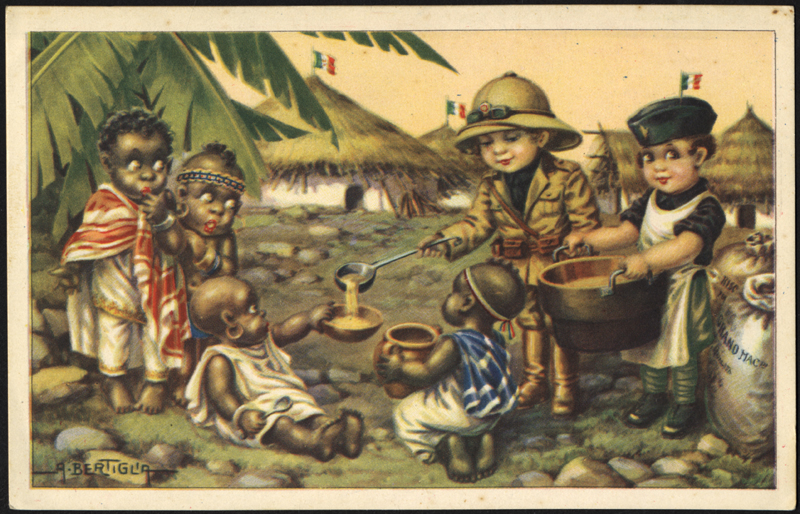
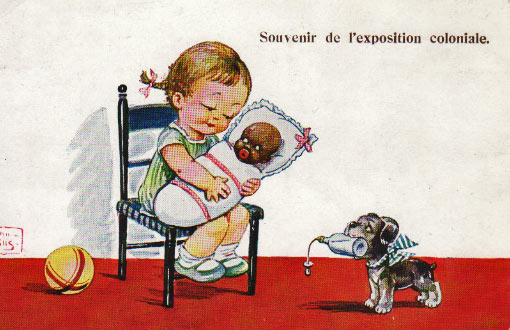
The propaganda postcards were also used to show national power, a way of bragging about colonies “owned” by European countries
postcard-german-another-city.jpg

This German postcard says “Another City, Another Girl!” and shows a highly sexualized and stereotypical depiction of an indigenous woman, a common practice to get European men to sign up to work in the colonies
XC2008.07.17.206.3-1.jpg


A number of the postcards show battle scenes, which was a way the Europeans showed how prosperous a conquest was. they also often illustrated the “savage” nature of Indigenous Peoples they “bravely” fought against.
postcard-german-rebellion.jpg


This German postcard titled “Herero-rebellion in German-Southwest-Africa” depicts a scene during a genocidal war against the Herero and Nama people of what is now Namibia. The postcards wouldn’t show that somewhere between 50,000 and 100,000 Natives were killed, but they depicted the Herero as looters and the German’s as heroes, taking down the unruly Natives.
aod19.jpg.jpg


18899799QALB_DvYkfq2pYfacVnvP7og6eGCIaWE1xMa7gyzmgItBuh7r8UtoVl8v8uvQDQJR2L7ocxG4Z6am0HPe269Q.jpg


turk-19.jpg.jpg


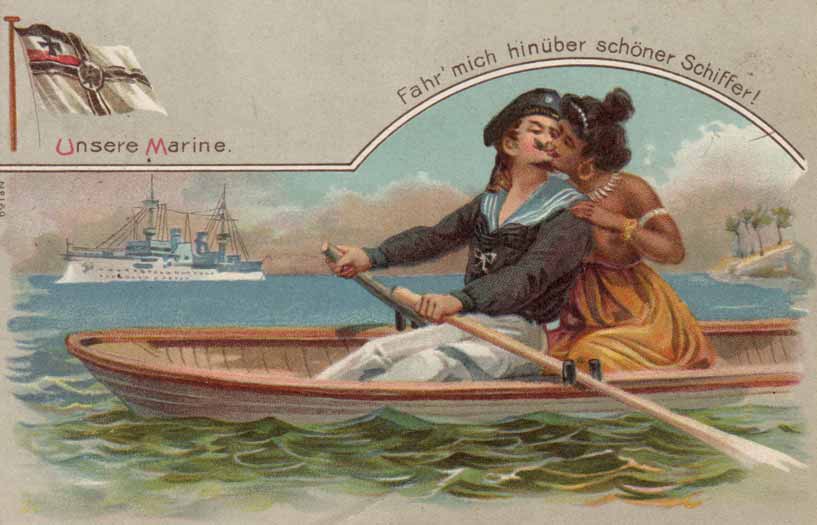
German postcard saying: Our Navy, row me to the other side, handsome shipper!
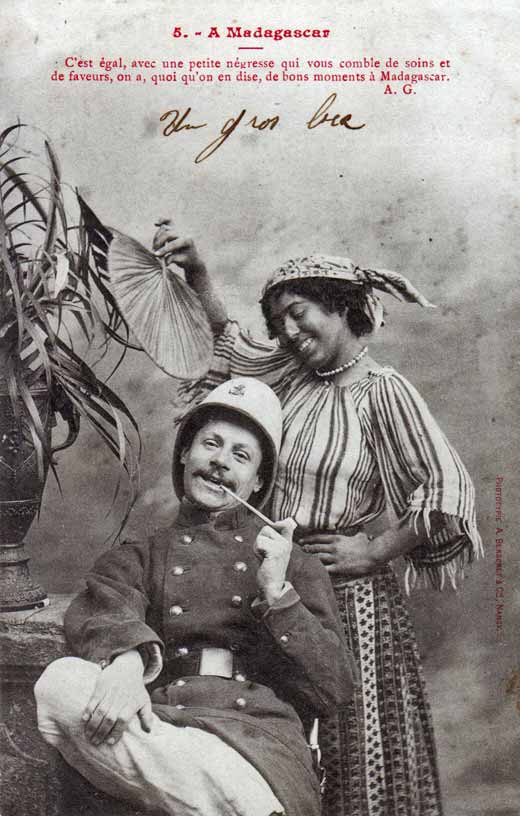

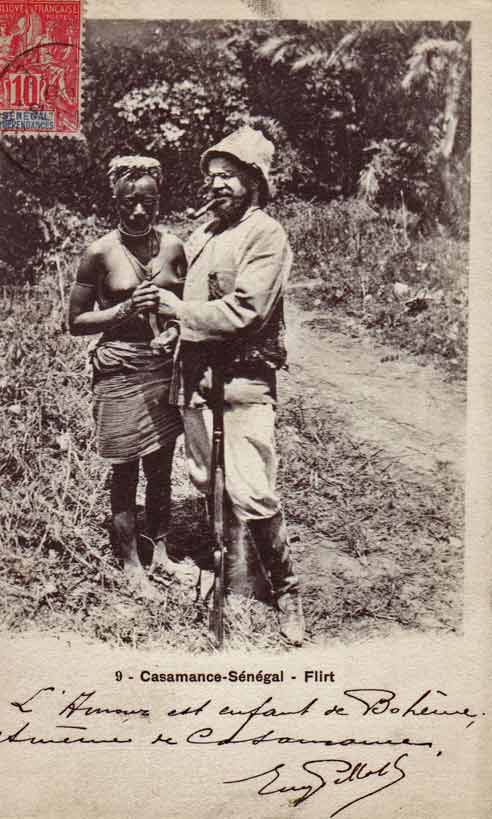
This French postcard reads: “It’s all the same, with a little negress taking care of your needs and showing you favor, it doesn’t matter what people say, these are good times in Madagaskar
turk-24.jpg.jpg


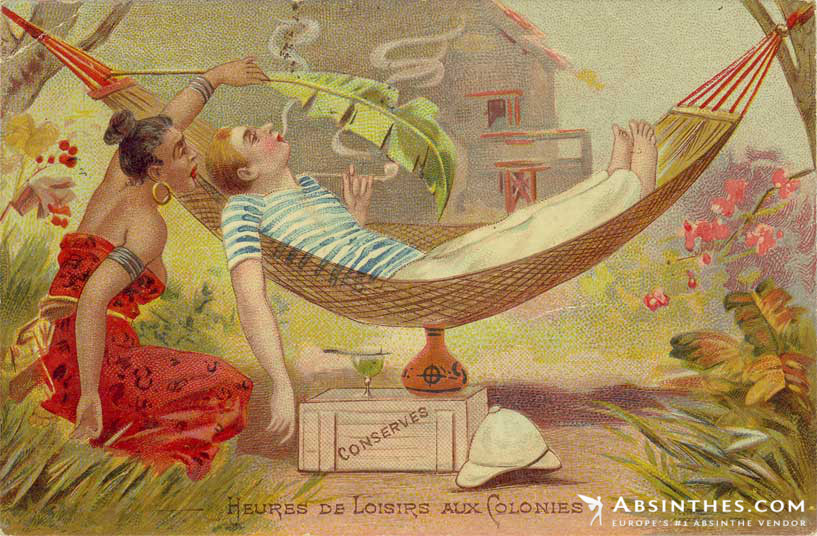
Heures-de-Loisirs-watermarked-for-web.jpg

Leisurely hours in the Colonies

KGrHqJiwE8MUmbkUBPMZeHN1kw-60_57-930x619.jpg

Happy Easter from the German colonies
 

cole phelps

Superstar
Joined
Nov 11, 2013
Messages
6,446
Reputation
5,141
Daps
28,797
turk-20.jpg.jpg

German card depicts an army officer conversing with three darker-skinned women in a scene reminiscent of the Balkans. The smiling women, two of whom are barefoot, are flirting with the officer over a smoke. The translated caption, In firing position, usually referring to a military maneuver, here likely indicates the lighting up of cigarettes and passion

turk-22.jpg.jpg


turk-25.jpg.jpg

American postcards depict the seductive dark skinned woman in more ambiguous circumstances. On the first, a uniformed soldier guarding a jail is being coquettishly approached by a barefoot native black woman. The guard shows surprise on his face, while from behind bars in the background, a black man looks on with wide eyes and mouth agape. One interpretation might have the woman trying to entice the guard with her charms as a means to attain the release of her imprisoned male friend. Another interpretation might have the prisoner, surprised and angered, witnessing his female friend trying to form a liaison with his white jailor. The caption is Dryden’s None but the Brave Deserves the Fair.

turk-26.jpg.jpg

On the second card, a bare-breasted native woman stands coquettishly flirting with a sentry. The soldier is distracted and somewhat embarrassed as he stands with rifle over his shoulder. The caption reads: Philippine Islands - Filipino Belle Flirting with Sentry. In this instance, fantasy and historical reality could not be further apart. The American incursion into the Philippines resulted in the needless massacre of countless civilians as entire villages were put to the torch and their inhabitants shot for sport. As Americans were highly ignorant of the country’s peoples and cultures, the word “******s” was applied to Filipinos and images in the press frequently depicted them as black African in features. In this context, cards such as this one served to reinforce the myth that America’s imperial goal was to bring civilization to the Filipino when news of torture and mass killings was still little known.

turk-30.jpg.jpg
turk-31.jpg.jpg

On the first, postmarked 1919, a black prostitute is accosting a somewhat hesitant solider. The caption reads: The Ten Commandments of a Soldier. Love’s Pleasure Does Not Come Solely From White Whores.

A second card shows a black prostitute inside a brothel inviting a soldier to her room as he claims he only loves dark-skinned women. A white prostitute, perhaps jealous, whispers a warning to him: “You know, sometimes she loses her color!”

Regarding the theme of prostitution on early postcards, it is worth noting that European and American views on the practice are reflected in the paucity of cards from the United States treating the issue and their ubiquity in Europe, especially in France. Generally speaking, Europeans were more accepting of prostitution and worked on ways to regulate it, while Americans were more prone, especially in the Progressive Era (1890-1920), to eradicate it. Furthermore, a puritan ethic in America and strict censorship inhibited its treatment on the postcard as a subject for humor or as a variant of legitimate sexual expression.

Another major difference regards the attitude and experience of white American men with darker-skinned women. In the United States, black women might be regarded in the popular imagination as promiscuous, but at the same time they were often seen as being repulsive due to their skin color. In France, by contrast, black women were far more apt to be appreciated for their beauty, and indeed, after the First World War, they were exoticized and eroticized as embodiments of primal ways of being, from which Europeans had to their detriment strayed.


turk-32.jpg.jpg


American card, encouraging the buying of war stamps and bonds on the verso, and titled Embarcation Dreams, a soldier dreams of the exotic females he might encounter overseas. The first two visions show a veiled blond woman with large breasts against a Middle Eastern or North African background and two Hawaiian dancers in grass skirts, also light-skinned. Then, suddenly, the dreamer is rudely awakened by his third dream - turned nightmare; a black African woman appears with nose ring and a bone earring.

Demonizing darker-skinned men and eroticizing their women into sexually seductive objects served Europeans well during the early postcard era. Though not the only means of portraying “the Other,” it was instrumental certainly in producing and reinforcing ugly stereotypes used to justified war and colonial exploits, while titillating the fantasies of viewers rooted in more sexually repressed cultures.
 
Top