

It won't be too long before the machines totally take over.

Markets
Wall Street Staffing Falls Again
Report finds head count of bankers and traders down 4% last year

The study on jobs at the biggest banks drew on data from Goldman Sachs and others. Above, Goldman’s headquarters in New York. Photo: Bloomberg News
By Justin Baer And Daniel Huang
Updated Feb. 19, 2015 7:25 p.m. ET
3 COMMENTS
Squeezed by new rules and tough markets, Wall Street is taking the ax to its workforce.
The number of investment bankers, traders, salespeople and research analysts at the world’s largest banks has fallen 20% globally since its recent peak in 2010, a report by Coalition Ltd., a London research firm, shows.
The latest data come after the firms, 10 of the world’s largest, trimmed 4%, or 2,100 employees, in 2014 from a year earlier amid a challenging trading environment on fixed-income desks.
The declines show that a trend on Wall Street is gaining momentum. The biggest banks are making do with fewer numbers on the front lines—or those who deal directly with clients and bring in revenue. New rules on capital and risk taking have crimped profit, forcing banks into tough decisions about businesses to exit from and veteran moneymakers to turn loose.
 ENLARGE
Still, some areas of the financial-services sector are growing. Hiring remains brisk among so-called back-office functions that don’t generate revenue, from technology and cybersecurity to legal and compliance divisions that are dealing with new postcrisis rules and enforcement cases.
J.P. Morgan Chase & Co. has hired 13,000 employees from 2012 through 2014 to beef up controls in areas ranging from compliance to legal to risk. Citigroup Inc. has hired about 10,000 people in regulatory and compliance-related roles, even though its overall employment number has fallen about 20,000 over the past two years, according to recent remarks by Chief Executive Michael Corbat .
Among bankers and traders, however, staffing has been falling for four consecutive years, Coalition said. The big banks face a crossroads on their staffing. Cutting more jobs may begin to limit their ability to generate revenue, said George Kuznetsov, head of research and analytics at Coalition. “There’s a certain amount of head count you can cut further, but if you start doing that, you start impacting what you can do,” he said.
The research firm noted that there were some 51,600 “front-office producers” working for the 10 banks at the end of 2014, down 12,800 from the 64,400 in 2010 after many big banks such as Morgan Stanley and others staffed up following a busy period in bond trading.
“Postcrisis, banks started to realize that keeping up with Joneses just for the sake of it wasn’t necessarily the smartest thing to do,” said Joseph Leung, managing partner at Aubreck Leung LP, a London-based Wall Street recruiting firm. “We saw banks pulling out of businesses altogether, retreating from regions or having watered down versions of what they previously had.”
Many of last year’s cuts came as banks decided to retreat from some businesses, many of them in fixed-income, currencies and commodities, or FICC, divisions, where head count dropped 9%. This past year’s data drew from head count estimates at Bank of America Corp. , Barclays PLC, BNP Paribas , Citigroup, Credit Suisse Group AG , Deutsche Bank AG , Goldman Sachs Group Inc., J.P. Morgan, Morgan Stanley and UBS AG.
Wall Street is notorious for overhiring in good times and reversing course when business weakens. “There’s a boom-and-bust cycle, and they have always operated that way,” said Charles Geisst, a finance professor at Manhattan College who has written on Wall Street history.
But some say these declines are different, coming as bank executives deal with a long slump in some of their biggest businesses, including FICC trading. The Coalition report shows the banks’ FICC trading revenue fell for a second-straight year, dropping 7% in 2014 to $69.4 billion. That market totaled $141.6 billion in 2009.
At one point, most of the big banks sought to compete in each and every market and in every corner of the world. The new rules have forced many banks into picking their spots.
“The vast majority [of the head count reductions] are quite permanent,” Mr. Kuznetsov said. “The ambitions are very different now. Most banks don’t have the ambition to compete across every product and every region. As a result, you see head count significantly lower.”
The cuts represent banks’ effort to eke out profits in an environment where that has become more difficult because of regulatory crackdowns on risky assets and heavy borrowing. The pay of investment bankers and traders is a key lever for banks’ cost controls, since such employees often make $1 million a year or more, far in excess of the amount an average bank employee makes.
The report didn’t factor in employees who work in back-office or support functions. It also doesn’t include wealth-management businesses, which have thrived amid the stock-market rebound and baby boomers’ need for financial advice.
Firms also are keeping a close eye on the compensation of people who remain at the firm. At Goldman, for example, the average employee received compensation of about $373,000, down from $430,000 in 2010.
Moves made by Wall Street’s giants tend to ripple through New York’s employment landscape. Data compiled by the New York Department of Labor show that employment in New York City’s “investment banking and securities dealing” sector has fallen significantly since before the financial crisis, recording a 20% drop between 2007 and 2014. This has muted the growth of the broader financial-services sector in the last few years, while total private employment in the city has increased more than 8% since 2007, buoyed by hiring in sectors like consulting and food and drinks.
Even if trading markets heat up, experts see subdued hiring. “The Street is beginning to look at its costs and run itself much more like an industrial company,” said Brad Hintz, an ex-Wall Street analyst who is now an adjunct finance professor at New York University. “Will these firms be run as tightly as General Electric? Of course not. It is Wall Street,” he said. “But I don’t see these management teams losing control of their cost base.”
Write to Justin Baer at justin.baer@wsj.com and Daniel Huang at daniel.huang3@wsj.com
There are 3 comments.

jeff wagner 19 minutes ago
Wasn't there just an article on the rush to hire new undergrads at up to $300,000. doesn't seem like much rush to save.

RODGER POTOCKI 1 hour ago
Private enterprise makes real cuts. Government squeals when it is asked to cut the rate of growth as it increases spending by 8% in the face of an $18 trillion deficit. Oh, well it's only taxpayer money.

Dr Kenneth Noisewater 11 hours ago
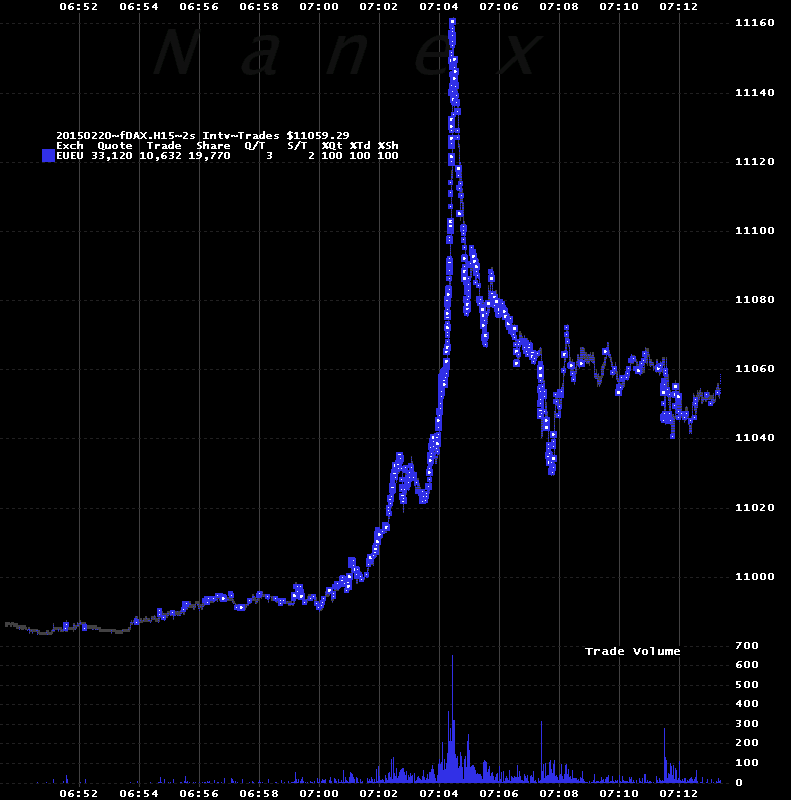
Who needs to pay a Wall Street trader 120,000 a year when you can just pipe into the HFT system and make billions.
http://www.wsj.com/articles/wall-street-staffing-falls-for-fourth-consecutive-year-1424366858
Markets
Wall Street Staffing Falls Again
Report finds head count of bankers and traders down 4% last year
The study on jobs at the biggest banks drew on data from Goldman Sachs and others. Above, Goldman’s headquarters in New York. Photo: Bloomberg News
By Justin Baer And Daniel Huang
Updated Feb. 19, 2015 7:25 p.m. ET
3 COMMENTS
Squeezed by new rules and tough markets, Wall Street is taking the ax to its workforce.
The number of investment bankers, traders, salespeople and research analysts at the world’s largest banks has fallen 20% globally since its recent peak in 2010, a report by Coalition Ltd., a London research firm, shows.
The latest data come after the firms, 10 of the world’s largest, trimmed 4%, or 2,100 employees, in 2014 from a year earlier amid a challenging trading environment on fixed-income desks.
The declines show that a trend on Wall Street is gaining momentum. The biggest banks are making do with fewer numbers on the front lines—or those who deal directly with clients and bring in revenue. New rules on capital and risk taking have crimped profit, forcing banks into tough decisions about businesses to exit from and veteran moneymakers to turn loose.
Still, some areas of the financial-services sector are growing. Hiring remains brisk among so-called back-office functions that don’t generate revenue, from technology and cybersecurity to legal and compliance divisions that are dealing with new postcrisis rules and enforcement cases.
J.P. Morgan Chase & Co. has hired 13,000 employees from 2012 through 2014 to beef up controls in areas ranging from compliance to legal to risk. Citigroup Inc. has hired about 10,000 people in regulatory and compliance-related roles, even though its overall employment number has fallen about 20,000 over the past two years, according to recent remarks by Chief Executive Michael Corbat .
Among bankers and traders, however, staffing has been falling for four consecutive years, Coalition said. The big banks face a crossroads on their staffing. Cutting more jobs may begin to limit their ability to generate revenue, said George Kuznetsov, head of research and analytics at Coalition. “There’s a certain amount of head count you can cut further, but if you start doing that, you start impacting what you can do,” he said.
The research firm noted that there were some 51,600 “front-office producers” working for the 10 banks at the end of 2014, down 12,800 from the 64,400 in 2010 after many big banks such as Morgan Stanley and others staffed up following a busy period in bond trading.
“Postcrisis, banks started to realize that keeping up with Joneses just for the sake of it wasn’t necessarily the smartest thing to do,” said Joseph Leung, managing partner at Aubreck Leung LP, a London-based Wall Street recruiting firm. “We saw banks pulling out of businesses altogether, retreating from regions or having watered down versions of what they previously had.”
Many of last year’s cuts came as banks decided to retreat from some businesses, many of them in fixed-income, currencies and commodities, or FICC, divisions, where head count dropped 9%. This past year’s data drew from head count estimates at Bank of America Corp. , Barclays PLC, BNP Paribas , Citigroup, Credit Suisse Group AG , Deutsche Bank AG , Goldman Sachs Group Inc., J.P. Morgan, Morgan Stanley and UBS AG.
Wall Street is notorious for overhiring in good times and reversing course when business weakens. “There’s a boom-and-bust cycle, and they have always operated that way,” said Charles Geisst, a finance professor at Manhattan College who has written on Wall Street history.
But some say these declines are different, coming as bank executives deal with a long slump in some of their biggest businesses, including FICC trading. The Coalition report shows the banks’ FICC trading revenue fell for a second-straight year, dropping 7% in 2014 to $69.4 billion. That market totaled $141.6 billion in 2009.
At one point, most of the big banks sought to compete in each and every market and in every corner of the world. The new rules have forced many banks into picking their spots.
“The vast majority [of the head count reductions] are quite permanent,” Mr. Kuznetsov said. “The ambitions are very different now. Most banks don’t have the ambition to compete across every product and every region. As a result, you see head count significantly lower.”
The cuts represent banks’ effort to eke out profits in an environment where that has become more difficult because of regulatory crackdowns on risky assets and heavy borrowing. The pay of investment bankers and traders is a key lever for banks’ cost controls, since such employees often make $1 million a year or more, far in excess of the amount an average bank employee makes.
The report didn’t factor in employees who work in back-office or support functions. It also doesn’t include wealth-management businesses, which have thrived amid the stock-market rebound and baby boomers’ need for financial advice.
Firms also are keeping a close eye on the compensation of people who remain at the firm. At Goldman, for example, the average employee received compensation of about $373,000, down from $430,000 in 2010.
Moves made by Wall Street’s giants tend to ripple through New York’s employment landscape. Data compiled by the New York Department of Labor show that employment in New York City’s “investment banking and securities dealing” sector has fallen significantly since before the financial crisis, recording a 20% drop between 2007 and 2014. This has muted the growth of the broader financial-services sector in the last few years, while total private employment in the city has increased more than 8% since 2007, buoyed by hiring in sectors like consulting and food and drinks.
Even if trading markets heat up, experts see subdued hiring. “The Street is beginning to look at its costs and run itself much more like an industrial company,” said Brad Hintz, an ex-Wall Street analyst who is now an adjunct finance professor at New York University. “Will these firms be run as tightly as General Electric? Of course not. It is Wall Street,” he said. “But I don’t see these management teams losing control of their cost base.”
Write to Justin Baer at justin.baer@wsj.com and Daniel Huang at daniel.huang3@wsj.com
There are 3 comments.
jeff wagner 19 minutes ago
Wasn't there just an article on the rush to hire new undergrads at up to $300,000. doesn't seem like much rush to save.
RODGER POTOCKI 1 hour ago
Private enterprise makes real cuts. Government squeals when it is asked to cut the rate of growth as it increases spending by 8% in the face of an $18 trillion deficit. Oh, well it's only taxpayer money.
Dr Kenneth Noisewater 11 hours ago
Who needs to pay a Wall Street trader 120,000 a year when you can just pipe into the HFT system and make billions.
http://www.wsj.com/articles/wall-street-staffing-falls-for-fourth-consecutive-year-1424366858






 less scumbags


