want to feel that we might not be alone, just zoom into the sharpest ever view of Andromeda

Hawaiian Punch

umop-apisdn
Supporter
Joined
Apr 30, 2012
Messages
19,027
Reputation
6,959
Daps
83,672
Reppin
The I in Team
:troll:

RFNAxxD.jpg


:ufdup:

Then there's that :jaywhoops:

 

tmonster

Superstar
Joined
Nov 26, 2013
Messages
17,900
Reputation
3,205
Daps
31,792
Then there's that :jaywhoops:
yeah the helix on the bench was invisible
but
1. the raised pattern across the slots depends on hydrophilic/london force interactions between the snowflakes otherwise the whole thing is flat like the bench

2. if this example does not work look at fractals in non living systems
WfnnrRe.png


and things like this
d719P2I.gif
 

DoubleClutch

Superstar
Joined
May 8, 2012
Messages
17,803
Reputation
-2,323
Daps
31,422
Reppin
NULL
well it shows that in a quantized paradigm it can take a very simple combination (curved slots in bench, wind, gravity and snow) of random unrelated events to manifest something that looks completely designed

If I removed the information surrounding of how this came about many would immediately think it was purposefully designed by sentience

pRBgVaj.png


memory begets new memory in an heterogeneous energetic world
it's the same story regarding the formation of elements after the big bang and of solar/galactic systems and then of life itself.


:ohhh:

:beli:
:camby:
 

Hawaiian Punch

umop-apisdn
Supporter
Joined
Apr 30, 2012
Messages
19,027
Reputation
6,959
Daps
83,672
Reppin
The I in Team
At this moment it truly occurred to me that we live in a multiverse. Nothing in our universe is found as a singular object. Whether we are talking about quarks, or atoms, organisms, planets, stars and galaxies, nothing is found as a singular entity.

How can a limit be set on how far out we can expand, when we have difficulty setting limits on how small things can be? Not only do we exist in a multiverse, but these other universes exist in unlimited sizes, shapes and components. For all we know we exist in an average universe, similar to how the earth is an averaged sized planet, the Sun is an average sized star and the Milky Way is just average :manny:
 

tmonster

Superstar
Joined
Nov 26, 2013
Messages
17,900
Reputation
3,205
Daps
31,792
At this moment it truly occurred to me that we live in a multiverse. Nothing in our universe is found as a singular object. Whether we are talking about quarks, or atoms, organisms, planets, stars and galaxies, nothing is found as a singular entity.

How can a limit be set on how far out we can expand, when we have difficulty setting limits on how small things can be? Not only do we exist in a multiverse, but these other universes exist in unlimited sizes, shapes and components. For all we know we exist in an average universe, similar to how the earth is an averaged sized planet, the Sun is an average sized star and the Milky Way is just average :manny:
on what basis (hypothetical or otherwise) would one objectively separate one universe from another?
 

Hawaiian Punch

umop-apisdn
Supporter
Joined
Apr 30, 2012
Messages
19,027
Reputation
6,959
Daps
83,672
Reppin
The I in Team
on what basis (hypothetical or otherwise) would one objectively separate one universe from another?

Any answer I give would be speculative, but it would first require seeing beyond the foam of cosmic microwave background. Also it would have to be seen from a scale larger than our imagination would allow. Our universe seen from the largest scale would be a collection of galaxies in a enclosed shell. What that shell is I do not know. Beyond that would be space, then another enclosed shell of a universe. The composition of that other universe would obviously vary. Just like our DNA varies, just like there are variations in everything in this universe. Could it be other galaxies? Possibly. Or maybe exotic matter. I would imagine each universe would have similar defining characteristics, similar to how stars are all composed of hydrogen, regardless of size. Then again planets come in so many sizes, shapes and compositions it is difficult to say what a typical planet is composed of :manny:
 

tmonster

Superstar
Joined
Nov 26, 2013
Messages
17,900
Reputation
3,205
Daps
31,792
Our universe seen from the largest scale would be a collection of galaxies in a enclosed shell. What that shell is I do not know. Beyond that would be space, then another enclosed shell of a universe.
would they all be expanding? if so than what would prevent them from merging beyond the point of distinction?
The composition of that other universe would obviously vary. Just like our DNA varies, just like there are variations in everything in this universe.
why would they vary? meaning if there is variety here and and variety there why would we not find the same species of material in either universe, just as a consequence of similar forces and similar starting materials interacting over time?
 

Hawaiian Punch

umop-apisdn
Supporter
Joined
Apr 30, 2012
Messages
19,027
Reputation
6,959
Daps
83,672
Reppin
The I in Team
would they all be expanding? if so than what would prevent them from merging beyond the point of distinction?

Energy fields. Again you do have theories that this universe was formed from the collision of two other universes.

why would they vary? meaning if there is variety here and and variety there why would we not find the same species of material in either universe, just as a consequence of similar forces and similar starting materials interacting over time?

They would vary because it's possible that the fundamental forces would not be same. Maybe there is more of one force, or the absence of another.
 

tmonster

Superstar
Joined
Nov 26, 2013
Messages
17,900
Reputation
3,205
Daps
31,792
Energy fields. Again you do have theories that this universe was formed from the collision of two other universes.

Are they expanding?
and which field? EM? gravity?

They would vary because it's possible that the fundamental forces would not be same. Maybe there is more of one force, or the absence of another.
why are the fundamental forces not the same? is this something you imagine or do you have some objective basis for it?

I find myself moving in the opposite theoretical direction from you
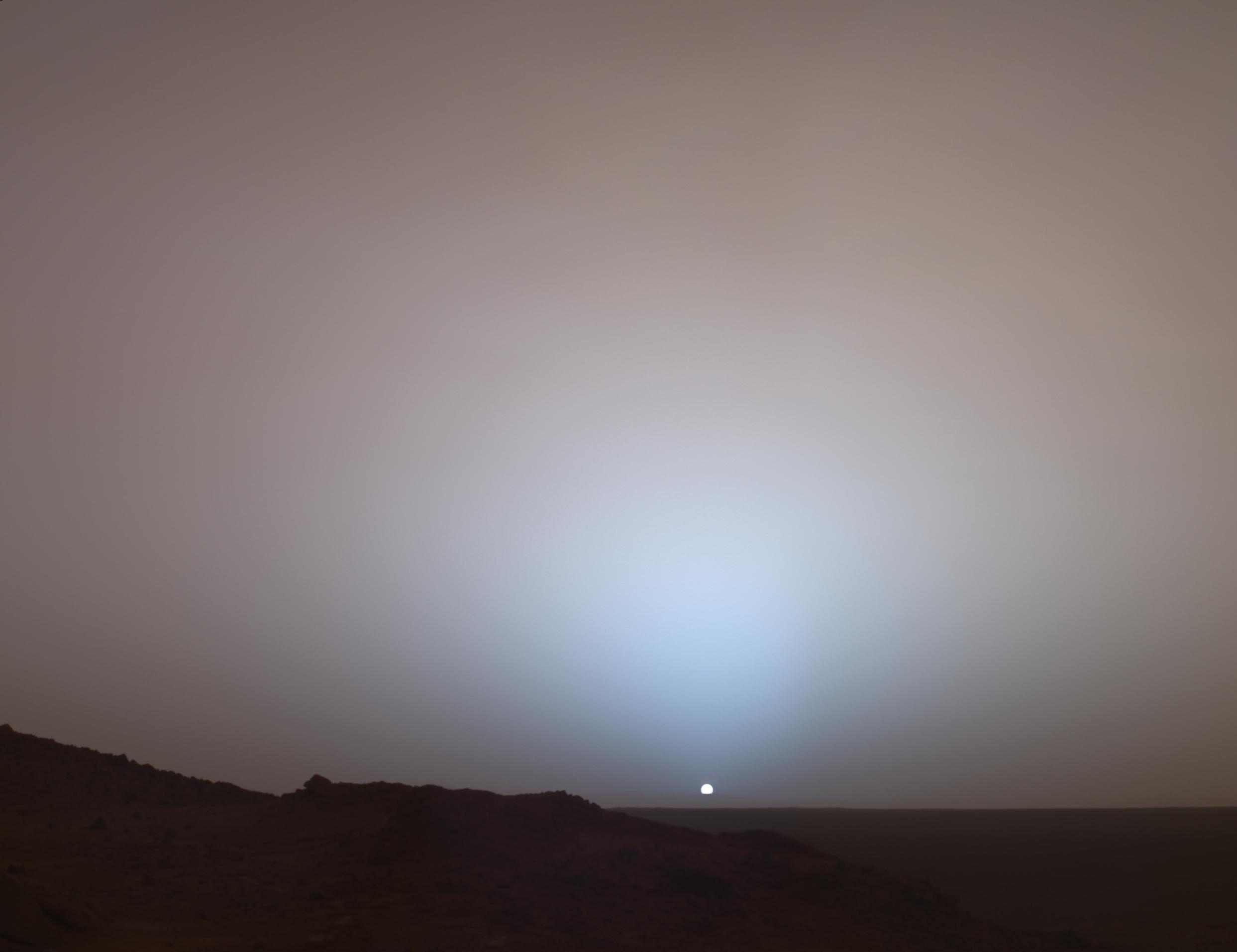
I think the Universe is pervasively mundane with variety arising from the forces we have discovered and scientifically speculated interacting with matter
I have felt this way ever since looking at the Martian sunset,
martiansunset_spirit_2486.jpg

it's all the same stuff potentially, just all really far away and varying based on permutational "climate" differences, most fundamentally isotope speciation. The optics of cosmological diversity is certainly awesome but seemingly predictable and explainable, safe for the continued expansion (sans the required mass) for which the scientific community has proposed the current place holders, of dark matter and energy. The uniformity of behavior of fundamental forces across spacetime is the cog upon which all of our astronomical observations and theories about space are made; in a universe where they are truly different, it's hard to even declare what it is one is even looking at.
 
Last edited:

tmonster

Superstar
Joined
Nov 26, 2013
Messages
17,900
Reputation
3,205
Daps
31,792
yeah the helix on the bench was invisible
but
1. the raised pattern across the slots depends on hydrophilic/london force interactions between the snowflakes otherwise the whole thing is flat like the bench

2. if this example does not work look at fractals in non living systems
WfnnrRe.png


and things like this
d719P2I.gif

further example

tumblr_mfaj6opnMY1rmhq8co1_1280.jpg


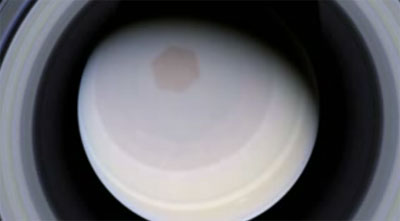
Saturn's hexagon: An amazing phenomenon
Date:
April 8, 2014
Source:
University of the Basque Country
Summary:
An unusual structure with a hexagonal shape surrounding Saturn's north pole was spotted on the planet for the first time thirty years ago. Nothing similar with such a regular geometry had ever been seen on any planet in the solar system. Astronomers have now been able to study and measure the phenomenon and, among other achievements, establish its rotation period. What is more, this period could be the same as that of the planet itself. Saturn is the only planet in the solar system whose rotation time remains unknown.
Share This
140408074827-large.jpg

This colorful view from NASA's Cassini mission is the highest-resolution view of the unique six-sided jet stream at Saturn's north pole known as "the hexagon."
Credit: NASA/JPL-Caltech/SSI/Hampton
[Click to enlarge image]
An unusual structure with a hexagonal shape surrounding Saturn's north pole was spotted on the planet for the first time thirty years ago. Nothing similar with such a regular geometry had ever been seen on any planet in the Solar System. The Planetary Sciences Group has now been able to study and measure the phenomenon and, among other achievements, establish its rotation period. What is more, this period could be the same as that of the planet itself. Saturn is the only planet in the Solar System whose rotation time remains unknown.

Related Articles
In 1980 and 1981 NASA's Voyager 1 and 2 space probes passed for the first time over the planet Saturn, located 1,500 million km from the Sun. Among their numerous discoveries they observed a strange, hexagon-shaped structure in the planet's uppermost clouds surrounding its north pole. The hexagon remained virtually static, without moving, vis-à-vis the planet's overall rotation that was not accurately known. What is more, the images captured by the Voyager probes found that the clouds were moving rapidly inside the hexagon in an enclosed jet stream and were being dragged by winds travelling at over 400 km/h.

Thirty years later -- the equivalent of one Saturn year, in other words, the time the planet takes to go all the way around the Sun -- and over more than six consecutive years, researchers in the UPV/EHU's Planetary Sciences Group, in collaboration with astronomers from various countries, were able to observe Saturn's northern polar region in detail once again and confirmed that the hexagon continued in place. After measuring the positions of the hexagon vertices with great precision, they determined that its movement remains extremely stable, and on the basis of the cloud movements, that the jet stream inside it remains unchanged. For this study the researchers used images taken from Earth between 2008 and 2014; they used, among others, the astronomical cameras PlanetCam (developed by the Planetary Sciences Group itself) and Astralux, fitted to the telescopes of the Calar Alto Observatory in Almería (Spain); in addition, they used the very high resolution images obtained by t he Cassini spacecraft, which has been orbiting Saturn since 2004.

Due to the tilt of approximately 27º of the planet Saturn, its polar atmosphere undergoes intense seasonable variations with long polar nights lasting over seven years, followed by a long period of 23 years of variable illumination. However, the seasonal variations do not affect the hexagon and its jet stream at all, so both are part of an extensive wave, deeply rooted in Saturn's atmosphere. The UPV/EHU researchers suggest that the hexagon and its stream are the manifestation of a "Rossby wave" similar to those that form in the mid-latitudes of Earth. On our planet the jet stream meanders from west to east and brings, associated with it, the system of areas of low pressure and anticyclones which we have been seeing regularly on weather maps.

On Saturn, a hydrogen gas planet, ten times the size of Earth, cold in its upper clouds, without a solid surface, and with an atmosphere as deep as that of an ocean, "the hexagonal wavy motion of the jet stream is expected to be propagated vertically and reveal to us aspects of the planet's hidden atmosphere," pointed out Agustín Sánchez-Lavega, Head of the Planetary Sciences research group. "The movement of the hexagon could therefore be linked to the depths of Saturn, and the rotation period of this structure, which, as we have been able to ascertain, is 10 hours, 39 minutes and 23 seconds, could be that of the planet itself," he added. Saturn is the only planet in the Solar System whose rotation period is not yet known.


saturns-hexagon.jpg
 

How Sway?

Great Value Man
Supporter
Joined
Nov 10, 2012
Messages
25,229
Reputation
4,241
Daps
82,625
Reppin
NULL
I've always said, if we didn't have insane light pollution in the cities and could actually see the milky way and other celestial bodies that our behavior would be altered. If you saw this EVERY NIGHT

milky-way-over-texas-larry-landolfi.jpg


you can't help but be humbled and awestruck.
photoshopped :osnap:

it must be :lupe::ohhh:
 
Last edited:
Top