African + diasporic language studies

get these nets

Veteran
Joined
Jul 8, 2017
Messages
58,962
Reputation
16,337
Daps
214,898
Reppin
Above the fray.


Nigeria: Federal Government Scraps Mother Tongue As Language of Instruction​


12 November 2025

The Federal Government has cancelled the national policy mandating the use of indigenous languages as the medium of instruction in schools, declaring English as the only language of instruction.
Minister of Education, Dr. Tunji Alausa, stated this at the 2025 Language in Education International Conference, organised by the British Council in Abuja on Wednesday.
The policy aims to promote indigenous languages, recognise their equal status, and improve early childhood learning outcomes, while English remains the official language used in later education and formal settings.
Speaking at the conference, Alausa announced that English is now the language of instruction in Nigerian schools from primary to tertiary levels.

He said the Nigerian children had been performing abysmally in public exams as a result of being taught in their mother tongue.

The minister stated that the decision to cancel the policy was based on extensive data analysis and evidence showing that the use of the mother tongue as the primary medium of instruction had negatively impacted learning outcomes in several parts of the country.


"We have seen a mass failure rate in WAEC, NECO, and JAMB in certain geo-political zones of the country, and those are the ones that adopted this mother tongue in an over-subscribed manner.
"This is about evidence-based governance. English now stands as the medium of instruction from the pre-primary, primary, junior secondary, senior secondary and to the tertiary education level," Alausa said.
"Using the mother tongue language in Nigeria for the past 15 years has literally destroyed education in certain regions. We have to talk about evidence, not emotions," he said.
According to him, data gathered from schools across the country revealed that students taught primarily in indigenous languages recorded higher failure rates in national examinations and struggled with basic English comprehension.

"The national policy on language has been cancelled. English now stands as the medium of instruction across all levels of education," he said.
The minister urged stakeholders with differing views to present verifiable data to support their positions, adding that the government remained open to evidence-based dialogue that would strengthen the education sector.
 
  • Sad
Reactions: QBN

get these nets

Veteran
Joined
Jul 8, 2017
Messages
58,962
Reputation
16,337
Daps
214,898
Reppin
Above the fray.


12/17/25

Writer of Creole national anthem reflects on its origins, significance​


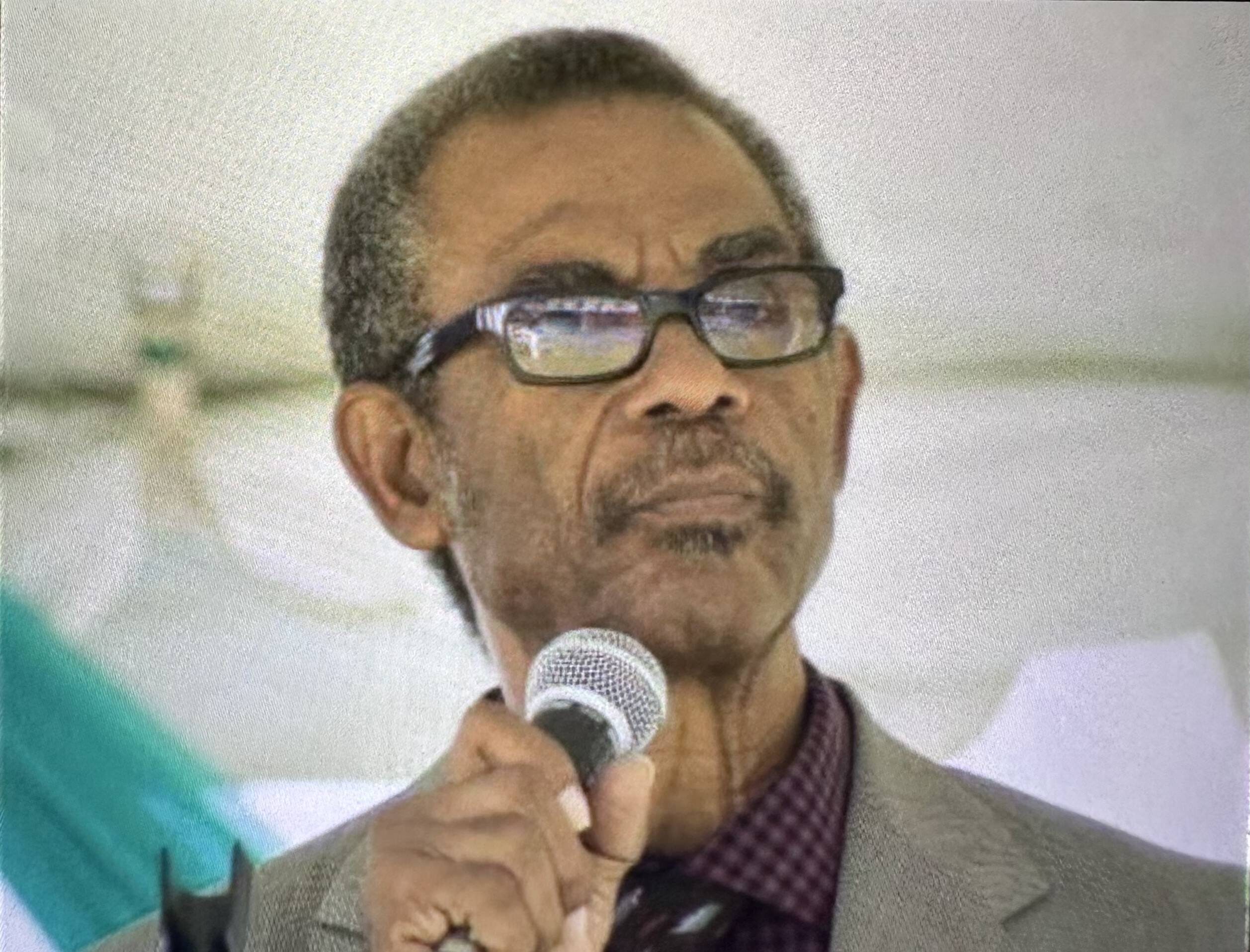
Concerned that large numbers of Saint Lucians could not fully grasp the English lyrics of the national anthem, Wulstan Charles set out in 2009 to produce an official Creole translation.

At the time, Charles was a Seventh-day Adventist Church Minister, a role he still holds. Before entering ministry, he taught and later became principal of the Saint Lucia Seventh-Day Adventist (SDA) Academy.
Growing up in several communities across the island, Charles recalled the literacy experiences that first opened his eyes.
“I became sensitive to the needs of people who are not very literate,” he told St Lucia Times. “Somebody who is very conversant with their Kweyol and is fluent in it may not be able to write it but I would consider that person to be literate where the language is concerned.”
He remembered that many church members used to walk long distances in difficult weather just to have their lesson explained by someone who could understand Kweyol clearly.

In 2007, as his friend Ernest Ottley, alongside others, were establishing a radio station called Praize FM, Charles was invited to help identify what was missing from local radio offerings. This led to the creation of the bilingual programme Your Lesson for Today, which he still hosts.

“It is bilingual. It is done in Kweyol and it is in English,” he noted, expressing how it grew directly out of his passion for helping those who struggled to understand Kweyol.
That same concern led him to consider the national anthem itself and what it meant for national identity. Charles believed that too many Saint Lucians lacked a full understanding of the anthem’s meaning. “A significant percentage of the population should not be wondering what the national anthem really is,” he said. Providing a Kweyol translation, he felt, would “clarify meaning” and ensure that no citizen was left behind.
In 2016, he presented his translation to the Folk Research Centre (FRC), where he still serves on the Kweyol Literacy Committee. The FRC subsequently submitted the work to Cabinet, and the Government appointed a committee, chaired by former Governor General Dame Pearlette Louisy, to review and edit the translation. After its approval, it officially became the Kweyol national anthem of Saint Lucia.

Last weekend, the anthem was performed at the St Lucia Labour Party (SLP) “Thank You” rally and recently done by a school choir. When asked how he felt knowing people are performing the rendition, Charles described the moment as part of a wider national effort, noting that the Kweyol version is occasionally sung at different events. “The way I look at it, nation-building is a collective effort,” he said.

He added that every individual’s contribution matters, explaining, “Each person’s role is significant and collectively what we contribute makes all of the difference when we look at the big picture.”
Charles noted that writing in Kweyol is about embracing identity and purpose. “Sometimes when I write poetry in Kweyol, it’s the same thing. I know everybody cannot write poetry in the language but I thank God for blessing the capacity,” he said.
Whether through the anthem, poetry, or radio programme, he sees his work as part of an ongoing conversation about defining who Saint Lucians are as a people.
His translation, now sung proudly across the island, stands as a testament to that belief.


Top