Counter Racist Male
Retired poster and occasional lurker
I know a girl from Boston who has no known Southern roots in her family. Everything as far as the history she knows is Massachusetts, Rhode Island, New York State.
How common is that though?

I know a girl from Boston who has no known Southern roots in her family. Everything as far as the history she knows is Massachusetts, Rhode Island, New York State.

Most of black philly is southern mainly Va & NC


old thread but:
Yes. they exist in the North East but most are either the roots of various "Black Amerindian" tribes (Shinneck, Pequot, Lenape, Mohegans, etc..) or blended with ADOS from the South who have been migrating North since the 1700s, who also are foundations to the aforementioned tribes.
Can't be that many, though...

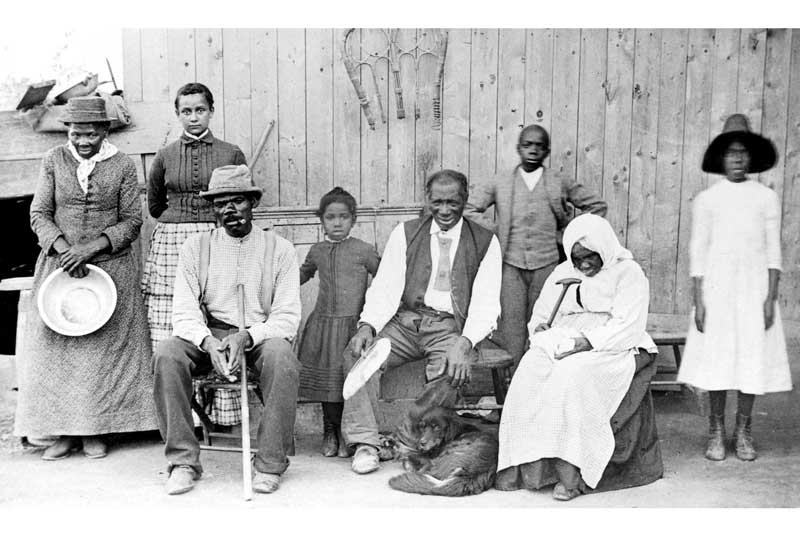
 hvmag.com


obviously in raw numbers it was never a comparison
.
.
but if you look in the right places, you'll find them
.
.
African American History: A Past Rooted in the Hudson Valley
Since the days of Henry Hudson, the presence of African culture in upstate New York has had a significant and lasting impact on the region.
they're often have links to these tribes
see ODB (also of southern ados stock but his Cuffee line is all Northern)


Yes. Slavery existed in the Northern States too. Massachusetts had America's first slave Statute in 1641. Slaves were also imported directly into New York City. Wall Street started as a slave market. So the answer is yes. There are Black Americans that have no roots in the South.I mean do you know any black Americans who has ancestors they have never set foot in the south? Because I don’t think I’ve ever met any.
Probably not. But I've read that Luther Vandross's family has no connection to the south they were brought over by Dutch settlers and remained in that area.Can't be that many, though...
Probably not. But I've read that Luther Vandross's family has no connection to the south they were brought over by Dutch settlers and remained in that area.
Actually I do. My wife traced my people to Massachusetts, immediately ran to Canada then my moms half went to Chicago, My fathers half settled in St Louis, then after they married they moved here to Houston and had me.


HGA announced that Peter D. Cook, AIA, NOMA, has joined the firm as design principal in the Washington, D.C. office. His design leadership, strategic planning and architectural expertise will enhance HGA’s growing East Coast presence.
Cook joins the firm with an outstanding portfolio of design leadership and award-winning projects throughout the United States—particularly in the D.C. area—encompassing museums, memorials, embassies, libraries, cultural and learning centers, and mixed-used corporate and neighborhood master planning. Among Cook’s high-profile projects are the Smithsonian Institution’s National Museum of African American History and Culture, Watha T. Daniel / Shaw Neighborhood Library, Embassy of South Africa and Saint Elizabeths East Gateway Pavilion.
That great-grand uncle was Julian F. Abele, one of the first and most prominent black architects in American history. Born in 1881, Abele excelled as an architect of whatever skin color: graduating from the University of Pennsylvania, studying at the École des Beaux-Arts, and then becoming chief designer of the renowned Philadelphia firm Horace Trumbauer. A Beaux Arts adherent and committed Francophile, Abele championed American revival architecture in a series of high-profile commissions that included the Free Library of Philadelphia, Harvard’s Widener Library, and the original campus of Duke University. But for the most part, he did so with Trumbauer’s imprimatur. “He was a shy and retiring person, he didn’t like being in front,” Cook says.


Specializing in criminal law, criminal procedure and evidence, Cook served for several years as an assistant U.S. attorney in Nevada and the District of Columbia. While a federal prosecutor and a member of the Organized Crime Drug Enforcement Task Force, he was responsible for the handling of an array of criminal matters, including felony narcotic, white-collar and various arrest-generated cases during the trial and appellate stages. He also served as a judicial clerk for Judge Philip M. Pro of the U.S. District Court for the District of Nevada.
Cook is the author or co-author of three books: Inside Adjudicative Criminal Procedure: What Matters and Why (Wolters Kluwer) (with A. Cook); Inside Investigative Criminal Procedure: What Matters and Why (Wolters Kluwer); and Trial Handbook for Georgia Lawyers (West) (with R. Carlson and M. Carlson). His articles and essays have been published (or are forthcoming) in the Brigham Young University Law Review, the Brooklyn Law Review, the Colorado Law Review, the Georgia Law Review, the Georgia Law Review Online, the Harvard Journal of Law and Public Policy, the Notre Dame Law Review (twice), the Notre Dame Law Review Online, the Wake Forest Law Review and the Yale Journal of International Law.

I want to see the 23andMe.
 unlike them pretendian Lumbee cats from the South, ODB's people actually show admixture. These people (his relatives) all have the Cuffee surname


