COVID-19 Pandemic (Coronavirus)

bnew

Veteran
Joined
Nov 1, 2015
Messages
69,493
Reputation
10,652
Daps
187,875
Some people were skeptical at various points of this story. Rightfully so in the early stages,before the were any cases or deaths in America. Everybody has had to walk back their doubtful comments about the scope of this pandemic.

People who were spouting straight nonsense about melanin making people immune to a novel coronavirus are fools. People who believed them were bigger fools.

riightly so?:mjtf:

we been knew since late January thousands were quickly dying in china and then in italy.
 

☑︎#VoteDemocrat

The Original
WOAT
Supporter
Joined
Dec 9, 2012
Messages
337,895
Reputation
-35,023
Daps
641,384
Reppin
The Deep State
Yes Trump, keep encouraging your minions to not heed the advice of social distancing . Good, good...

tenor.gif
 

loyola llothta

☭☭☭
Joined
Apr 17, 2014
Messages
35,064
Reputation
7,059
Daps
80,062
Reppin
BaBylon
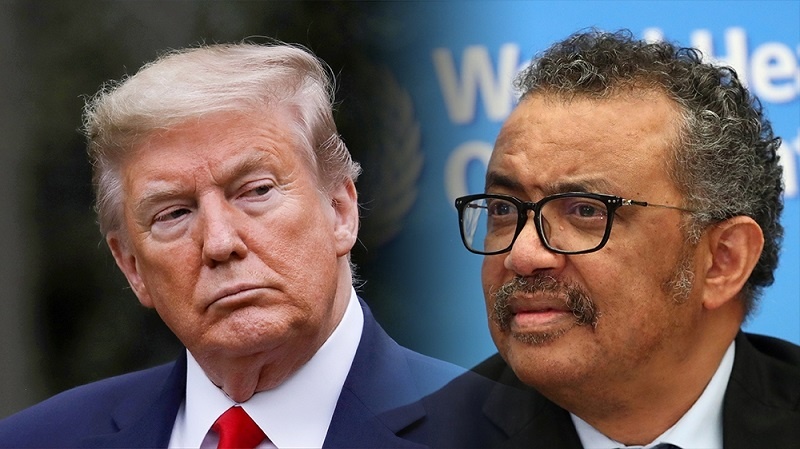
trump-WHO.jpg

17 April 2020

Cutting the Funding: The WHO, Trump and the Coronavirus Wars

The US president is in a warring mood. Having declared himself a president at war, a meaningless gesture given that the US is always, somewhere in the world, at war, finding necessary enemies in distraction was always going to be a priority. Donald Trump already had the “China virus” in his artillery, attaching nationality to pathogen. Now, and it took some time in coming by his standards, is the World Health Organization, a body which has, as its utopia, an idea of health as “a state of complete physical, mental and social well-being, and not merely the absence of disease or infirmity.”

The US tends to contribute a large slice of funding to the WHO – some $400 million a year and ten times, say, what China does. It has been foot dragging lately: $200 million is still to be paid for the last round. (As a point of interest, the Bill & Melinda Gates Foundation is the second largest donor, with a touch over $200 million based on 2018-9 figures.) In a flourish of indignation, Trump has decided to freeze the revenue stream. On Tuesday, he claimed that the WHO had “failed in its basic duty” in responding to COVID-19.

“I am directing my administration to halt funding while a review is conducted to assess the World Health Organization’s role in severely mismanaging and covering up the spread of the coronavirus.”

The White House has been eager to disgorge any material to press outlets keen to understand the nature of WHO villainy and corruption. Accusations read like mirror portraits, and the headline of one of the factsheets is hysterical: “Delaying world mobilization in the fight against COVID-19: Working with China to cover up the deadly spread of COVID-19, who hindered critical efforts that could have saved lives.”

The charge list on the White House fact sheet is the usual muddle of slung mud and mild accuracy: the role played by brave Taiwan; the WHO deference to “Chinese propaganda that covered up the virus’ spread and fatalities, praising Beijing for its false efforts and promoting the use of Chinese traditional medicine to treat the disease.”

Nor can we deny the obvious remark that the US was “not alone in its well-founded criticism. WHO has faced constant critique over its poor coordination, lack of transparency, and finances from multiple parties.” This would sound like a superb summary of the Trump administration, but the president lacks humour in such matters.

The organisation’s director-general Tedros Adhanom Ghebreyesus, who had previously praised Trump as showing “leadership” in this crisis (we are all entitled to slips), was regretful. The US had been “a long-standing and generous friend… and we hope it will continue to be so.”

The WHO is the convenient whipping boy of pandemic and epidemic; of premature assessment or over eager commitment. Uncertainty is its curse, leaving it vulnerable in such instances as the swine flu epidemic, when it was accused of being too quick off the mark in declaring it to be a pandemic; or too foot slow in declaring the West African Ebola outbreak a pressing health emergency. And forgotten in its current shade of demonization by Washington is the fact that the WHO, for decades, was belittled for being an auxiliary of US foreign policy. “Like other United Nations (UN) agencies,” comes a sombre assessment in the American Journal of Public Health in 2016, “the WHO quietly abandoned its dreams of a collaborative community of nations and instead began to come to terms with international political realities. The agency moved closer to US foreign policy and became partially captive to US resources and priorities.”

By no means should the WHO be seen as angelic. No international organisation is, marked as they tend to by the gravy train effect, the flabby end of upper management more interested in first class travel than fighting healthy problems. At the same time, it has also operated with one hand tied behind its back, reliant, as it were, on the initial drips and drabs coming from the source country where an infectious outbreak has taken place. Its chief has, it is true, shown an unsettling tendency to praise the Chinese effort, which has veered between harsh and muscular concealment to harsh and muscular quarantine. But it is worth casting an eye to the more workmanlike nature of the process of how the WHO formed a picture of what was happening.

China’s first smidgens of information on COVID-19 reached the WHO on December 31, describing it as “a pneumonia of an unknown cause”. On January 5, the organisation, based on what was provided by Chinese sources, stated that the material showed “no evidence of significant human-to-human transmission.” No causal agent had been as yet identified or confirmed, and the WHO admitted to having “limited information to determine the overall risk of this reported cluster of pneumonia of unknown etiology.” The advice given in that note now seem like the haunted warnings of premature assessment: no recommended specific measures for travellers; no application of travel or trade restrictions on China. Again, the caveat, weighty as ever, was always on what was in the hands of WHO functionaries, who, it should be said, are not entirely shock horrors in the epidemiology department.

In time, the picture became more muddled as information started to clot the canvas.


The Wuhan Health Commission refused to rule out the possibility of human-to-human transmission. The WHO, as January progressed, started drawing parallels, basing its assessments on other coronaviruses. What this chaotic swirl of information does not seem to show, as Trump alleges, is that Taiwan in its exchanges with WHO, went heavy on the idea of human-to-human transmission.

Then came Trump’s own glorious words of praise, lost in consciousness but retrievable in cyberspace.

“China has been working very hard to contain the Coronavirus,” he tweeted with boyish enthusiasm on January 25. “The United States greatly appreciates their efforts and transparency. It will work out well. In particular, on behalf of the American people, I want to thank President Xi!”

Not exactly hostile.

Trump’s change of heart revolves upon supposed tardiness in sending in that class of individuals he tends to despise: the experts.

“Had the WHO done its job to get medical experts into China to objectively assess the situation on the ground and to call out China’s lack of transparency, the outbreak could have been contained at its source with very little death.”

Lacking in this resentful assessment is the point that plagues all international bodies: their need to respect the sovereignty of member states.

The immediate consequences of such funding will have the effect, as has been threatened before, of driving the WHO to bankruptcy. The front organisation responsible for marshalling the medical side of combating disease and infection will be hobbled. Trump can at least have one historical comfort: in pulling US funding, he joins the defunct Soviet Union in refusing to pay membership fees for several years after it had “deactivated” its membership. Grievances with international governance, be it over health, security, even sport, never age.


Link:

Cutting the Funding: The WHO, Trump and the Coronavirus Wars - Global Research
 
Last edited:

spencerforhire

All Star
Joined
Jun 21, 2014
Messages
2,680
Reputation
-2,024
Daps
6,177
Yahoo is now a part of Verizon Media

Sunlight destroys virus quickly, new govt. tests find, but experts say pandemic could last through summer

Preliminary results from government lab experiments show that the coronavirus does not survive long in high temperatures and high humidity, and is quickly destroyed by sunlight, providing evidence from controlled tests of what scientists believed — but had not yet proved — to be true.

A briefing on the preliminary results, marked for official use only and obtained by Yahoo News, offers hope that summertime may offer conditions less hospitable for the virus, though experts caution it will by no means eliminate, or even necessarily decrease, new cases of COVID-19, the disease caused by the coronavirus. The results, however, do add an important piece of knowledge that the White House’s science advisers have been seeking as they scramble to respond to the spreading pandemic.

The study found that the risk of “transmission from surfaces outdoors is lower during daylight” and under higher temperature and humidity conditions. “Sunlight destroys the virus quickly,” reads the briefing.

While that may provide some good news about the outlook for outdoor activities, the Department of Homeland Security briefing on the results cautions that enclosed areas with low humidity, such as airplane cabins, “may require additional care to minimize risk of transmission.”

In a statement to Yahoo News, the DHS declined to answer questions about the findings and strongly cautioned against drawing any conclusions based on unpublished data.

“The department is dedicated to the fight against COVID-19, and the health and safety of the American people is its top priority. As policy, the department does not comment on allegedly leaked documents,” the DHS said in a statement. “It would be irresponsible to speculate, draw conclusions, or to inadvertently try to influence the public based upon a document that has not yet been peer-reviewed or subjected to the rigorous scientific validation approach.”

The results are contained in a briefing by the DHS science and technology directorate, which describes experiments conducted by the National Biodefense Analysis and Countermeasures Center, a lab created after the 9/11 terrorist attacks to address biological threats.

While the DHS describes the results as preliminary, they may eventually make their way into specific recommendations. “Outdoor daytime environments are lower risk for transmission,” the briefing states.

Simulated sunlight “rapidly killed the virus in aerosols,” the briefing says, while without that treatment, “no significant loss of virus was detected in 60 minutes.”

The tests were performed on viral particles suspended in saliva. They were done indoors in environments meant to mimic various weather conditions.

While the results of these tests have not been previously made public, Harvey Fineberg, head of the National Academies Standing Committee on Emerging Infectious Diseases and 21st Century Health Threats, broadly described plans to conduct the experiments in an April 7 letter to the White House.

In that letter, addressed to President Trump’s top science adviser Kelvin Droegemeier, Fineberg wrote that the DHS lab “is well suited for the kinds of studies they have planned, and the scope and relevance are noteworthy. In particular, they plan to create simulated infected body fluids, including saliva and lower respiratory secretions.”

Droegemeier’s office did not respond to a request for comment on whether it has received the latest results from the DHS. The National Academies also did not respond to a request for comment.

While the lab results are new, scientists for many weeks have predicted, based on available data on the disease’s spread, that warmer, wetter climates would be less hospitable to the spread of the coronavirus. An early analysis by scientists observed that the virus was spreading more slowly in countries with warmer climates.

“We are not saying that at higher temperatures, the virus will suddenly go away and everything would be fine and you are going out,” Qasim Bukhari, a computational scientist at MIT and a co-author of the analysis, told Yahoo News in an interview. “No, we are not saying it. We are just seeing that there is a temperature- and humidity-related dependency, but I think many people now have started to realize this.”

Bukhari said that since he and his colleagues published that analysis, the numbers on the coronavirus’s spread continue to support their contention. “They are doing a lot of tests now in India. Also, when you look at the numbers in Pakistan it’s the same. There are more than 5,000 cases in Pakistan right now,” he said. “But the increase is not as rapid as you see in other countries.”
 

get these nets

Veteran
Joined
Jul 8, 2017
Messages
59,015
Reputation
16,387
Daps
214,994
Reppin
Above the fray.
riightly so?:mjtf:

we been knew since late January thousands were quickly dying in china and then in italy.
Yes, skeptical.
For proof, look no further than the article/audio clip you posted on the site on January 21, 2020
here
https://www.thecoli.com/posts/36337886/

Using the information available at the time, the NPR article that you posted, included this quote. (posting the full passage for context)
=====
Should Americans be afraid of coronavirus?
"With global travel, the spread of any infectious disease is literally a plane ride away," says Robert Glatter, an emergency physician at New York's Lenox Hill Hospital.

On Friday, the Centers for Disease Control and Prevention and Customs and Border Protection began enhanced health screenings to detect travelers sickened by coronavirus coming into the United States from Wuhan. The screenings are taking place at airports in San Francisco, New York and Los Angeles. The CDC said it is monitoring coronavirus and the risk for spreading into the U.S.

Glatter, however, said perspective is important.

"It’s more likely that you would encounter the flu compared to the coronavirus," Glatter said. "It’s the flu and measles which pose a greater threat to the global community at this time."

===================================================

So, like I said, the medical professionals in America at the time were downplaying the likelihood of it exploding here like it had in other regions. Physicians and scientists altered and changed what they were saying as they learned more about the virus. It was after all a novel or new virus. The nature of it, and the possible public safety risk was being compared to SARS and other outbreaks of disease.


So, will double down on Americans being rightfully skeptical about early reports and what we were being told.
 
Top