

AyBrehHam Linkin
First Black Brehsident
Media captionPolice use tear gas on protesters
Hong Kong's Chief Executive Carrie Lam criticised protests against a proposed bill that would allow extradition to China, calling them "organised riots".
She said the clashes between protesters and police were "unacceptable for any civilised societies".
Seventy-two people aged between 15 and 66 were injured in violence, including two men who were in critical condition.
The bill's critics cite the alleged use of torture, arbitrary detentions and forced confessions in mainland China.
They also fear that the law could be used to target political opponents of the Chinese state in Hong Kong.
Ms Lam's government has backed the bill, which is also supported by China. The Hong Kong government has said there will be legally binding human rights safeguards.
- All you need to know on the Hong Kong protests
- Hong Kong-China extradition plans explained
- Hope and defiance on the streets of Hong Kong
Hong Kong's Legislative Council (LegCo) has delayed a second reading but the bill is expected to pass on a final vote on 20 June.
How did the protests unfold?
The rallies against the extradition bill have been the biggest since Hong Kong was handed back to China by the British in 1997.
On Wednesday, activists tried to storm government buildings and police responded by firing tear gas and rubber bullets at crowds of demonstrators. The protesters also blocked key roads around government buildings and threw bricks and projectiles at police.
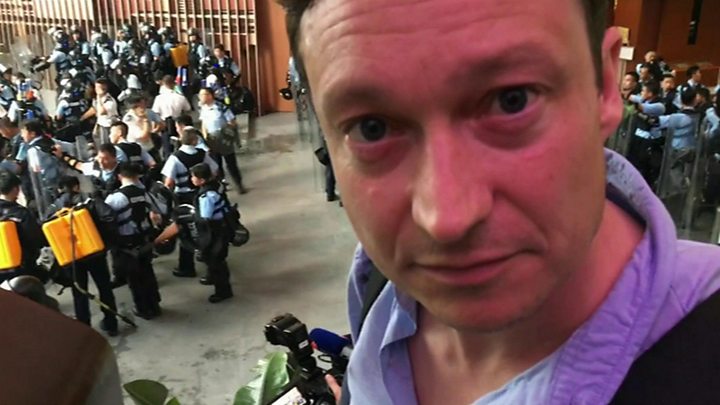
Media captionThe BBC's Gabriel Gatehouse was inside the LegCo building
Rights groups including Amnesty accused police of using excessive force, but Hong Kong Police Commissioner Stephen Lo Wai-chung said police had had "no choice".
As night fell on Wednesday, protesters remained in some streets in the central Hong Kong, behind makeshift barricades, despite sustained efforts by police officers to disperse them. Officials said 21 officers had been hurt in the clashes.
Image copyrightREUTERS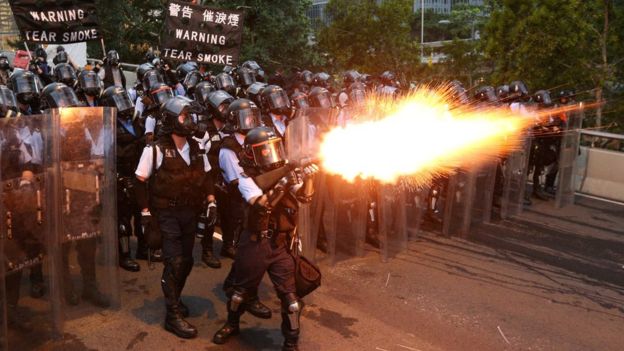
Image captionPolice have been using tear gas
Separately, police said they were investigating death threats made against Ms Lam. In a tearful interview on a local TV station, Ms Lam dismissed accusations that she had "sold out" Hong Kong.
"I have grown up here with all the Hong Kong people, my love for this place has led me to make many personal sacrifices," she said.
A Chinese foreign ministry spokesman said reports that security forces might be sent to Hong Kong from the mainland were "fake news".
Image copyrightAFP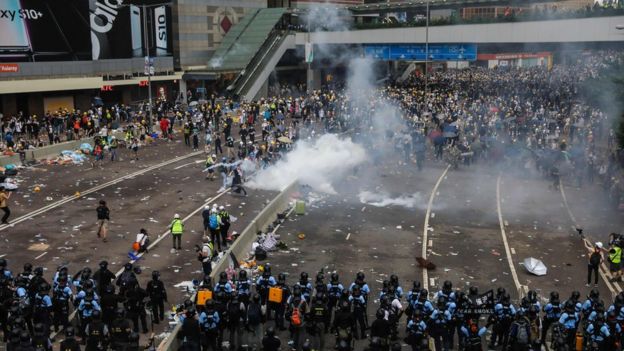
Image captionPolice and protesters faced off on key roads
What is in the extradition bill?
The bill allows for extradition requests from authorities in mainland China, Taiwan and Macau for suspects accused of criminal wrongdoing such as murder and rape. The requests would be decided on a case-by-case basis.
The move came after a 19-year-old Hong Kong man allegedly murdered his 20-year-old pregnant girlfriend while they were holidaying in Taiwan together in February last year. The man fled to Hong Kong and could not be extradited to Taiwan because the two do not have an extradition treaty.
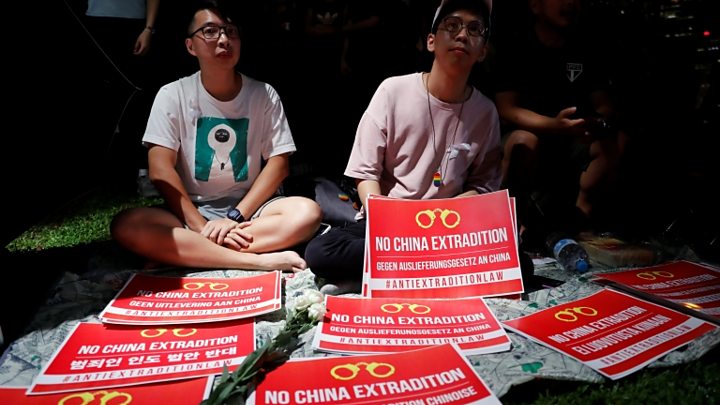
Media captionThe BBC's Helier Cheung on why people are taking to the streets in Hong Kong
Hong Kong officials have said courts in the territory will have the final say over whether to grant extradition requests, and suspects accused of political and religious crimes will not be extradited.
The government has also promised to only hand over fugitives for offences carrying a maximum sentence of at least seven years.
Hong Kong has entered into extradition agreements with 20 countries, including the UK and the US.
What reaction has there been?
Taiwanese President Tsai Ing-wen tweeted that her nation supported the protesters' "demands for freedom".
Image Copyright @iingwen@IINGWEN
Report

Many Western nations have also criticised the extradition bill.
British Foreign Minister Jeremy Hunt urged the Hong Kong government to "listen to the concerns of its people and its friends in the international community and to pause and reflect on these controversial measures".
US President Donald Trump said he was sure China and Hong Kong would be able to "work things out", Reuters reported.
EU foreign policy chief Federica Mogherini said European countries shared Hong Kong citizens' concerns over the extradition reforms, and called for the protesters' right to assemble and express themselves freely and peacefully to be respected.
Image copyrightGETTY IMAGES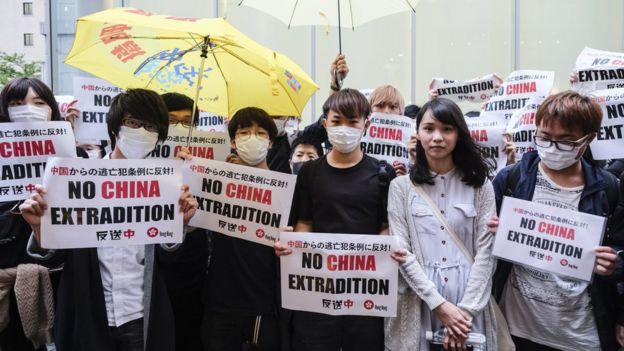
Image captionThe protesters fear human rights abuses in China's legal system
More than 100 businesses in Hong Kong said they would shut to allow their staff to protest and nearly 4,000 teachers said they would strike.
Powerful business lobbies say they fear the plans will damage Hong Kong's competitiveness as a base of operations.
On Sunday, protest organisers said more than a million people had taken to the streets, though police estimated turnout was 240,000 at its peak.
Image copyrightBBC NEWS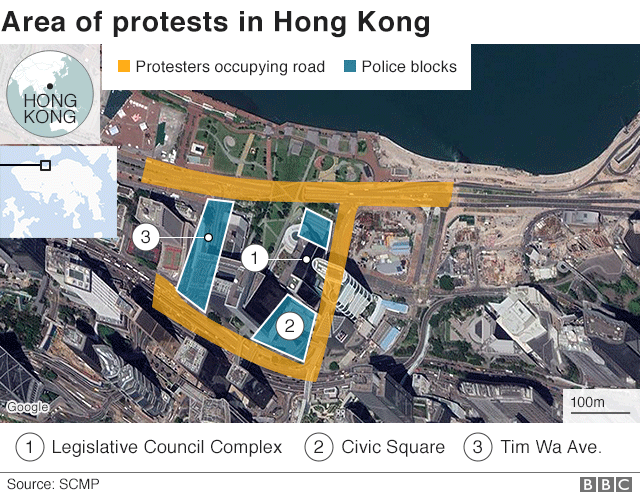
What is Hong Kong's relationship with China?
Hong Kong was a British colony from 1841 until sovereignty was returned to China in 1997. Under the "one country, two systems" principle, Hong Kong has kept its judicial independence, its own legislature, its economic system and the Hong Kong dollar.
Image copyrightAFP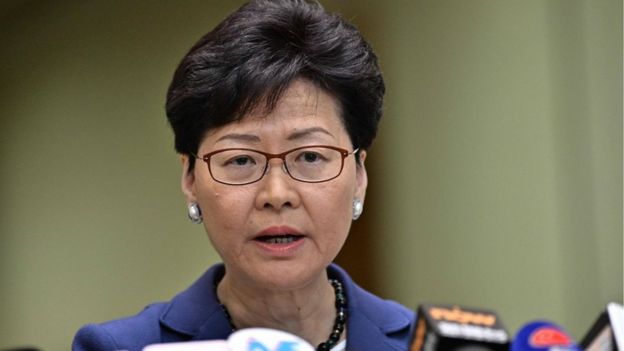
Image captionMs Lam has refused to scrap the bill
Its residents were also granted protection of certain human rights and freedoms, including freedom of speech and assembly. Beijing retains control of foreign and defence affairs, and visas or permits are required for travel between Hong Kong and the mainland.
In 2014, tens of thousands protested against restrictions imposed from Beijing on who they could vote for as chief executive. Despite being mostly peaceful, the protests failed to achieve any concessions. Some of the organisers have since been jailed on public nuisance charges.
Ive been telling people the next flashpoint is China...they are trying to take total control over Hong Kong despite promising a one country two systems method, and are trying to make Taiwan, a democratic country that claims independence, a subject to the same system which they obviously don't trust as you can see with that China is trying to do to Hong Kong.
Xi Jinping made himself president for life, has been literally building islands in the south china sea, which is smack dab in the middle of international shipping lanes, is bullying smaller countries out of their territorial holdings in the sea, and Chinese military officials are openly threatening to invade Taiwan if they dont submit to China.
next major conflict gonna be China vs US and other countries in south east Asia i reckon


 They don’t got the power or strength to tell China to fukk off.
 .
.


