ogc163
Superstar
“Outside a new day is dawning
Outside suburbia's sprawling everywhere
I don't want to go, baby”
— Kim Wilde
Conor Dougherty is perhaps the best chronicler of America’s battle for denser housing. I heartily encourage everyone to read his recent article in the New York Times, entitled “Where the Suburbs End”. It recaps the story of how Americans fled cities to live in sprawling suburban neighborhoods zoned for single family homes, and how that model of urbanism is now slowly coming to an end.
The reason for this, of course, is that the suburban model we created was fundamentally unsustainable. The upkeep on the vast sprawl of roads and other infrastructure was hellishly expensive, especially given the country’s excessive construction costs. New knowledge industries created clustering economies that made density more important for productivity, even as social media and a decline in crime made urban life more enjoyable. And the housing crash of 2007-8 showed that the model of sprawling ever farther outward from city centers had come to its limits — from now on, new Americans must mostly be put into existing urban spaces, which means density. These pressures have created both a rental crisis for renters and an affordability crisis for first-time homebuyers.
The suburban model of the mid 20th century, however, came with a set of laws and institutions designed to protect it against future encroachment — urban fragmentation that enables powerful local homeowners to block new development, and a thicket of formidable zoning regulations, parking requirements, setbacks, height limits, and other regulations. Those who realize the need to create a denser America have only begun to hack through that tangle, and resistance is fierce.
But as Dougherty notes, the victories are slowly piling up — most recently and perhaps most notably, SB 9 and SB10, two new California laws that end single-family zoning by allowing duplexes everywhere, upzone areas near transit hubs, and streamline the permitting process for this new housing. Other states are passing similar laws.
These new laws will not turn the U.S. into Japan, where efficient networks of trains weave “suburbs” denser than Brooklyn into huge megalopolises, and housing is affordable because developers are empowered to build as much as they want. But they will change the suburbs — especially the inner-ring ‘burbs that lie between dense urban centers and far-flung exurban sprawl. As Dougherty puts it:
Across America, housing is for the most part built in one of two familiar ways. The first is [exurbs] outside the urban center [with] wide streets and cul-de-sacs named after trees. The second is…a glass condominium tower or high-rent apartment building.
In the vast zone between those poles lie existing single-family neighborhoods…which account for most of the urban landscape yet remain conspicuously untouched. The omission is the product of a political bargain that says sprawl can sprawl and downtowns can rise but single-family neighborhoods are sealed off from growth…
And now [that bargain is] being torn up.
The suburbs will not vanish as a result of America’s new need for density; they will simply change. But what will they change into? What will the new suburbs look like, and what will the lives of people in them be like? Obviously there will be a wide variety, but I think that current trends are starting to sketch us a rough outline of that future.
I think it’s very important to spin concrete visions of how Americans will live and commute and work and play in the future. This is different from spinning fantastical visions of what our cities might look like if we had carte blanche to rebuild them however we saw fit — the solarpunk dream. Political constraints and cost constraints are very real things, and the somewhat-denser future we’re going to get is not the same as the much-denser utopia that many urbanists and YIMBYs would like. It’s going to be significantly better, but not infinitely better.
Here’s a taste of where I think we’re headed.
Where we’ll live
The newer, denser suburbs will have roughly the same layout, but single-family housing will be replaced with a mix of housing. New state-level housing bills like SB9 and SB10 are mandating legalization of things like accessory dwelling units (ADUs) and duplexes. But near transit hubs, they’re legalizing even more dense forms of housing, like apartment complexes. And some cities will choose to allow more density than the state governments mandate. Thus, the new suburban landscape will generally include:

A duplex

Some rowhouses

A low-rise apartment complex

A low-rise apartment complex next to a single-family home
Note how these construction styles generally preserve the feeling of the existing suburban construction based around single-family homes. There are trees lining the streets, with cars parked out front. The dwellings are somewhat set back from the street, and are mostly constructed in ways that make multi-family housing resemble single-family housing in construction style.
In other words, the feel of the suburbs won’t be that changed from what it is now. The plots that have housing now will simply have more housing, at the expense of yard and a little bit of sky. The streets will remain the same, the commercial areas will largely remain the same. There will simply be more people.
So what does this really change? First, it allows us to fit more people into existing areas, which is economically necessary. Second, it will lead to a greater mix of classes in neighborhoods — if local suburban amenities are the same, smaller units will necessarily be cheaper than larger ones. You’ll have working-class families, students, and young people living in apartments and ADUs, higher-earning folks living in duplexes and row-houses, and a combination of well-off folks and legacy homeowners in the single-family homes.
This is a somewhat more egalitarian vision of suburban America, but it also means that some of the “neighborhood character” that incumbent homeowners are used to — and that they fight so hard to protect — will be sacrificed. Having young people and college kids and working-class families in your leafy suburban neighborhood really does make it a different place (a better place, I would argue). And greater density will provide some other benefits, such as more people knowing their neighbors.
But we shouldn’t get too excited about these changes. There will still be nicer and worse neighborhoods, gradations of class and price and “good schools” and other markers of desirability. (Remember, I’m not describing how I wish America would be, but merely predicting how it will be.)
The real key here is that despite greater density, the suburban way of life will be mostly preserved. And the fundamental reason it will be preserved is that Americans really really like living in the suburbs. During the mid-2010s, at a time when city centers were becoming insanely overpriced and everybody was talking about moving to the city, Americans actually moved out to the ‘burbs on net:

Source: Jed Kolko
The desire for suburban living is overwhelming, and the only way to square that with the economic need for greater density is to have a whole lot of neighborhoods that still feel like suburbs but fit more people.
How we’ll get around

There are basically two issues when it comes to transit: How people get around the place they live, and how they get to other places.
The densification of the suburbs will put pressure on road networks. Street parking will become more scarce, and streets will become more crowded. That will make car ownership less desirable, because parking will become more expensive and traffic will become more of a problem (though many streets will put in speed humps to limit car traffic and increase safety, which will also make driving more onerous).
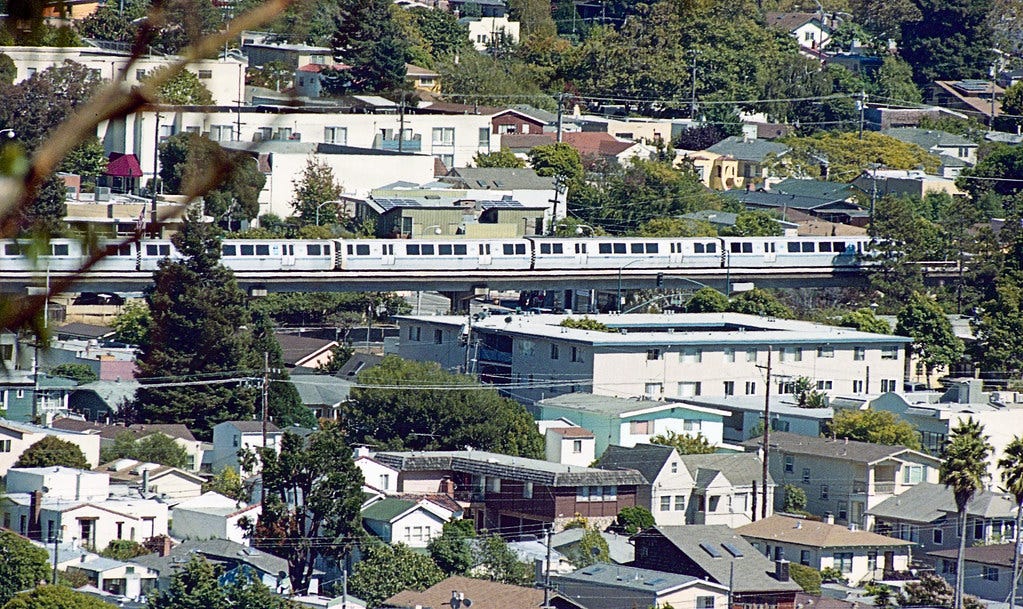
This will lead to several developments. First, more people who work in the city center — or in another suburb — will want to take the train instead of drive. That will require commuter rail — fast trains that go into the city center from suburban hubs. The Bay Area already has two commuter rail systems — BART and Caltrain. With more people wanting to ride such trains, there will be pressure to add service and build more stops. That will happen.
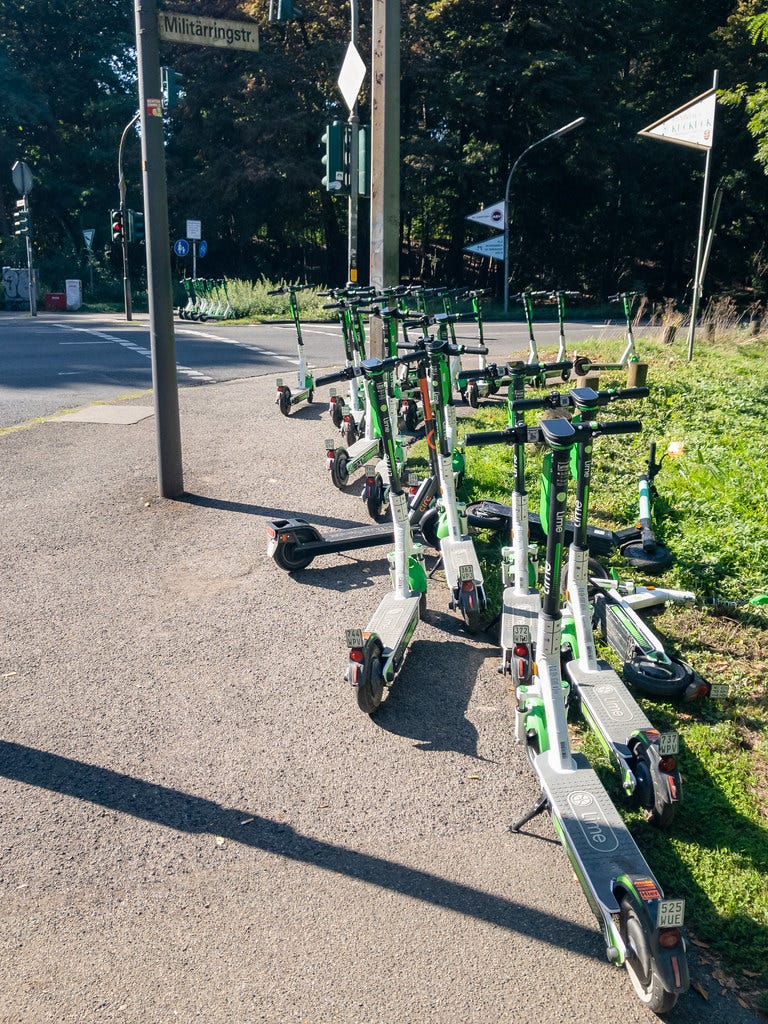
A second change is that driving around town will become less popular. Some people — especially young people and lower-income people — will decide to ditch their cars in favor of e-bikes, bikes, and electric scooters. The rise of batteries has come just in time to give people a variety of local transportation options. Even some higher-income people may choose to go car-free for reasons of health, safety, and lower stress — biking to the local commuter rail station to go into the city, biking or walking to local shopping villages, and so on.
Of course, most people will still own cars, though the cost of doing so will go up. Cars will therefore be somewhat more of a mark of status, though this will be mitigated by the fact that many of the cars will be hidden inside parking garages instead of displayed in driveways. I predict that change will erode the culture of conspicuous consumption that has grown up around the American automobile, which will hopefully help people feel more comfortable about embracing alternative modes of transportation.

Where we’ll work, shop, and play

Outside suburbia's sprawling everywhere
I don't want to go, baby”
— Kim Wilde
Conor Dougherty is perhaps the best chronicler of America’s battle for denser housing. I heartily encourage everyone to read his recent article in the New York Times, entitled “Where the Suburbs End”. It recaps the story of how Americans fled cities to live in sprawling suburban neighborhoods zoned for single family homes, and how that model of urbanism is now slowly coming to an end.
The reason for this, of course, is that the suburban model we created was fundamentally unsustainable. The upkeep on the vast sprawl of roads and other infrastructure was hellishly expensive, especially given the country’s excessive construction costs. New knowledge industries created clustering economies that made density more important for productivity, even as social media and a decline in crime made urban life more enjoyable. And the housing crash of 2007-8 showed that the model of sprawling ever farther outward from city centers had come to its limits — from now on, new Americans must mostly be put into existing urban spaces, which means density. These pressures have created both a rental crisis for renters and an affordability crisis for first-time homebuyers.
The suburban model of the mid 20th century, however, came with a set of laws and institutions designed to protect it against future encroachment — urban fragmentation that enables powerful local homeowners to block new development, and a thicket of formidable zoning regulations, parking requirements, setbacks, height limits, and other regulations. Those who realize the need to create a denser America have only begun to hack through that tangle, and resistance is fierce.
But as Dougherty notes, the victories are slowly piling up — most recently and perhaps most notably, SB 9 and SB10, two new California laws that end single-family zoning by allowing duplexes everywhere, upzone areas near transit hubs, and streamline the permitting process for this new housing. Other states are passing similar laws.
These new laws will not turn the U.S. into Japan, where efficient networks of trains weave “suburbs” denser than Brooklyn into huge megalopolises, and housing is affordable because developers are empowered to build as much as they want. But they will change the suburbs — especially the inner-ring ‘burbs that lie between dense urban centers and far-flung exurban sprawl. As Dougherty puts it:
Across America, housing is for the most part built in one of two familiar ways. The first is [exurbs] outside the urban center [with] wide streets and cul-de-sacs named after trees. The second is…a glass condominium tower or high-rent apartment building.
In the vast zone between those poles lie existing single-family neighborhoods…which account for most of the urban landscape yet remain conspicuously untouched. The omission is the product of a political bargain that says sprawl can sprawl and downtowns can rise but single-family neighborhoods are sealed off from growth…
And now [that bargain is] being torn up.
The suburbs will not vanish as a result of America’s new need for density; they will simply change. But what will they change into? What will the new suburbs look like, and what will the lives of people in them be like? Obviously there will be a wide variety, but I think that current trends are starting to sketch us a rough outline of that future.
I think it’s very important to spin concrete visions of how Americans will live and commute and work and play in the future. This is different from spinning fantastical visions of what our cities might look like if we had carte blanche to rebuild them however we saw fit — the solarpunk dream. Political constraints and cost constraints are very real things, and the somewhat-denser future we’re going to get is not the same as the much-denser utopia that many urbanists and YIMBYs would like. It’s going to be significantly better, but not infinitely better.
Here’s a taste of where I think we’re headed.
Where we’ll live
The newer, denser suburbs will have roughly the same layout, but single-family housing will be replaced with a mix of housing. New state-level housing bills like SB9 and SB10 are mandating legalization of things like accessory dwelling units (ADUs) and duplexes. But near transit hubs, they’re legalizing even more dense forms of housing, like apartment complexes. And some cities will choose to allow more density than the state governments mandate. Thus, the new suburban landscape will generally include:
- single-family homes
- single-family homes with ADUs
- duplexes, triplexes, and fourplexes
- row-houses
- low-rise apartment buildings
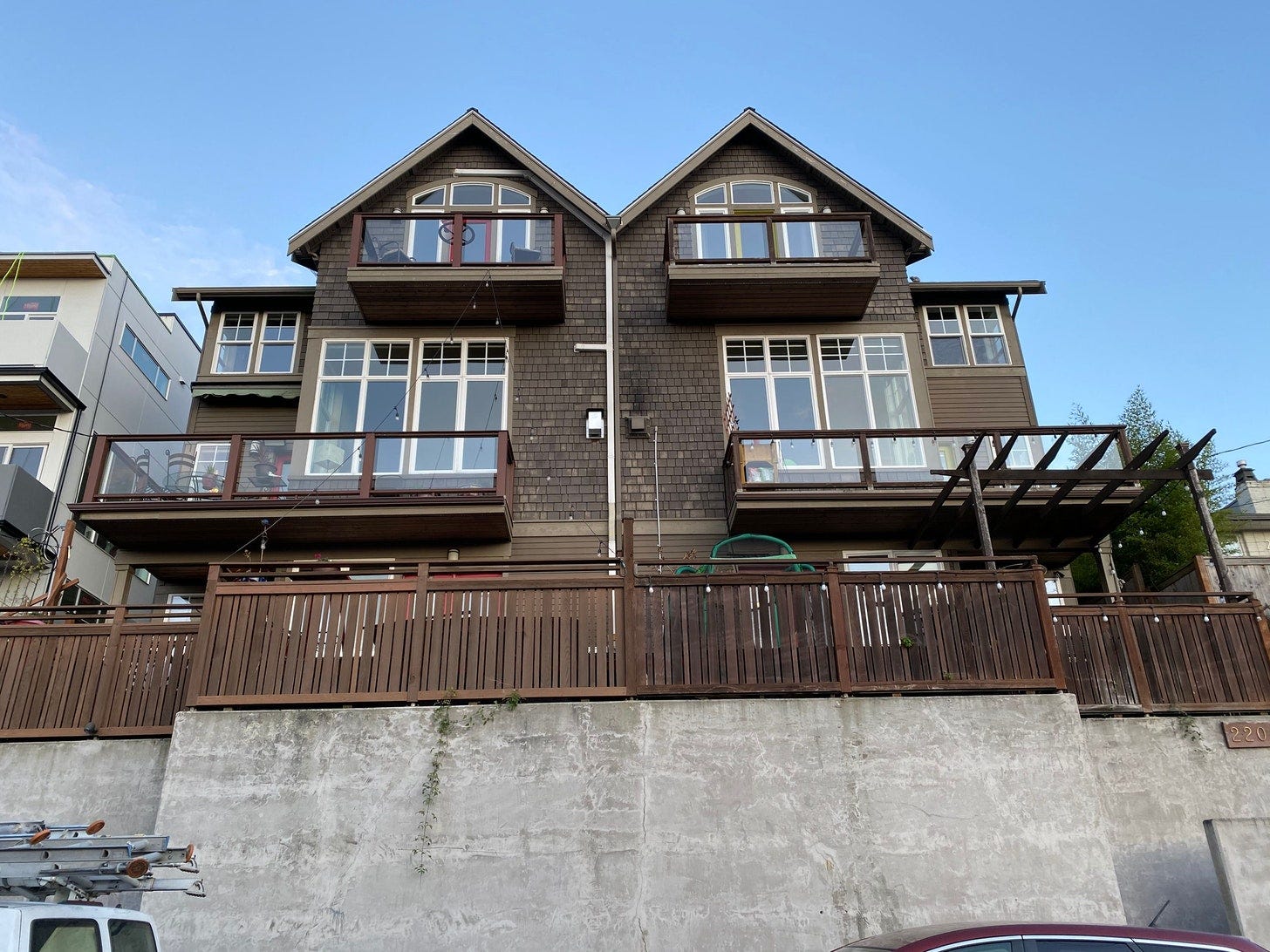
A duplex
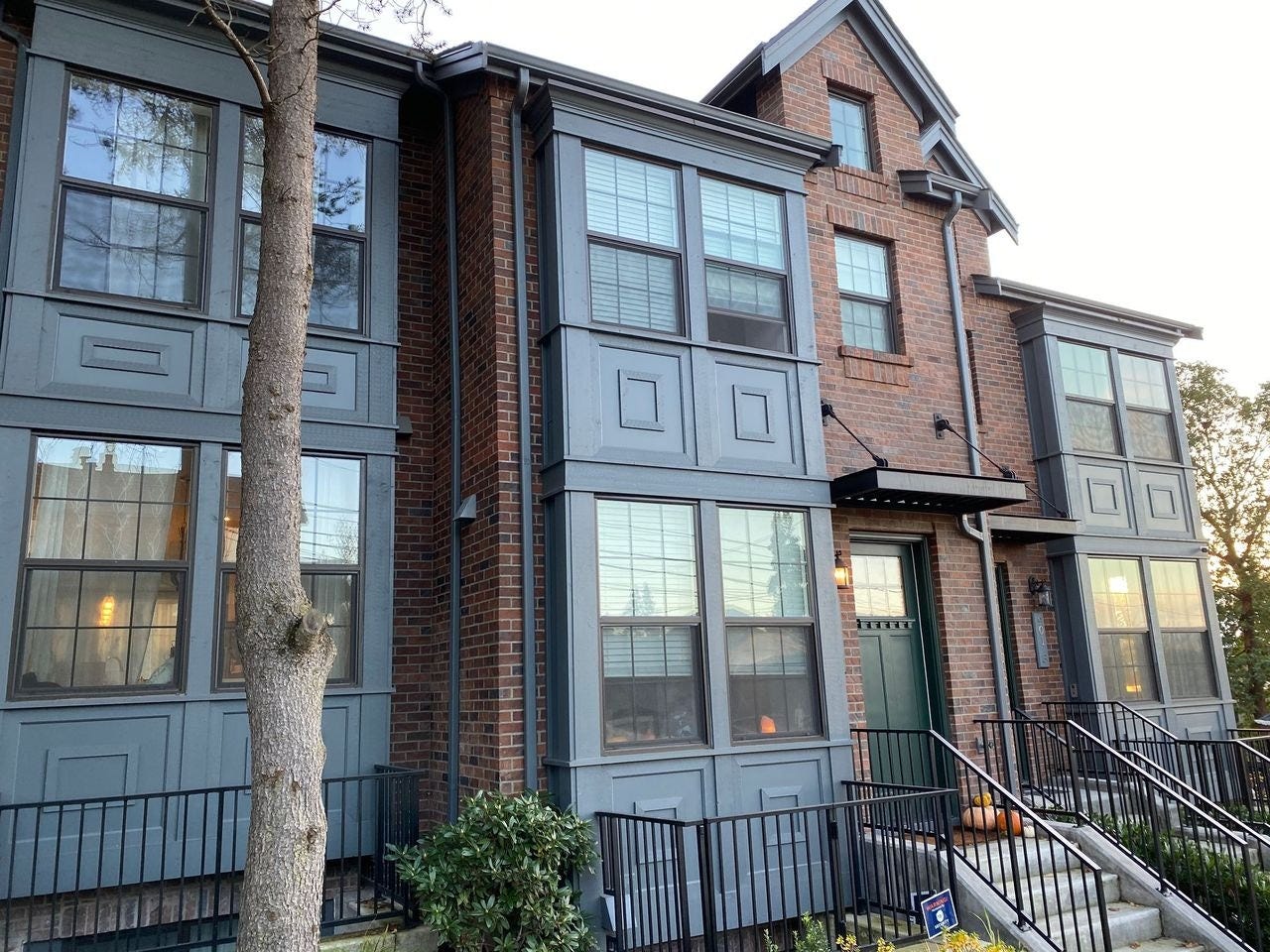
Some rowhouses
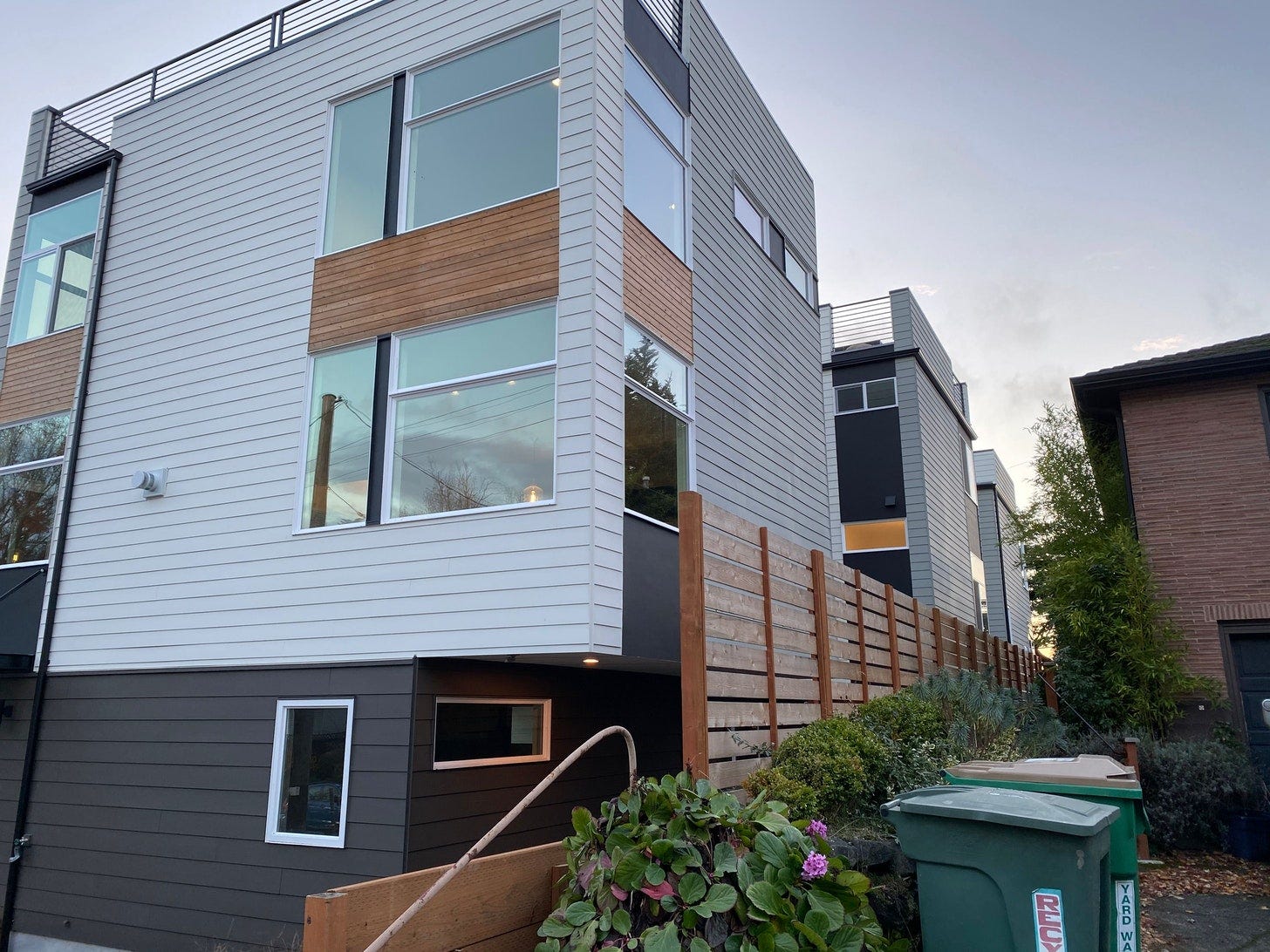
A low-rise apartment complex

A low-rise apartment complex next to a single-family home
Note how these construction styles generally preserve the feeling of the existing suburban construction based around single-family homes. There are trees lining the streets, with cars parked out front. The dwellings are somewhat set back from the street, and are mostly constructed in ways that make multi-family housing resemble single-family housing in construction style.
In other words, the feel of the suburbs won’t be that changed from what it is now. The plots that have housing now will simply have more housing, at the expense of yard and a little bit of sky. The streets will remain the same, the commercial areas will largely remain the same. There will simply be more people.
So what does this really change? First, it allows us to fit more people into existing areas, which is economically necessary. Second, it will lead to a greater mix of classes in neighborhoods — if local suburban amenities are the same, smaller units will necessarily be cheaper than larger ones. You’ll have working-class families, students, and young people living in apartments and ADUs, higher-earning folks living in duplexes and row-houses, and a combination of well-off folks and legacy homeowners in the single-family homes.
This is a somewhat more egalitarian vision of suburban America, but it also means that some of the “neighborhood character” that incumbent homeowners are used to — and that they fight so hard to protect — will be sacrificed. Having young people and college kids and working-class families in your leafy suburban neighborhood really does make it a different place (a better place, I would argue). And greater density will provide some other benefits, such as more people knowing their neighbors.
But we shouldn’t get too excited about these changes. There will still be nicer and worse neighborhoods, gradations of class and price and “good schools” and other markers of desirability. (Remember, I’m not describing how I wish America would be, but merely predicting how it will be.)
The real key here is that despite greater density, the suburban way of life will be mostly preserved. And the fundamental reason it will be preserved is that Americans really really like living in the suburbs. During the mid-2010s, at a time when city centers were becoming insanely overpriced and everybody was talking about moving to the city, Americans actually moved out to the ‘burbs on net:
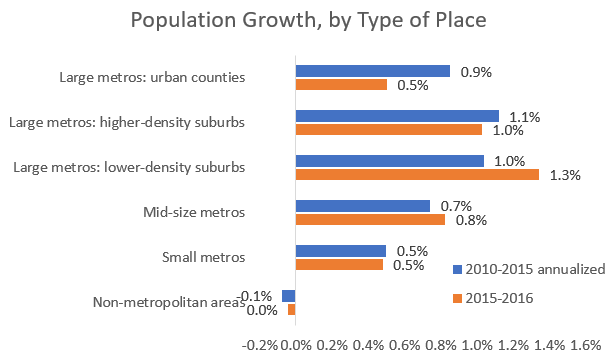
Source: Jed Kolko
The desire for suburban living is overwhelming, and the only way to square that with the economic need for greater density is to have a whole lot of neighborhoods that still feel like suburbs but fit more people.
How we’ll get around
There are basically two issues when it comes to transit: How people get around the place they live, and how they get to other places.
The densification of the suburbs will put pressure on road networks. Street parking will become more scarce, and streets will become more crowded. That will make car ownership less desirable, because parking will become more expensive and traffic will become more of a problem (though many streets will put in speed humps to limit car traffic and increase safety, which will also make driving more onerous).
This will lead to several developments. First, more people who work in the city center — or in another suburb — will want to take the train instead of drive. That will require commuter rail — fast trains that go into the city center from suburban hubs. The Bay Area already has two commuter rail systems — BART and Caltrain. With more people wanting to ride such trains, there will be pressure to add service and build more stops. That will happen.
A second change is that driving around town will become less popular. Some people — especially young people and lower-income people — will decide to ditch their cars in favor of e-bikes, bikes, and electric scooters. The rise of batteries has come just in time to give people a variety of local transportation options. Even some higher-income people may choose to go car-free for reasons of health, safety, and lower stress — biking to the local commuter rail station to go into the city, biking or walking to local shopping villages, and so on.
Of course, most people will still own cars, though the cost of doing so will go up. Cars will therefore be somewhat more of a mark of status, though this will be mitigated by the fact that many of the cars will be hidden inside parking garages instead of displayed in driveways. I predict that change will erode the culture of conspicuous consumption that has grown up around the American automobile, which will hopefully help people feel more comfortable about embracing alternative modes of transportation.
Where we’ll work, shop, and play