
You are using an out of date browser. It may not display this or other websites correctly.
You should upgrade or use an alternative browser.
You should upgrade or use an alternative browser.
Liquid Swords turns 21 today!
- Thread starter Inspect Her Deck
- Start date
More options
Who Replied?

No votes for Gold
aye im just happy Swordsman got 5. no one ever talks about that song

aye im just happy Swordsman got 5. no one ever talks about that song
heads know.
Gold having zero votes is
 Easily one of my favorites on the entire album.
heads know.
Gold having zero votes is
only 1 for Labels, Killah Hills is my least favorite and that has 5
thats no knock on that song tho


Inspect Her Deck
Skins of all colours come together as brothers
only 1 for Labels, Killah Hills is my least favorite and that has 5
thats no knock on that song tho
worst beat on the album which is why I have it quite low down but the lyricism on that particular track is

Tough question, but how would y'all rank every song on Liquid Swords best to worst?
Imo:
Shadowboxin'
Cold World
Duel of the Iron Mic
Living in the World Today
4th Chamber
Liquid Swords
Swordsman
Gold
BIBLE
Labels
Investigative Reports
I Gotcha Back
Hell's Wind Staff / Killah Hills 10304
It hurts having to put some songs so low
BIBLE would be dead last with not even a second thought. Never liked that song.
My list?
Swordsman
Shadowboxin
Gold
Liquid Swords
Living In The World Today
Labels
Cold World
Investigative Reports
Hell's Wind Staff/Killah Hills 10304
4th Chamber
Duel of the Iron Mic
I Gotcha Back
BIBLE

aye im just happy Swordsman got 5. no one ever talks about that song
Breh. That song plus I Gotcha Back are so fukking monumental. Excellent way to end a classic album.
First time I heard "Whats the meaning of C.R.I.M.E./ Is it Criminals Robbing Innocent Motherfukkers Everytime." I was like
 ..... .....
Plus the hook on Swordsman is so blunt yet filthy


ZEB WALTON
ayo! - BEZ
Damn brehBIBLE would be dead last with not even a second thought. Never liked that song.
My list?
Swordsman
Shadowboxin
Gold
Liquid Swords
Living In The World Today
Labels
Cold World
Investigative Reports
Hell's Wind Staff/Killah Hills 10304
4th Chamber
Duel of the Iron Mic
I Gotcha Back
BIBLE
Idk what say bout that. Bible like a top 5 song to me.
To me the worst song is i gotcha back which it isnt really bad it just dont have the explossive power of the other songs.
Id prolly go
Unexplained/swordsman
Bible
Shadowboxin
Investigative reports
Cold world
Duel of the iron mic
4th chamber
Livin in the world today
Killa hills 10304
Gold
Liquid swords
Labels
I gotcha back
Unexplained/swordsman and northstar and bible prolly my 3 fav wu songs ever

just listened to this en route to the airport..
masterpiece LP..
We reign all year round from June to June
masterpiece LP..
We reign all year round from June to June
GZA, along with his cousins Robert Diggs (RZA) and Russell Jones (Ol' Dirty b*stard), founded the collective Wu-Tang Clan in 1992. Since forming, the group has released seven gold and platinum studio albums while achieving sales of more than 40 million albums.
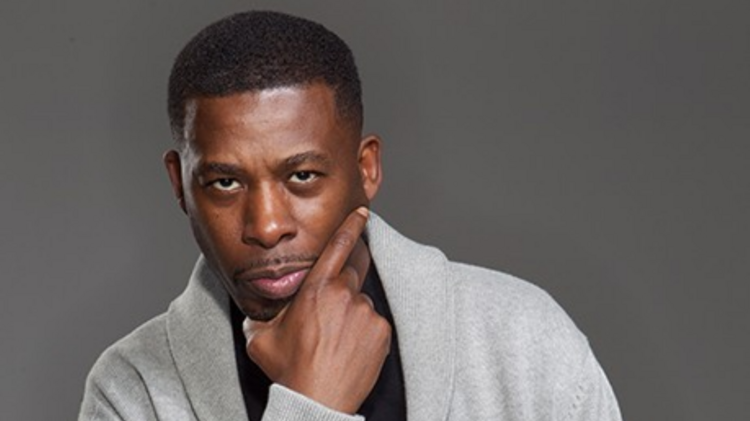 Enlarge
GZA
GZA is considered to be one of the all-time most gifted lyricists and intelligent staples in hip-hop. In addition to his illustrious career as a musician, he has lectured at Harvard University, University of Oxford, University of Southern California, Massachusetts Institute of Technology, New York University and Cornell University.
GZA will be in Atlanta to perform his platinum-selling studio album "Liquid Swords," which was produced entirely by RZA, at City Winery on Nov. 7.
Atlanta Business Chronicle: You’re frequently called one of the most talented lyricists in hip-hop. From where did you develop your vocabulary and what advice do you have for up-and-coming rappers that want to have a versatile vocabulary? Were you a big reader when you were a kid?
GZA Laughs) I don’t know. I never really thought I had an extensive vocabulary like that and I’m not an avid reader. I didn’t read a lot growing up — at all. (Laughs) But, I do like reading.
I just have certain interests in different things and they inspire me to write. I would encourage aspiring artists or MCs or rappers to be able to grab from many different sources to create your story. When you think of hip-hop or rap music nowadays, it’s usually limited to just a few things as far as subject matter so I would encourage aspiring artists to read different things and learn new things then share them — put them in your songs in an interesting way.
ABC: How do you view hip-hop from Atlanta pre- and post- OutKast?
GZA: Overall, it has changed since the days from OutKast musically and lyrically. I’m don’t know which artists are all from Atlanta but I’m familiar with Future and 2 Chainz. They’re good artists and I listen to some of their music. It is different than what OutKast was doing but that’s how it is — music changes throughout the course of years.
ABC: Very true, but I always wondered why some albums have consistent sales years after its released. For instance, your record "Liquid Swords" was released in 1995 but it didn’t go platinum (sell one million units) until September of 2015. Commercially speaking, to what do you attribute the longevity of its popularity?
GZA: I think it’s the music. The music was really strong. There was this cinematic feeling to it with its atmospheric production. Lyrically, it was great for the time. Conceptually, it was cool because there’s a theme behind the whole album. Also, I think it has a lot to do with having loyal fans that still love and respect your music so they introduce your music to new people and younger audiences.
One of the things I noticed about Wu-Tang, as a group and as individuals for some of us, is we have two generations of fans now. When we’re doing shows and performing —every now and then we do festivals and gigs here and there — the crowd is still young. There are 17-year-old children in there who weren’t even born when Wu-Tang dropped their first album. A lot of times, these new generations are introduced to it through parents. I was getting a cut in a barbershop one day in the first chair near the window when a young guy walking by stopped, backed up, came in and said, 'Are you GZA? Man, I love your work. "Liquid Swords" is a great album!'
I asked him his age and he said he was 18. Then I asked, 'How did you get on to the music? Who introduced you to it?'
He said, 'It was my father. He said, ‘If you want to hear real hip-hop, you listen to Wu-Tang. You listen to Rakim. You listen to Big Daddy Kane.'
So, as far as the albums still selling slowly but surely, it has a lot to do with our following bringing the younger kids to the music. It may also have something to do with people buying it twice and three times because sometimes people lose music. They’ll lose a CD or it will be cracked so they’ll buy another one. There are many different factors.
ABC: What would you have done differently if you were releasing "Liquid Swords" today knowing what you know at this point in your life?
GZA: I would eliminate the profanity.
ABC: To get more radio play?
GZA: I mean it helps when it comes to radio play and it helps when it comes to selling your music to minors. Sometimes that sticker can be a deterrent for parents to not purchase something for their children.
For the past maybe eight years, I haven’t been using profanity and not for that specific reason, it’s just not in my writing, and hasn’t been for years. A lot of times certain words are just fillers. Also, you want anyone to be able to listen to your music. There was a time I was at a school doing a lecture and they were playing my music in the school. I remember hearing “Swordsman” and it was like, 'When a [expletive] steps out his place, And gets slapped in his [expletive] face.' I wondered how the professors or older teachers would react to the music in that sense.
I remember one time I met a marine biologist and she said, 'I listen to your music.' I was thinking, 'Uh, oh. She’s going to hear that and might not take it easy.'
As you grow and get older, you evolve. I know I had lines as a teenager that I wouldn’t use as an adult. You understand? So we’re growing, learning and evolving.
But, there are times you may have a featured artist when you may get that [Parental Advisory] sticker because they will use profanity on the song. But, I chose not to just to not have the sticker on there.
ABC: Do you mix up your show or do you only perform tracks off of "Liquid Swords?"
GZA: I mix it up. I was asked to do the "Liquid Swords" album and have been doing ["Liquid Swords" shows] since ’07 or ’08. I don’t do it all the time but a lot of the shows are ["Liquid Swords" shows].
If I just did the album, it wouldn’t be a full show so I still mix it up with some new songs and songs from other albums. Most of it is from "Liquid Swords" but there will be other songs.
ABC: You’ve been working on your documentary "Wu-Tang Revealed" for quite some time. How is that going?
GZA: That’s been on hold for so long. It’s been sitting on the shelf for a while but I started editing some stuff this year. I’ve been editing and piecing stuff together trying to figure out how to tell the story. But, people are waiting on it.
ABC: Wu-Tang came up during a violent time for hip-hop. The East Coast rappers and producers were beefing with the West Coast rappers and producers, yet Wu-Tang stayed out of it even being from New York. How and Why?
GZA: Right, but I think you would have to ask each individual.
ABC: What about you?
GZA: It was never anything I was a part of or wanted to be a part of. We get a lot of love in California. Wu-Tang gets love from all over but the love is strong on the West Coast with all the shows we’ve done out there — Rock the Bells, Chalice California, Coachella. There is one spot in Orange County that I perform at at least five times a year and it’s usually sold out.
There’s a lot of love coming from the West Coast but it (the violence in the ‘90s) wasn’t something I was a part of. It didn’t make sense to get on some East Coast/Est Coast thing because we get love from both sides and show love back. I wouldn’t want to get caught up in that.
ABC: Wu-Tang is a collective and Atlanta has a storied collective in the Dungeon Family, which includes groups like Organized Noize, OutKast and Goodie Mobb. What are the advantages and disadvantages of being in a collective?
GZA: The advantage is the more the merrier because there is more room for one to be successful. Nowadays, when someone is a big artist and they have a clique or a crew, it’s easier for them to get on because they’re on already. Do you understand?
ABC: Yes, sir. Kind of like Scooter Braun and Justin Bieber. Scooter was connected to Usher so it was easy for Bieber to get put on since the connections were there.
GZA: Right. At one time when Wu-Tang first came out, maybe like the first or second year, it was easy for several people to get deals because they were from Shaolin (Staten Island). Just being from the area or being associated with a scene, can be a big advantage.
What would be the disadvantage? Being part of a group or a certain force where years down the road you don’t see things the same way and opinions differ. Sometimes a lot of groups get together, then start separating years down the road. That’s a disadvantage but it’s a disadvantage you create on your own.
ABC: Wu-Tang has one of the most recognizable logos in hip-hop. Who designed it and did y’all have any clue how important it would be to y’all’s brand?
GZA: Mathematics, our DJ, designed it. He grew up drawing and sketching.
But, that logo is very important because that is our brand. When people see that, they recognize what it is just by seeing it. That’s what logos do. That’s why companies make logos. Just like Target. When you see that red circle, you know its Target.
[The Wu-Tang logo is] a great logo. That’s why I decided to turn it sideways. Mine is a “G” with the same “W” — Mathematics did that for me too.
But, I had no idea what it was going to do for us. I was just grateful to be a part of it.
ABC: Wu-Tang is featured on the Chappelle's Show. How did y’all connect with Dave Chappelle? Did his manager reach out to y’all?
GZA: I don’t really remember how it came about. I think they may have reached out to a manager of mine — Sophia Chang or Angela Yee — then it came to me. I ended up meeting Dave. We did a show together this month in New York with The Roots. He’s a smart dude, man. He’s really brilliant, clever, funny and cool to hand out with. We had fun on the set when we did “The Racial Draft” and “Wu-Tang Financial.”
ABC: Yeah, they still crack me up. But, I have to change tone here. What do you want your personal legacy, your professional legacy and Wu-Tang’s legacy to be?
GZA: It would all be music. We were rhyming as children. It was just fun for us. We loved hip-hop so much we’d travel so far to make a demo, make a tape. We would walk two miles to get on a train to go to the Bronx to hear a beat just to do a demo so our legacy, whether it’s Wu-Tang or myself, would be the music.
As far as myself, it would be the music and how I touched certain people’s lives with the music and also how I touch lives while speaking at schools. [My legacy] would be the music and those words.
ABC: What is the most important point you’re trying to drive home to today’s youth when you speak at schools?
GZA: Learn all you can learn. Never stop learning.
http://www.bizjournals.com/atlanta/...-the-wu-tang-clan-talks-documentary-dave.html
EnlargeGZA
GZA is considered to be one of the all-time most gifted lyricists and intelligent staples in hip-hop. In addition to his illustrious career as a musician, he has lectured at Harvard University, University of Oxford, University of Southern California, Massachusetts Institute of Technology, New York University and Cornell University.
GZA will be in Atlanta to perform his platinum-selling studio album "Liquid Swords," which was produced entirely by RZA, at City Winery on Nov. 7.
Atlanta Business Chronicle: You’re frequently called one of the most talented lyricists in hip-hop. From where did you develop your vocabulary and what advice do you have for up-and-coming rappers that want to have a versatile vocabulary? Were you a big reader when you were a kid?
GZA
Laughs) I don’t know. I never really thought I had an extensive vocabulary like that and I’m not an avid reader. I didn’t read a lot growing up — at all. (Laughs) But, I do like reading.I just have certain interests in different things and they inspire me to write. I would encourage aspiring artists or MCs or rappers to be able to grab from many different sources to create your story. When you think of hip-hop or rap music nowadays, it’s usually limited to just a few things as far as subject matter so I would encourage aspiring artists to read different things and learn new things then share them — put them in your songs in an interesting way.
ABC: How do you view hip-hop from Atlanta pre- and post- OutKast?
GZA: Overall, it has changed since the days from OutKast musically and lyrically. I’m don’t know which artists are all from Atlanta but I’m familiar with Future and 2 Chainz. They’re good artists and I listen to some of their music. It is different than what OutKast was doing but that’s how it is — music changes throughout the course of years.
ABC: Very true, but I always wondered why some albums have consistent sales years after its released. For instance, your record "Liquid Swords" was released in 1995 but it didn’t go platinum (sell one million units) until September of 2015. Commercially speaking, to what do you attribute the longevity of its popularity?
GZA: I think it’s the music. The music was really strong. There was this cinematic feeling to it with its atmospheric production. Lyrically, it was great for the time. Conceptually, it was cool because there’s a theme behind the whole album. Also, I think it has a lot to do with having loyal fans that still love and respect your music so they introduce your music to new people and younger audiences.
One of the things I noticed about Wu-Tang, as a group and as individuals for some of us, is we have two generations of fans now. When we’re doing shows and performing —every now and then we do festivals and gigs here and there — the crowd is still young. There are 17-year-old children in there who weren’t even born when Wu-Tang dropped their first album. A lot of times, these new generations are introduced to it through parents. I was getting a cut in a barbershop one day in the first chair near the window when a young guy walking by stopped, backed up, came in and said, 'Are you GZA? Man, I love your work. "Liquid Swords" is a great album!'
I asked him his age and he said he was 18. Then I asked, 'How did you get on to the music? Who introduced you to it?'
He said, 'It was my father. He said, ‘If you want to hear real hip-hop, you listen to Wu-Tang. You listen to Rakim. You listen to Big Daddy Kane.'
So, as far as the albums still selling slowly but surely, it has a lot to do with our following bringing the younger kids to the music. It may also have something to do with people buying it twice and three times because sometimes people lose music. They’ll lose a CD or it will be cracked so they’ll buy another one. There are many different factors.
ABC: What would you have done differently if you were releasing "Liquid Swords" today knowing what you know at this point in your life?
GZA: I would eliminate the profanity.
ABC: To get more radio play?
GZA: I mean it helps when it comes to radio play and it helps when it comes to selling your music to minors. Sometimes that sticker can be a deterrent for parents to not purchase something for their children.
For the past maybe eight years, I haven’t been using profanity and not for that specific reason, it’s just not in my writing, and hasn’t been for years. A lot of times certain words are just fillers. Also, you want anyone to be able to listen to your music. There was a time I was at a school doing a lecture and they were playing my music in the school. I remember hearing “Swordsman” and it was like, 'When a [expletive] steps out his place, And gets slapped in his [expletive] face.' I wondered how the professors or older teachers would react to the music in that sense.
I remember one time I met a marine biologist and she said, 'I listen to your music.' I was thinking, 'Uh, oh. She’s going to hear that and might not take it easy.'
As you grow and get older, you evolve. I know I had lines as a teenager that I wouldn’t use as an adult. You understand? So we’re growing, learning and evolving.
But, there are times you may have a featured artist when you may get that [Parental Advisory] sticker because they will use profanity on the song. But, I chose not to just to not have the sticker on there.
ABC: Do you mix up your show or do you only perform tracks off of "Liquid Swords?"
GZA: I mix it up. I was asked to do the "Liquid Swords" album and have been doing ["Liquid Swords" shows] since ’07 or ’08. I don’t do it all the time but a lot of the shows are ["Liquid Swords" shows].
If I just did the album, it wouldn’t be a full show so I still mix it up with some new songs and songs from other albums. Most of it is from "Liquid Swords" but there will be other songs.
ABC: You’ve been working on your documentary "Wu-Tang Revealed" for quite some time. How is that going?
GZA: That’s been on hold for so long. It’s been sitting on the shelf for a while but I started editing some stuff this year. I’ve been editing and piecing stuff together trying to figure out how to tell the story. But, people are waiting on it.
ABC: Wu-Tang came up during a violent time for hip-hop. The East Coast rappers and producers were beefing with the West Coast rappers and producers, yet Wu-Tang stayed out of it even being from New York. How and Why?
GZA: Right, but I think you would have to ask each individual.
ABC: What about you?
GZA: It was never anything I was a part of or wanted to be a part of. We get a lot of love in California. Wu-Tang gets love from all over but the love is strong on the West Coast with all the shows we’ve done out there — Rock the Bells, Chalice California, Coachella. There is one spot in Orange County that I perform at at least five times a year and it’s usually sold out.
There’s a lot of love coming from the West Coast but it (the violence in the ‘90s) wasn’t something I was a part of. It didn’t make sense to get on some East Coast/Est Coast thing because we get love from both sides and show love back. I wouldn’t want to get caught up in that.
ABC: Wu-Tang is a collective and Atlanta has a storied collective in the Dungeon Family, which includes groups like Organized Noize, OutKast and Goodie Mobb. What are the advantages and disadvantages of being in a collective?
GZA: The advantage is the more the merrier because there is more room for one to be successful. Nowadays, when someone is a big artist and they have a clique or a crew, it’s easier for them to get on because they’re on already. Do you understand?
ABC: Yes, sir. Kind of like Scooter Braun and Justin Bieber. Scooter was connected to Usher so it was easy for Bieber to get put on since the connections were there.
GZA: Right. At one time when Wu-Tang first came out, maybe like the first or second year, it was easy for several people to get deals because they were from Shaolin (Staten Island). Just being from the area or being associated with a scene, can be a big advantage.
What would be the disadvantage? Being part of a group or a certain force where years down the road you don’t see things the same way and opinions differ. Sometimes a lot of groups get together, then start separating years down the road. That’s a disadvantage but it’s a disadvantage you create on your own.
ABC: Wu-Tang has one of the most recognizable logos in hip-hop. Who designed it and did y’all have any clue how important it would be to y’all’s brand?
GZA: Mathematics, our DJ, designed it. He grew up drawing and sketching.
But, that logo is very important because that is our brand. When people see that, they recognize what it is just by seeing it. That’s what logos do. That’s why companies make logos. Just like Target. When you see that red circle, you know its Target.
[The Wu-Tang logo is] a great logo. That’s why I decided to turn it sideways. Mine is a “G” with the same “W” — Mathematics did that for me too.
But, I had no idea what it was going to do for us. I was just grateful to be a part of it.
ABC: Wu-Tang is featured on the Chappelle's Show. How did y’all connect with Dave Chappelle? Did his manager reach out to y’all?
GZA: I don’t really remember how it came about. I think they may have reached out to a manager of mine — Sophia Chang or Angela Yee — then it came to me. I ended up meeting Dave. We did a show together this month in New York with The Roots. He’s a smart dude, man. He’s really brilliant, clever, funny and cool to hand out with. We had fun on the set when we did “The Racial Draft” and “Wu-Tang Financial.”
ABC: Yeah, they still crack me up. But, I have to change tone here. What do you want your personal legacy, your professional legacy and Wu-Tang’s legacy to be?
GZA: It would all be music. We were rhyming as children. It was just fun for us. We loved hip-hop so much we’d travel so far to make a demo, make a tape. We would walk two miles to get on a train to go to the Bronx to hear a beat just to do a demo so our legacy, whether it’s Wu-Tang or myself, would be the music.
As far as myself, it would be the music and how I touched certain people’s lives with the music and also how I touch lives while speaking at schools. [My legacy] would be the music and those words.
ABC: What is the most important point you’re trying to drive home to today’s youth when you speak at schools?
GZA: Learn all you can learn. Never stop learning.
http://www.bizjournals.com/atlanta/...-the-wu-tang-clan-talks-documentary-dave.html

i used to listen to this when i would go out writing graffiti, scoping out spots late at night listening to this...shyt was eerie af
One of the rare albums thats still 100% as effective as the year it dropped, true classic.
One of the rare albums thats still 100% as effective as the year it dropped, true classic.
Can't find the words to describe how legendary this album is. On another note, what the fukk was the RZA on? Just check this run of greatness:
36 Chambers
Tical
Return to the 36 Chambers
OB4CL
Liquid Swords
Ironman
Wu Tang Forever
36 Chambers
Tical
Return to the 36 Chambers
OB4CL
Liquid Swords
Ironman
Wu Tang Forever


