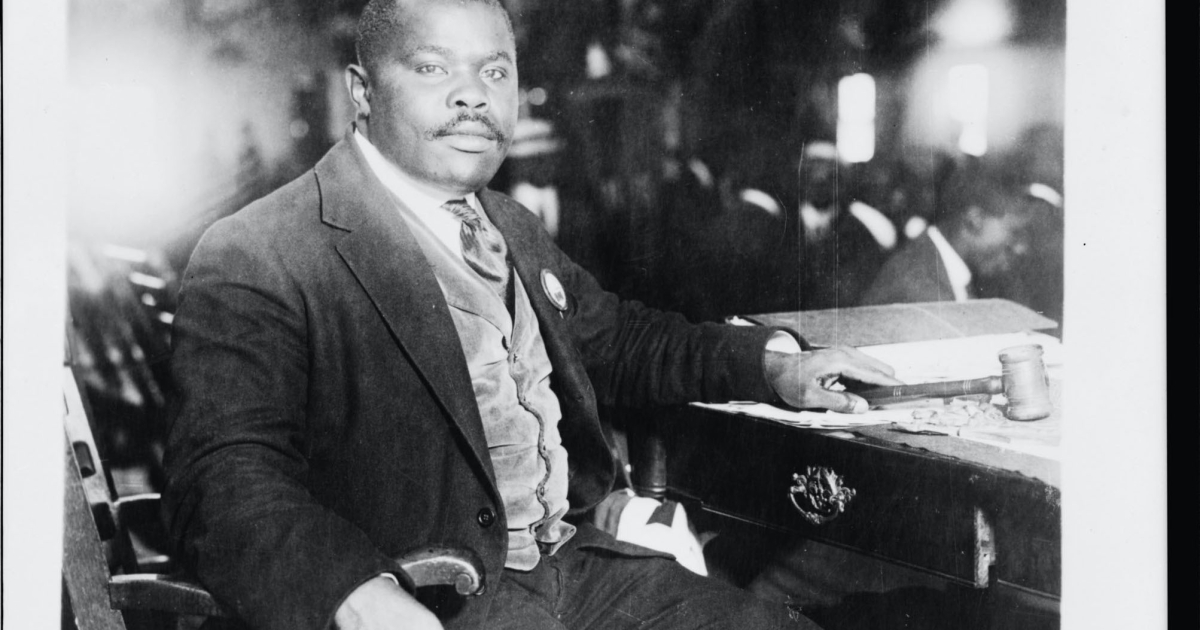
“Marcus Garvey was a fat tether”- The Honorable Tariq Nasheed

Ish Gibor

Omnipresence
Joined
Jan 23, 2017
Messages
6,648
Reputation
930
Daps
8,037
How is Tariq a grifter? Unlike those two he actually produces the projects/products. You putting him in that category is disingenuous.
He's not a grifter, but he's a smart pimp. And pimp has hoes to do the bidding. You should have read the instruction manual... because the same game is being played.


images


But I am glad the money was pulled together for the next Hidden Colors project by 3,240 backers who pledged $261,760 to help bring this project to life. So he can sell it right back to the people who funded it. That has been the business model from the start, and it's an excellent business model at that for this niche to approach. In normal business settings it wouldn't work, that's what makes this so special.

You sound like one of the salty tethers doing that.
Well agent, at one point in time a lot of now "salty tethers" used to fund his projects. So it's understandable, right?

The crazy part is that I learned about Tariq from a Southern Egyptian (North Sudanese) in 2013/14. He referred to the Hidden Color series.


You are tethering to Marcus Sanders who has killed another FBA. I want go as far as saying guilty by association. But I do frown upon this.

 
Last edited:

Ish Gibor

Omnipresence
Joined
Jan 23, 2017
Messages
6,648
Reputation
930
Daps
8,037
The primary influence behind the idea was Dr. Claud Anderson. He is the one who first expressed the idea that our ethnicity created the wealth of this nation. Tariq just labeled it Foundational. So the work was done by another, Tariq gave it a moniker and then patented it.

I already stated long ago that FBA was an excellent choice, because it keeps other groups from being able to claim to be one of us. Still, I do not give more credit to an idea, than is actually warranted.
Dr. Claude Anderson actually had an economic plan and was part of the early reparations movement, when your FBA leader was making song about “washing yo ass…”.

I rather follow Dr. Claud Anderson for his original concept, not some nock off. Especially because I knew Dr. Claud Anderson long before I knew Tar... I mean Marcus Sanders.

Title: “There is clear legal precedent for reparations for Native Blacks.”


Title: “Dr. Anderson lays out the Economic and Legal case for Black Reparations. This video was recorded at Crenshaw Christian Center in Los Angeles California in about 1996.”


28615209117_0f6ce9eede_o.gif
 
Last edited:

No Sleep

Superstar
Supporter
Joined
May 5, 2012
Messages
15,525
Reputation
3,907
Daps
37,165
Reppin
Souf Caro
I mean…:yeshrug:


IMG-0054.jpg
They danced all round this.

Again, a foreign Jamaican coming over here telling black Americans what they should do. Also meet with the KKK on some get the blacks out of here talk.

Tethers got some nerve I tell you.
 
Last edited:

Apollo Creed

Look at your face
Supporter
Joined
Feb 20, 2014
Messages
62,642
Reputation
15,649
Daps
232,942
Reppin
Handsome Boyz Ent
Dr. Claude Anderson actually had an economic plan and was part of the early reparations movement, when your FBA leader was making song about “washing yo ass”…

I rather follow Dr. Claud Anderson for his original concept, not some nock off. Especially because I knew Dr. Claud Anderson long before I knew Tar... I mean Marcus Sanders.

There is clear legal precedent for reparations for Native Blacks.


Dr. Anderson lays out the Economic and Legal case for Black Reparations. This video was recorded at Crenshaw Christian Center in Los Angeles California in about 1996.


28615209117_0f6ce9eede_o.gif


Damn this nikka old as fukk
 

Ish Gibor

Omnipresence
Joined
Jan 23, 2017
Messages
6,648
Reputation
930
Daps
8,037

Tar…, I mean Marcus changes his “origin story” each time and that’s the only consistency he has.

Tariq Nasheed: Thanksgiving & The Aboriginal History of FBA


Were There Black Aboriginal Tribes In America Before Columbus?


Tariq Nasheed: East African Man Questions FBAs Indigenous Lineage


Tariq Nasheed Debates a Mayo Mythologist About Black Aboriginal History


"They go completely naked except that around their loins they wear skins of small animals like martens, with a narrow belt of grass around the body, to which they tie various tails of other animals which hang down to the knees; the rest of the body is bare, and so is the head. Some of them wear garlands of birds’ feathers. They are dark in color, not unlike the Ethiopians, with thick black hair, not very long, tied back behind the head like a small tail".

(The Written Record of the Voyage of 1524 of Giovanni da Verrazano as recorded in a letter to Francis I, King of France, July 8th, 1524)

Le-Soldat-du-Chen.jpg


00076597.jpg


Ish Gibor

Omnipresence
Joined
Jan 23, 2017
Messages
6,648
Reputation
930
Daps
8,037
I mean…:yeshrug:

“On January 15, 1923, a group of eight prominent African Americans petitioned Attorney General Harry M. Daugherty asking the U.S. government to continue its prosecution of Garvey on charges of mail fraud, and to investigate acts of violence attributed to Garvey's followers -- among them, the assassination in early January 1923 in New Orleans of J. W. H. Eason, Garvey's former deputy, who had been expelled from the movement at the August 1922 Convention on charges of personal misconduct…”.


“In 1927 Daugherty twice went to trial on charges of graft and fraud stemming from his actions as attorney general; both trials ended in hung juries. He spent the rest of his life in law practice in Ohio, maintaining his innocence to the end and defending both himself and Harding in The Inside Story of the Harding Tragedy, written jointly with Thomas Dixon in 1932.”


They danced all round this.

Again, a foreign Jamaican coming over here tell black Americans what they should go. Also meet with the KKK on some get the blacks out of here talk.

Tethers got some nerve I tell you.
He has done more for Black Americans than you ever have and ever will.

Your contribution is posting on social media, the word tether.

Marcus Garvey like the KKK believed (believe) in separatism, that was the only reason they met.

You are not a historian in Black studies (Africana studies), nor a political scientist.

The meeting between Marcus Garvey and members of the Ku Klux Klan in 1922 is one of the most controversial episodes in early 20th-century Black political history. To understand it, you have to look at Garvey’s strategic logic—not approval of the KKK, but a very hardline ideological position.

1. Garvey’s Core Strategy: Separatism, Not Integration

Garvey believed that:
• Black people should build independent economic, political, and social systems
• Racial integration in the U.S. was unrealistic and dangerous
• The long-term solution was self-reliance and, ultimately, a return to Africa

This was the foundation of his movement, the UNIA (Universal Negro Improvement Association).

2. Why Meet the KKK?

Garvey’s reasoning was blunt and tactical:

A. “They are honest about racism”

Garvey argued that:
• Groups like the KKK were open about wanting racial separation
• White liberals, in his view, were hypocritical—claiming equality but maintaining power structures

So he preferred dealing with an “honest enemy” over what he saw as deceptive allies.

B. Shared (but very different) interest in separation
• The KKK wanted segregation to maintain white supremacy
• Garvey wanted separation to build Black sovereignty

He saw a temporary overlap in outcome (separation), even though the motives were completely opposed.

C. Strategic positioning

Garvey believed:
• If both sides agreed that races should be separate, it could accelerate his vision of Black autonomy
• It strengthened his argument that integration was not achievable

3. What actually happened?

In 1922, Garvey met with KKK leaders in Atlanta.
He later publicly stated that:
• The KKK represented the true feelings of many white Americans
• Their stance actually validated his separatist ideology

4. Why this was heavily criticized

Many Black leaders strongly opposed this move, including:
• W. E. B. Du Bois
• Other NAACP figures

Their arguments:
• Meeting the KKK legitimized a violent, terrorist organization
• It undermined the fight for civil rights and equality
• It risked dividing Black political movements

Du Bois even called Garvey “the most dangerous enemy of the Negro race” in this context.

5. Bottom line (precise interpretation)

Garvey did not meet the KKK because he supported them.
He met them because:
• He believed racial separation was inevitable
• He saw the KKK as confirmation of that reality
• He was willing to engage even extreme opponents to advance Black nationalist goals

However, strategically and morally, this decision was—and still is—widely regarded as deeply flawed and damaging.

• Marcus Garvey (Black nationalism & separatism)
• W. E. B. Du Bois (integration & civil rights within the U.S.)

 
Last edited:

Justin Nitsuj

Superstar
Joined
Jan 23, 2018
Messages
13,074
Reputation
2,642
Daps
61,938
Everyone always have something to say about Black American lineage, but quiet as fukk about these weak ass immigrants running over here pretending to be us, politicking with these white clowns trying to move us into another place where most our ancestors never came from and plotting to take our fukking reparations to fix their shythole country. And some of you dumb mothafukkas on here are allowing this shyt to go on, but be extra hostile to other Black Americans for pointing this shyt out to y’all.
 

Ish Gibor

Omnipresence
Joined
Jan 23, 2017
Messages
6,648
Reputation
930
Daps
8,037
Everyone always have something to say about Black American lineage, but quiet as fukk about these weak ass immigrants running over here pretending to be us, politicking with these white clowns trying to move us into another place where most our ancestors never came from and plotting to take our fukking reparations to fix their shythole country. And some of you dumb mothafukkas on here are allowing this shyt to go on, but be extra hostile to other Black Americans for pointing this shyt out to y’all.
Since you claim your ancestors never came from “Africa”, why are you worried about what the diaspora of African descents are doing?

Chez Chardé:

"Why the Ghanaians vs Black Americans Reparations Debate Is Ridiculous"


"Why I’m Not Surprised the U.S. Rejected Reparations at the U.N.

In this video, I break down why the U.S. opposing the recent U.N. resolution on reparations is not surprising at all. Only three countries — the U.S., Israel, and Argentina — voted against recognizing slavery as one of the greatest atrocities against humanity, and I explain what this really means for global accountability and reparations.

I share my perspective on the UN slavery resolution controversy, the implications for slavery reparations, and why America continues to resist facing this historical truth. If you want a clear breakdown of the vote, the countries involved, and what it means for the fight for justice, this video is for you.

Keywords included naturally: U.S. opposes reparations, UN slavery resolution, reparations for slavery, slavery reparations debate, global reparations controversy, only three countries opposed reparations, America and reparations.

Comment below what you think about the U.S. vote. Do you think reparations will ever happen? Don’t forget to like, share, and subscribe for more videos on history, justice, and global events.U.S. opposes reparations, UN resolution, reparations debate, , UN controversy,".


N'COBRA (National Coalition of Blacks for Reparations in America) was the original Pan African origination for reparations, from there subsections arose. The call for reparations has a Pan African root. FBA's are known for being ABO (abos / aboriginal to the Americas).

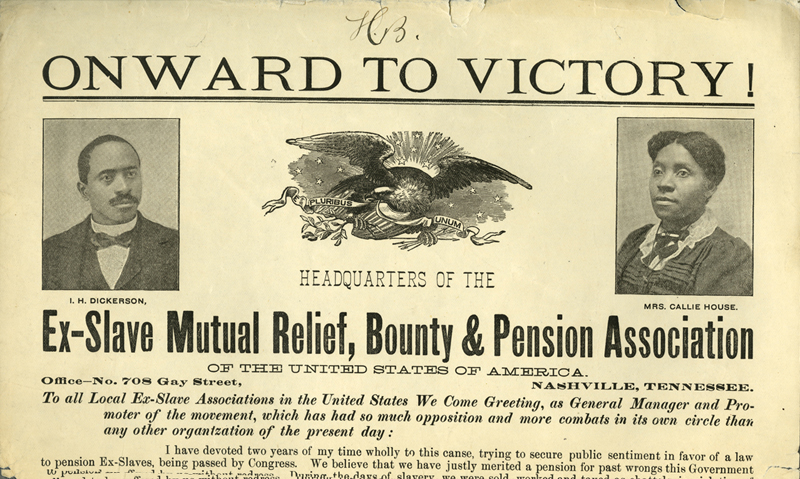
The timeline of reparation-related events spans the period from 1897 to 2018.


CARICOM adressed Callie House in 2014.


Even further back,

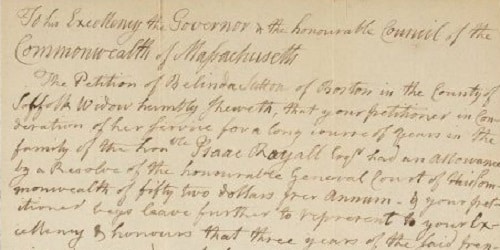
"As a child, Belinda Sutton was kidnapped into slavery in West Africa and brought to Massachusetts. She was enslaved by Isaac Royall Jr., a merchant and politician with strong ties to the British Crown. Royall fled to Canada at the start of the Revolutionary War in 1775; he died in England six years later."
[...]
"Her 1783 petition, excerpted here, marks one of the earliest known cases in U.S. history of a formerly enslaved person acquiring economic reparations for slavery."


kingofnyc

Superstar
Supporter
Joined
Apr 30, 2012
Messages
28,721
Reputation
1,675
Daps
59,290
Reppin
Boogie Down BX
“On January 15, 1923, a group of eight prominent African Americans petitioned Attorney General Harry M. Daugherty asking the U.S. government to continue its prosecution of Garvey on charges of mail fraud, and to investigate acts of violence attributed to Garvey's followers -- among them, the assassination in early January 1923 in New Orleans of J. W. H. Eason, Garvey's former deputy, who had been expelled from the movement at the August 1922 Convention on charges of personal misconduct…”.


He has done more for Black Americans than you ever have and ever will.

Your contribution is posting on social media, the word tether.

Marcus Garvey like the KKK believed (believe) in separatism, that was the only reason they met.

You are not a historian in Black studies (Africana studies), nor a political scientist.

The meeting between Marcus Garvey and members of the Ku Klux Klan in 1922 is one of the most controversial episodes in early 20th-century Black political history. To understand it, you have to look at Garvey’s strategic logic—not approval of the KKK, but a very hardline ideological position.

1. Garvey’s Core Strategy: Separatism, Not Integration

Garvey believed that:
• Black people should build independent economic, political, and social systems
• Racial integration in the U.S. was unrealistic and dangerous
• The long-term solution was self-reliance and, ultimately, a return to Africa

This was the foundation of his movement, the UNIA (Universal Negro Improvement Association).

2. Why Meet the KKK?

Garvey’s reasoning was blunt and tactical:

A. “They are honest about racism”

Garvey argued that:
• Groups like the KKK were open about wanting racial separation
• White liberals, in his view, were hypocritical—claiming equality but maintaining power structures

So he preferred dealing with an “honest enemy” over what he saw as deceptive allies.

B. Shared (but very different) interest in separation
• The KKK wanted segregation to maintain white supremacy
• Garvey wanted separation to build Black sovereignty

He saw a temporary overlap in outcome (separation), even though the motives were completely opposed.

C. Strategic positioning

Garvey believed:
• If both sides agreed that races should be separate, it could accelerate his vision of Black autonomy
• It strengthened his argument that integration was not achievable

3. What actually happened?

In 1922, Garvey met with KKK leaders in Atlanta.
He later publicly stated that:
• The KKK represented the true feelings of many white Americans
• Their stance actually validated his separatist ideology

4. Why this was heavily criticized

Many Black leaders strongly opposed this move, including:
• W. E. B. Du Bois
• Other NAACP figures

Their arguments:
• Meeting the KKK legitimized a violent, terrorist organization
• It undermined the fight for civil rights and equality
• It risked dividing Black political movements

Du Bois even called Garvey “the most dangerous enemy of the Negro race” in this context.

5. Bottom line (precise interpretation)

Garvey did not meet the KKK because he supported them.
He met them because:
• He believed racial separation was inevitable
• He saw the KKK as confirmation of that reality
• He was willing to engage even extreme opponents to advance Black nationalist goals

However, strategically and morally, this decision was—and still is—widely regarded as deeply flawed and damaging.

• Marcus Garvey (Black nationalism & separatism)
• W. E. B. Du Bois (integration & civil rights within the U.S.)

:snoop:

like real talk : what was your purpose of making this post

the question is how and why would a Jamaican born , Jamaican come to America and believe he has the right to meet up with a racist white terrorist group & speak for us “ Black Americans “
 

Ish Gibor

Omnipresence
Joined
Jan 23, 2017
Messages
6,648
Reputation
930
Daps
8,037
:snoop:

like real talk : what was your purpose of making this post

the question is how and why would a Jamaican born , Jamaican come to America and believe he has the right to meet up with a racist white terrorist group & speak for us “ Black Americans “
The answer is right here in this post by Barlow:

I mean…:yeshrug:


“When Marcus Garvey first arrived in the United States in 1916, he quickly found his way to many of New York's most prominent black radical activists and intellectuals. And, at least briefly, Garvey enjoyed their support.

But by 1920, A. Philip Randolph and other black leaders, some of whom had supported Garvey after his arrival in the United States, came to believe that Garvey's program for black advancement was unsound, and that Garvey himself was a charlatan. Though they admired his skills as a propagandist, these prominent black critics derided Garvey's proposed solutions for the problems of African Americans. They believed that his plans for black progress, including the Black Star Line and the establishment of a pan-African empire, were unrealistic and ill-advised; they considered the Universal Negro Improvement Association's grandiose titles and military regalia to be preposterous; and they thought Garvey, with his assumption of a regal posture under the title "Provisional President of Africa," to be little more than a self-aggrandizing buffoon. A. Philip Randolph, who had introduced Garvey to his first American audience on a Harlem street corner, said Garvey had "succeeded in making the Negro the laughingstock of the world."

 
Last edited:

DonB90

Veteran
Joined
Mar 11, 2022
Messages
15,412
Reputation
3,884
Daps
82,867
“On January 15, 1923, a group of eight prominent African Americans petitioned Attorney General Harry M. Daugherty asking the U.S. government to continue its prosecution of Garvey on charges of mail fraud, and to investigate acts of violence attributed to Garvey's followers -- among them, the assassination in early January 1923 in New Orleans of J. W. H. Eason, Garvey's former deputy, who had been expelled from the movement at the August 1922 Convention on charges of personal misconduct…”.


“In 1927 Daugherty twice went to trial on charges of graft and fraud stemming from his actions as attorney general; both trials ended in hung juries. He spent the rest of his life in law practice in Ohio, maintaining his innocence to the end and defending both himself and Harding in The Inside Story of the Harding Tragedy, written jointly with Thomas Dixon in 1932.”


He has done more for Black Americans than you ever have and ever will.

Your contribution is posting on social media, the word tether.

Marcus Garvey like the KKK believed (believe) in separatism, that was the only reason they met.

You are not a historian in Black studies (Africana studies), nor a political scientist.

The meeting between Marcus Garvey and members of the Ku Klux Klan in 1922 is one of the most controversial episodes in early 20th-century Black political history. To understand it, you have to look at Garvey’s strategic logic—not approval of the KKK, but a very hardline ideological position.

1. Garvey’s Core Strategy: Separatism, Not Integration

Garvey believed that:
• Black people should build independent economic, political, and social systems
• Racial integration in the U.S. was unrealistic and dangerous
• The long-term solution was self-reliance and, ultimately, a return to Africa

This was the foundation of his movement, the UNIA (Universal Negro Improvement Association).

2. Why Meet the KKK?

Garvey’s reasoning was blunt and tactical:

A. “They are honest about racism”

Garvey argued that:
• Groups like the KKK were open about wanting racial separation
• White liberals, in his view, were hypocritical—claiming equality but maintaining power structures

So he preferred dealing with an “honest enemy” over what he saw as deceptive allies.

B. Shared (but very different) interest in separation
• The KKK wanted segregation to maintain white supremacy
• Garvey wanted separation to build Black sovereignty

He saw a temporary overlap in outcome (separation), even though the motives were completely opposed.

C. Strategic positioning

Garvey believed:
• If both sides agreed that races should be separate, it could accelerate his vision of Black autonomy
• It strengthened his argument that integration was not achievable

3. What actually happened?

In 1922, Garvey met with KKK leaders in Atlanta.
He later publicly stated that:
• The KKK represented the true feelings of many white Americans
• Their stance actually validated his separatist ideology

4. Why this was heavily criticized

Many Black leaders strongly opposed this move, including:
• W. E. B. Du Bois
• Other NAACP figures

Their arguments:
• Meeting the KKK legitimized a violent, terrorist organization
• It undermined the fight for civil rights and equality
• It risked dividing Black political movements

Du Bois even called Garvey “the most dangerous enemy of the Negro race” in this context.

5. Bottom line (precise interpretation)

Garvey did not meet the KKK because he supported them.
He met them because:
• He believed racial separation was inevitable
• He saw the KKK as confirmation of that reality
• He was willing to engage even extreme opponents to advance Black nationalist goals

However, strategically and morally, this decision was—and still is—widely regarded as deeply flawed and damaging.

• Marcus Garvey (Black nationalism & separatism)
• W. E. B. Du Bois (integration & civil rights within the U.S.)
Chatgpt tether babble


According to Tuskegee Institute, more than 4,700 people were lynched between 1882 and 1959 in a campaign of terror led by the Ku Klux Klan.

This who this fat tether meet with to discuss the future of Black Americans. Think about that for a second.
 
Last edited:

kingofnyc

Superstar
Supporter
Joined
Apr 30, 2012
Messages
28,721
Reputation
1,675
Daps
59,290
Reppin
Boogie Down BX
Since you claim your ancestors never came from “Africa”, why are you worried about what the diaspora of African descents are doing?

Chez Chardé:

"Why the Ghanaians vs Black Americans Reparations Debate Is Ridiculous"


:russ:

u don’t understand how ridiculous she sounds

when she’s half ADOS/FBA … half West African

:snoop:
 

Ish Gibor

Omnipresence
Joined
Jan 23, 2017
Messages
6,648
Reputation
930
Daps
8,037
Chatgpt tether babble
It’s actually the other way around.

But of course you have no valid argument to refute.

Meanwhile you are tethered to a pimp called Tariq Nasheed.

Tariq Nasheed Speaks to WS Richard Spencer - (Discussion 5-1-2017


“The Universal Negro Improvement Association (UNIA) had at least thirty-four divisions in Georgia during the early to mid-1920s.

Black Georgians read its newspaper, the Negro World, and contributed generously to many UNIA causes. The UNIA’s Jamaican founder, Marcus Garvey, had a significant following in the South, particularly in rural areas among tenant farmers and sharecroppers, for his programs of economic independence, racial separatism, and African redemption. His ideas also found strong support in urban areas with large Black populations, in the Caribbean, and in Africa.”

 
Top