
Golayitdown
Veteran
I might be coming home soon as well.
I am starting to doubt WP8 as a platform
shyt was locked like IOS like without the apps.... Pointless....

I might be coming home soon as well.
I am starting to doubt WP8 as a platform
It's more closed than iOSshyt was locked like IOS like without the apps.... Pointless....

Here we go again, this is simply not true LOLplay store

Agreed.It's more closed than iOS
I'm tempted to take my sim card out of my phone, retire it to go back to one of my android phones I have in my closet
This was a lesson learned, but this is what I do with all platforms to make sure I am using what I like the best. Will try a blackberry 10 phone soon as well
What's the best file manager/ file explorer? Used to use Solid Browser, but it's a paid app now.
I use Estrong; its free also

I might be coming home soon as well.
I am starting to doubt WP8 as a platform
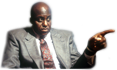
(CNN) -- In the future we will have screens not just in the palm of our hands, but all around us, according to Matias Duarte, Google's Director of Android User Experience.
Talking to CNN at Mobile World Congress in Barcelona, Duarte identified gesturing and "tangibility" as the next major developments in mobile technology.
Read: Mozilla to launch mobile phones with Firefox
"Computers have to work the way people expect and not the other way round. I want everything can you touch on the screen to operate like objects in the real world do. That doesn't mean they have to look like copies of objects in the real world, but they have to be tangible and physical and delightful," he said.
Admitting that using a phone can be an emotional experience, Duarte said: "In the old days we used to be poking at phones. If I were to start poking you, you wouldn't like it, but when you start stroking, it's a totally different message.
Why spend $1,500 for these glasses?
2012: Google's augmented reality glasses
"Right now we only recognize a couple of fingers, and on screens that are small and always in the palm of your hand.
Read: Why life through Google Glass should be for our eyes only
"In the future, we will look at the gestures of your entire body, facial expressions, arms, all of the fingers that you have, and you're going to have screens not just in the palm of your hand, but all around you," he said.
Duarte promised that Google would never clamp down on the user's ability customize Android on their phones.
And he said one of the biggest challenges for Android was designing a platform for communities.
"We don't look at a single target market, we try to think of this as a gift we're giving to the world and that's a big responsibility we take very seriously. I want it to be computing power for everyone. I want it to connect people, and make it open and free, not controlled by any company or any government."
Google is growing increasingly worried about Samsung's position atop the Android smartphone market, according to the Wall Street Journal. During a meeting last year, Android head Andy Rubin reportedly credited the manufacturer's spectacular success, though also warned that Google could fall into a precarious position should Samsung pull too far ahead of competitors.
The company already wields plenty of influence after tallying 39.6 percent of the global smartphone market last year, with Android devices making up a vast majority of that figure. Other Android vendors haven't fared nearly as well, painting a situation that could allow Samsung to demand more from Google, or — in a worst case scenario — follow Amazon's lead and develop its own forked-off version of the OS.
"Motorola is Google's line of defense"
That's where Motorola Mobility comes in. The Wall Street Journal says Google's buyout of the mobile business was an insurance measure (or in Rubiin's words, a "hedge") that could help block Samsung from gaining an unassailable foothold over Android. Of course, the products we've seen from Motorola under Google's ownership (so far) don't exactly gel with that plan. To pull consumers away from Samsung's gravity, Google will need to innovate beyond its Nexus line of hardware and build a device with broad appeal. Perhaps the so-called "X Phone" is the answer.
Samsung has announced plans to kill off its Bada operating system and merge it with Tizen, the open source project formed from the ashes of Nokia and Intel's MeeGo. Yonhap reports comments from Hong Won-pyo, the president of Samsung's Media Solutions Center, saying that once Tizen devices come out, the two will come together. Samsung plans to release multiple Tizen devices this year.
Tizen phones will be able to run apps designed for Bada devices, but it won't be possible to upgrade a Bada phone to Tizen. "Rather than seeing this as a straightforward merger, it's better to view it as a transition to a better service," says Hong, indicating that Bada wasn't a good fit for modern smartphones. We initially heard that the two operating systems would fold into each other over a year ago, but Samsung played down the reports a few days later. Samsung adds Tizen to its lengthy list of supported mobile operating systems which includes Android, Windows Phone, and its own bada OS -- a custom-built mobile OS which the company will make open source in 2012. A Samsung spokesman told Reuters, "We've been a core Linux partner ... and this is in line with our strategy of supporting many platforms." With Microsoft partnering with Nokia and Google buying itself a hardware company it's easy to see why Samsung would desire greater control over its mobile OS future, even if the success of Tizen feels like a longshot while webOS is left to wither on the HP vine.
Google Now doesn’t get the recognition it deserves, but that will change if Google’s Matias Duarte, director of Android user experience, has anything to do with it, and it may well be in a comfortable marriage with Project Glass. SlashGear sat down with Duarte at Mobile World Congress this week to talk Google Now and how it and Glass, not only share some common DNA, but might well find themselves the future of Android itself. For Google Now, meanwhile, it’s still very much a work-in-progress. Duarte wouldn’t give us any specific examples of where the context engine would go next, but it’s clear that with the amount of work that has gone into Now so-far, it’s likely to play an increasingly central role in future iterations of Android. As Glass reaches the consumer market, meanwhile, later in 2013, that will likely see Now’s brand of confident predictions tested more thoroughly. Users might be less willing to accept misguided results on a mobile device versus in a desktop browser, but they’ll be even less accommodating of poor suggestions floated in their wearable display. The Glass project – and indeed Google Now – are still young, but there’s a lot about the future of Android that rests upon their reception and development

I need to know how everything works and feels breh...its the only way to achieve a full grasp of how everything is going in tech. I even had an iPhone 5 for about 9 days
This clown, that was stanning iPhone and iOS back when I was rocking a Galaxy S, is trying to call me a rookie.... SMH!

I really wish the SOHH boards were still up. The amount of shyt we have on this dude...


