
You are using an out of date browser. It may not display this or other websites correctly.
You should upgrade or use an alternative browser.
You should upgrade or use an alternative browser.
President Maduro of Venezuela urges US diplomats to leave country within next 72hrs
- Thread starter Kwabena
- Start date
More options
Who Replied?
loyola llothta
☭☭☭
29 September 2020
Colombia-U.S. Axis: Hitting at Venezuela
By W.T. Whitney Jr.
Secretary of State Michael Pompeo and Colombian President Iván Duque, meeting in Bogotá on Sept. 20, talked about “managing the COVID-19 response … narcotraffickers … and [President] Maduro’s illegitimate regime,” according to the State Department. A Cuban observer insists they explored “when to begin military actions and sabotage in Venezuela.” Elliott Abrams, the White House official responsible for Venezuelan affairs, dismissed the idea of U.S. military engagement as an “absurdity.”
Link:As talks were taking place in Bogotá, joint naval and air force exercises were underway along Colombia’s Caribbean coast. Supposedly, they were preparing to fight an illicit drug trade attributed to Venezuela. That’s why the U.S. Navy has been monitoring Venezuela’s northern coast since April. Colombia itself, of course, supplies most of the illegal drugs entering the United States.
The specter looms of an “October Surprise,” that staple of U.S. presidential electioneering. It’s widely assumed that to win in Florida, candidates must show off their anti-revolutionary zeal to voters of Cuban or Venezuelan origin. Decisive action against Venezuela now might do the trick.
Colombia acts as the local U.S. enforcer as regards Venezuela. That role grew out of the U.S.’ “Plan Colombia,” which after 2000 had the United States building up Colombia’s military, harassing leftist insurgents, and establishing a base for regional military operations—all under the pretext of combating illegal drugs.
Before arriving in Bogotá, Pompeo had visited Venezuela’s other neighbors—Surinam, Brazil, and Guyana. In Boa Vista, located 141 miles from the Venezuelan border, he met with Brazil’s foreign minister and commiserated with Venezuelan refugees.
Pompeo backed Guyana’s resistance to a Venezuelan claim on the Essequibo region, where ExxonMobil is extracting oil. He authorized U.S. participation in military patrols along that disputed border. China, investing in Guyana and Surinam, has invited both to join its Belt and Road initiative.
On Aug. 18 in Bogotá, White House National Security advisor Robert O’Brien had already presented President Duque with a new version of Plan Colombia called “Colombia Grows.” By way of nurturing the alliance, it offers “rural development, infrastructure expansion, [and] new opportunities for investment.” The presence at the meeting of Admiral Craig Fuller, Chief of the U.S. Southern Command, and Mauricio Claver-Carone, head at the time of the National Security Council’s Western Hemisphere Division, suggests Venezuela was on the agenda.
Venezuela is in the spotlight now for good reason. National Assembly elections take place there on Dec. 6, and the right-wing opposition is fractured. Both the United States and Juan Guaidó, the former National Assembly president named as Venezuela’s president by the United States, want an election boycott. Other opposition groups and leaders, notably former presidential candidate Henrique Capriles, will be participating.
Signs of unity are cropping up—not good news in Washington.
Says a government supporter:
“on December 6, many of us will vote for the government, others will vote for the opposition, but all of us … will be voting against the criminal blockade that has caused us so much damage.”
For the U.S. government, any hint of election normalcy would be a reverse. Sympathetic world leaders, counting on a new government in Venezuela but detecting signs of durability, might adjust their thinking. Maybe the present show of hostility—the meetings, naval maneuvers, and new sanctions on diesel fuel—would keep them in line.
U.S. strategists may be fretting also because regime change hasn’t happened, despite all the financial and logistical support that’s been delivered to Venezuelan dissidents and plotters during the presidencies of both Presidents Maduro and Chávez.
The list of recent attacks is impressive: street protests in 2014 and 2017, a drone attack against Venezuela’s top leaders in August 2018, humanitarian aid pushed across the Colombia-Venezuela border in January 2019 to incite a military uprising, a cyber-attack causing a nationwide electrical blackout in March 2019, a military officers’ coup attempt in April 2019 backed by Guaidó, and in May renegade Venezuelan troops led by former U.S. Green Berets invading from Colombia.
Plotters often plan and prepare in Colombia and find refuge there afterwards.
U.S. economic sanctions and U.S. plundering of Venezuela’s economic assets abroad have led to devastating shortages of credit, food, medicines, and supplies for oil production, which has collapsed. Oil exports have accounted for more than 95% of the country’s export income. There’s no other money available to pay for imported food and medicines or for social services. Even so, Venezuela’s government survives.
In Colombia presently, societal disruption and a newly energized protest movement may be deflecting the government’s attention from regime change in Venezuela.
Unemployment is 20.2 percent; 19 million Colombians live in poverty, eight million in extreme poverty; 6.5 percent of the people are food-deprived; 2 million Colombians are illiterate; the health care system is a disaster. According to one report, 992 social leaders and 229 former FARC insurgents have been killed since late 2016, when the government’s peace agreement with the FARC was signed.
A U.S. “Security Force Assistance Brigade” arrived in early June to prepare a “full spectrum offensive against Venezuela.” But Colombia’s Senate rejected its presence, a court decision validated the Senate’s action, and then Defense Minister Carlos Holmes Trujillo welcomed the U.S. troops anyway. A U.S. military presence in Colombia is not new, but now popular opposition to more U.S. troops is growing.
Police in Bogotá killed law student Javier Ordóñez on Sept. 9. He had joined many thousands who were protesting the killings of social leaders, a flawed response to the COVID-19 pandemic, and neoliberalism. Later that day, the police killed 11 young people. Broadening their demands, demonstrators called for Pompeo’s visit and the U.S.-Colombian military exercises to be canceled.
Former President Álvaro Uribe, meanwhile, is under house arrest. This recipient of the U.S. Medal of Freedom and collaborator with drug traffickers and murderous paramilitaries is accused of complicity in three paramilitary massacres, including the El Aro massacre of 1997. Former paramilitary chieftain Salvatore Mancuso, responsible for that massacre and recently released from a U.S. prison, is resisting repatriation to Colombia, where he might have to testify against Uribe. An obliging U.S. government may let him stay. Colombian critics of Uribe and his protégé Duque are outraged.
In both countries, ramifications of the pandemic, serious economic problems, and political divisions serve, if for nothing else, to lessen the urgency of other concerns. It’s a context in which, for many Colombians, plotting against Venezuela, especially in collaboration with the United States, may no longer be a priority. In Colombia, reports one observer, Duque has “all but lost legitimacy as president.”
If indeed direct military intervention is unlikely, the option of undercover war remains. In fact, paramilitary detachments have been operating in Venezuela for many years. The U.S. government itself recently showed what war in the shadows will look like.
Venezuelan authorities are prosecuting a CIA-connected former U.S. Marine who, well-armed and with explosives, was arrested on Sept. 14 with Venezuelan accomplices near a large oil-refinery complex in Falcón State. Matthew John Heath is accused of preparing “acts of sabotage.”
Question: How committed are anti-Venezuelan hawks in the United States to direct military intervention? Maybe they doubt the capabilities of their Colombian ally. Maybe a mess of the kind visited upon Iraq, Afghanistan, and Libya would be too close to home. Maybe, in the end, harassing the Maduro government, destabilization, and bluster will be enough, at least for keeping their foreign and domestic friends in line.
Masses of working people in Venezuela are mobilized for better lives and for peace. They are anti-imperialist. They are why their government survives. It would survive easier with a kindred movement in Colombia. A U.S. version would be icing on the cake.
Colombia-U.S. Axis: Hitting at Venezuela
loyola llothta
☭☭☭

5 October 2020
Venezuela Announces New Fuel Scheme as Iranian Gasoline Arrives
The Maduro government also presented a new "anti-blockade" law.
By Manuela Solé
A second Iranian convoy of tankers is arriving in Venezuela this week with over 800,000 barrels of gasoline.
Forest, Faxon and Fortune ships will be discharging the fuel shipments in the El Palito and Paraguana refinery ports over the coming days at a moment when the nation’s gasoline supply finds itself in a critical state.
Last May, a flotilla of five Iranian vessels made a first delivery of 1.5 million barrels of gasoline and fuel additives, as well as parts for refineries.
Another shipment destined for Venezuela with an estimated 1.1 million barrels was seized in international waters in August in a US civil forfeiture case. The fuel will allegedly be auctioned and the funds destined to the US Victims of State Sponsored Terrorism Fund.
With US sanctions targeting the Caribbean country’s oil industry as well as crude-for-fuel swap deals, fuel shortages have become widespread in recent weeks throughout the country. Caracas has turned to Tehran for assistance with both fuel cargoes and restarting the country’s refining industry.
The El Palito and Cardon refineries are currently producing 55,000 barrels per day (bpd), well below maximum capacity and short of meeting demand.
The new Iranian fuel shipment saw the Venezuelan government unveil a new fuel rationing system based on license plate numbers which will begin next Monday. President Maduro announced that new cargoes have been secured but that the country needs to meet its gasoline and diesel demand with domestic production.
Fuel shortages, as well as a deterioration of public services, have generated protests in a host of states in recent days. Local authorities deployed riot police, with an unconfirmed number of arrests thus far.
On Tuesday, the Maduro government announced a new initiative to tackle the effects of US sanctions by submitting an “anti-blockade” bill at the National Constituent Assembly. The legislation is claimed to provide the Venezuelan state with new institutional and legal capacities to face the US blockade.
In his speech presenting the bill, Maduro highlighted the harmful effects of the US Treasury measures on the oil industry and the difficulties they created in sustaining social programs.
“In five years, the blockade cut off financing to the country, preventing the state from having the foreign exchange to purchase food, medicine, supplies and essential raw materials for economic activity,” he emphasized.
Maduro explained that the new law will look to stimulate economic activity by creating better and more flexible conditions for private sector investment. This will reportedly entail creating labor and tax benefits for businesses.
Link:
Venezuela Announces New Fuel Scheme as Iranian Gasoline Arrives

GreenGhxst
Veteran

loyola llothta
☭☭☭
US deploys missile destroyer off coast of Venezuela

US deploys missile destroyer off coast of Venezuela
wsws.org
loyola llothta
☭☭☭
More going on in South america
loyola llothta
☭☭☭

22 October 2020
Major Oil Discovery Puts Suriname in Global Spotlight Amid Venezuela Crisis and US-China Trade War
By Uriel Araujo
Although Guyana’s newly discovered oil reserves and US interests in the regionhave been the focus of attention, not many analysts have been noticing neighboring Suriname, one of Latin America’s poorest countries.
Guyana’s prospects have certainly changed tremendously – its economy was forecasted by the IMF to grow 85% percent this year. We should expect similar things in Suriname with the discovery of new oil fields offshore that are estimated to have 1.4 billion barrels, according to Rystad Energy. This has already attracted interest from foreign investors.
The wider Guyana-Suriname Basin is being described as the world’s number one offshore exploration. ExxonMobil has already discovered the equivalent of more than 8 billion barrels worth of oil in the region and has announced its 18th oil discovery in the Stabroek block in Guyana. Oil experts believe that what Exxon is doing in Guyana can be reproduced in Suriname.
Last month, after three discoveries, oil company Apache announced a fourth offshore well, all in Suriname’s Block 58. Recently, Shell bought a package of Kosmos Energy’s exploration assets, including a 33% stake in Suriname’s Block 42. Malaysian oil company Petronashas already spudded its first well in Suriname on October 12.
In fact, this makes Suriname a potentially future wealthy petro-state. This in itself is sure to place the country on the international radar soon, and this is happening at a time of crisis.
This region is indeed rich in national resources. In fact, there is also a new gold rush going on – gold prices have gone up 25% this year – with conflicts in the Brazilian-Suriname border region between local indigenous tribes and artisanal miners from Suriname and elsewhere. Such problems could be used in the narrative wars depending on how leaders in the Suriname capital of Paramaribo position themselves on the Venezuela issue. The issue of drug trafficking and gold smuggling is one of the main rhetorical weapons employed by the US against Venezuela.
Furthermore, Chinese aspirations in the Caribbean region and the Northeastern Atlantic coast of South America have been increasing friction between Beijing and Washington. Suriname has seen a recent wave of Chinese companies and Chinese migrants arrive. Also, Beijing and Paramaribo have held a strategic cooperative partnership since November 2019 – in areas such as communication, energy and infrastructure construction but also medicine, law enforcement and coordination on global issues. Moreover, Suriname and Venezuela reaffirmed on August 10 their commitment to further expand ties, including in energy, food, and cultural agreements.
Mike Pompeo’s September 17 visit to Suriname and Guyana made him the first US Secretary of State to do so.
Pompeo did ask Suriname and Guyana to favor US businesses over China. The latter has invited both South American countries into its Belt and Road Initiative.
In the near future, we can expect a lot of competition between oil giants such as Chevron, ExxonMobil and the Chinese National Offshore Oil Corporation (CNOOC) over Surinamese oil in international bidding. And, as we have seen with the dispute over 5G and Chinese company Huawei (involving Brazil as well), there is a global US-Chinese trade war going on. So, it is not just “the attraction of oil”, as some analysts have described it. Trade disputes often are an aspect of geopolitical competition and closer economic relations may accompany cooperation in other areas and narratives of “shared values”.
Another hot issue is Venezuela. It is surrounded by nations that do not recognize the current government. It borders to the west with Colombia; to south with Brazil; and, finally with Guyana (to the East). In fact, there would be, in terms of physical continuity, a straight line towards the Atlantic Ocean in the Guyana Shield Region of small countries aligned with the US over hostilities against Caracas, further isolating and encircling Venezuela.
After Pompeo’s trip, some analysts are concerned the US could be planning another intervention against Venezuela. Pompeo’s visit to Suriname was certainly also aimed at exerting some influence on Suriname ‘s new president Chan Santokhi. Last week, Washington sent Homeland, Treasury, USAID, State Department, and high level teams from three other Departments to Suriname. It is the first time that six American government agencies were simultaneously in a mission in Suriname.
To counter Chinese influence, the US can certainly offer plenty of investment opportunities and also help Suriname with its engagement with the IMF, as well as with USAID. Should Washington and Paramaribo relations further develop, Suriname shall be expected to distance itself from Venezuelan President Nicolas Maduro. Venezuela is the one hot issue the Caricom bloc, of which Suriname is a member, currently faces. So far, Caricom has maintained a non-interference position.
The northeast coast of South America remains quite tense, with migration crises, smuggling as well as narcotics-related conflicts and border disputes involving Venezuela and Guyana. The US and Guyana conduct joint maritime patrols near the Venezuela-Guyana border and the latter supports “democratic change” for Venezuela. Should Venezuela-Guyana tensions escalate, Suriname too will be pressed to take a side.
On Monday, Suriname and Guyana issued a joint statement reaffirming their commitment for cooperation in transportation infrastructure and other areas. However, competition between the two countries for the development of their deepwater resources may also ensue and Suriname’s close ties with Venezuela are certainly a concern to Guyana.
We should be hearing a lot about Suriname in the near future on the back of these developments. The discovery of oil fields is not the only thing that is new for Suriname. The geopolitical scenario too has changed, with a so-called “new cold war” going on in South America and the Caribbean between Russia, China and Venezuela on one side, and the US, Colombia, and Brazil on the other.
For Suriname, therefore, the current scenario may present an almost existential problem. Considering US history of interference abroad and the tense situation around Venezuela, Suriname could very well find out that being in the spotlight might also be a curse. In 2017 when Russian Foreign Minister Sergei Lavrov visited Suriname, Moscow and Paramaribo were close to signing a military cooperation agreement – but the conversation stalled. Suriname would perhaps benefit greatly from restarting such a conversation. Due to its size and its limitations, Suriname cannot afford to be “neutral”: it will need to take a side in the current “new cold war”.
Link:
Major oil discovery puts Suriname in global spotlight amid Venezuela crisis and US-China trade war
loyola llothta
☭☭☭
The United States said that it sold oil from #Iran seized on its way to #Venezuela - two countries under US economic sanctions - for more than $40 million

US sells oil seized from Iran to Venezuela for $40 million
news.yahoo.com
Last edited:
loyola llothta
☭☭☭

2 November 2020
Like Old-Time Piracy: The US Seizes Venezuelan Oil and Sells It
Venezuela faces gasoline supply problems due to arbitrary sanctions whereby the U.S. seeks to destabilize the Bolivarian revolution.
By Telesur
The U.S. Justice Department announced on Thursday that President Donald Trump’s administration sold over 1.1 million barrels of refined petroleum that were onboard the Luna vessel, which was seized by the United States from Iran on August 14, 2020.
“The ships’ owner transferred the petroleum to the government, and we can now announce that the United States has sold and delivered that petroleum,” the Assistant Attorney General for the National Security Division John Demers said.
The Trump administration justified its action by arguing that the money from the oil sale to Caracas would supposedly benefit the Iranian Revolutionary Guard Corps (IRGC)-Quds Force, which is considered a terrorist organization.
In recent years, Venezuela has faced gasoline supply problems because of the arbitrary and unilateral sanctions that the U.S. government established as a mechanism to destabilize the Bolivarian revolution and President Nicolas Maduro.
In this context, the United States even threatened to send troops to the Caribbean to prevent the supply of fuel to the South American country.
On May 23, the first of the ships loaded with fuel from Iran arrived in Venezuela’s territorial waters. Almost three months later, the Department of Justice reported that Washington had achieved “the largest seizure of fuel shipments from Iran,” for a total amount of 1,116 million barrels of oil, which Venezuela had already paid for.
“The U.S. insisted on chasing the gasoline we were importing. It even stole three million barrels from us,” President Maduro said on October 28.
The day before, the main Venezuelan refinery was attacked by a missile, an act labeled as terrorist by the Oil Minister Tareck El Aissami.
link:
Like Old-Time Piracy: The US Seizes Venezuelan Oil and Sells It
loyola llothta
☭☭☭
Election time in the US. Biden pitch his Latin American plan
loyola llothta
☭☭☭
When @TheEconomist pronounces Venezuela’s parliamentary election rigged before it even happens, and produces zero evidence to back up its claim, you can be sure the State Department is working to delegitimize the contest and compelling its paid opposition proxies to boycott it.
loyola llothta
☭☭☭
4 December 2020
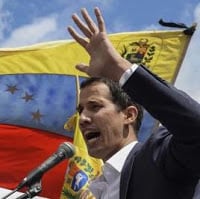
US-Backed Opposition in Venezuela Is in Freefall, Have Only Themselves to Blame
By Pablo Vivanco
Most people around the globe would agree that 2020 has been a year to forget. This is certainly, if not especially, true for Venezuela’s opposition, and the upcoming parliamentary vote will only add to their misfortunes.
A revolt from within the opposition ranks who sought the ouster of self-proclaimed ‘president’ Juan Guaido as head of the National Assembly set the tone in early January, with scandals and defections cascading month after month.
Among the most notable gaffes of course was the preposterous invasion failure in May that the hapless leader feverishly denied involvement in. A member of Guaido’s inner circle resigned from his ‘post’ after the ex-US Marine turned-mercenary who headed the operation produced a recorded phone conversation along with a multi-million contract of the plot bearing Guaido’s signature.
As this now infamous year winds down, things aren’t looking any better for the would-be leader and Co., given that they will almost certainly end up in political purgatory after votes are counted in the country’s legislative election on December 6.
The most likely result of the contest – the 26th election held in 21 years of the Bolivarian Revolution – is a victory for the Venezuelan United Socialist Party (PSUV) led by Nicolas Maduro, who even promised to step down if the opposition wins.
A certain outcome however, is that Guaido and his US-backed coalition will be left without any representation in the National Assembly after the group opted to boycott the elections, claiming a lack of guarantees for free and fair elections.
Their allegations have been echoed by US officials and parrotted by some in the mainstream media, with others going as far as to cry fraud before any vote has actually taken place.
This isn’t the first time Venezuela’s opposition parties have disavowed election authorities and results. In fact, prominent sections of the opposition have attempted to levy fraud charges in every one of those over two dozen elections, with the exception of two – the 2007 constitutional referendum and the 2015 legislative elections, both of which were won by the opposition.
Opposition forces also boycotted the elections in 2005 and the 2018 presidential vote.
As with all previous elections, the upcoming vote will involve more than 1,500 registered observers involving 200 international monitors and including academics and representatives from regional groups such the Puebla Group and CARICOM. Caracas had also asked the EU to send an observer group, but this offer wasn’t taken up.
Despite the boycott from Guaido’s allies, over 14,000 candidates from over 100 parties and organizations – almost all of them connected with opposition parties from the right and left not affiliated with Guaido – are vying for the 277 seats in the National Assembly.
With over two decades of history to look on, it is clear that there are no guarantees that would allow Venezuela’s opposition to participate in a vote let alone accept the result, other than a guarantee that they would be declared winners, of course.
But even if they had contested this vote, Guaido’s forces would have been unlikely to repeat their 2015 result, when they won nearly two-thirds of the seats in the National Assembly. If there is dissatisfaction within the ranks of Chavismo due to the ongoing woes with oil, goods and price speculation which have been exacerbated by Washington’s sanctions, there is equal or even greater disillusionment in the opposition camp given that Guaido has proven to be at least as ineffective as opposition leaders before him.
The attempt by Maduro’s regional adversaries in Washington, Ottawa and elsewhere to crown Guaido as the country’s president was used to illegally seize Venezuelan state assets in the form of refineries, oil and gold, with the pretext of these being administered by this parallel ‘government.’
Almost two years after the move and the opposition has once again fallen into the divisions and infighting that have characterized it throughout the last two decades, especially given the serious allegations of corruption and misuse of funds being administered by Guaido ‘officials.’ For his part, Guaido has been unable to wrestle control of any institution in the country, and is on the brink of definitively losing control of the only one they did control.
With his stock in freefall, Guaido’s allies continue to jump ship, while others are invariably maneuvering to take the wheel.
But with Guaido as its leader or no, 2021 could be even bleaker than this past year for Venezuela’s opposition. Not only will they lack representation in any of the country’s key institutions, effectively removing their arguments about being the only legitimate protectors of the constitution, but they also have a dwindling roster of allies in the region.
Bolivia will likely join Argentina and Mexico in not participating in the anti-Maduro initiatives at the so-called Lima Group, which hasn’t even been able to meet in Lima given the turmoil that has claimed two presidents in as many years. Ecuador looks poised to have its own political shift in 2021, leaving a handful of governments who are immersed in their own political and economic crises.
Importantly, there will also be a new administration in Washington, which will almost certainly continue to attempt to overthrow Maduro and the Bolivarian Revolution, but not in the same way as the outgoing government. The Biden White House (and Pentagon, and Langley) will have to reconcile with the fact that Guaido is not the President of Venezuela, nor is he a tenable option to lead a viable opposition.
link:
US-Backed Opposition in Venezuela is in Freefall, Have Only Themselves to Blame
loyola llothta
☭☭☭
loyola llothta
☭☭☭
Biden's announcement that regime-change is still very much a priority means that a media onslaught will be coming soon. That's why VA's on the ground reporting is as needed as ever. A $10 or $20 monthly subscription goes a long way to support our work: https://venezuelanalysis.com/donate
Last edited:


