The Random stories of Black History thread!!!!!!!!!!!!!!

Sonic Boom of the South

Louisiana, Army 2 War Vet, Jackson State Univ Alum
Supporter
Joined
May 1, 2012
Messages
83,558
Reputation
24,853
Daps
303,216
Reppin
Rosenbreg's, Rosenberg's...1825, Tulane
Tumblr-l-47262099638218.jpg


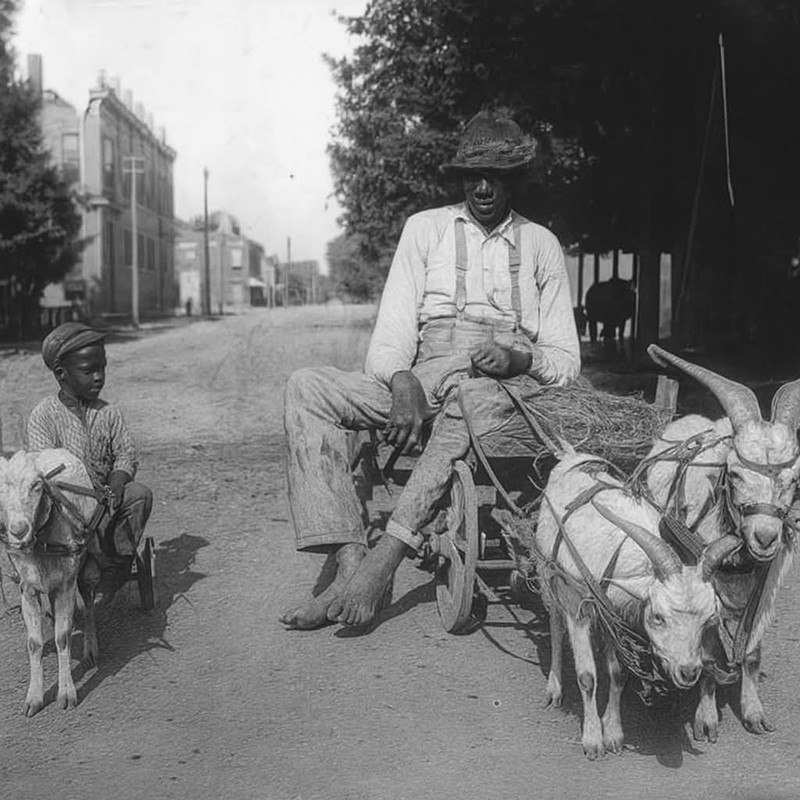
John Rogan, the tallest Black American in history and the second-tallest person ever recorded at 8 feet 9 inches, stood as a towering figure in more ways than one. Living in the Jim Crow South, he drew constant attention and was often called the "Negro Giant" by newspapers of the time. Despite being approached with numerous offers to join carnivals and sideshows, Rogan refused to be put on display, choosing instead to earn a living with dignity by meeting incoming trains and hauling luggage to local hotels. Though a condition left him unable to walk or stand on his own, he ingeniously crafted a goat-drawn cart from his bed, turning it into a homemade wheelchair that allowed him to move independently. His strength, resilience, and refusal to be reduced to a spectacle make him a powerful example of self-respect and ingenuity.
 

Sonic Boom of the South

Louisiana, Army 2 War Vet, Jackson State Univ Alum
Supporter
Joined
May 1, 2012
Messages
83,558
Reputation
24,853
Daps
303,216
Reppin
Rosenbreg's, Rosenberg's...1825, Tulane
Kc5Tas9.jpg


On this day
September 23, 1955

All-White Jury Acquits White Men Who Murdered 14-Year-Old Emmett Till

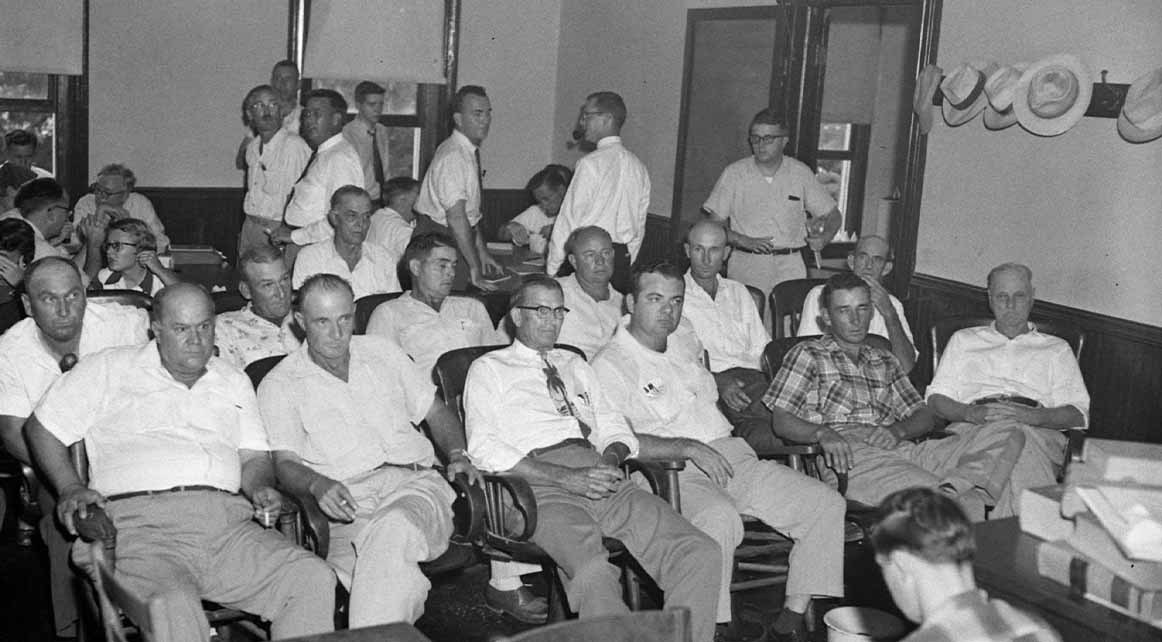
On September 23, 1955, an all-white jury in Tallahatchie County, Mississippi, acquitted Roy Bryant and John Milam, the two white men who murdered Emmett Till, a 14-year-old Black boy. Despite the fact that Black citizens comprised over 63% of Tallahatchie County’s population, not a single Black person served on the jury. Under state law, only registered voters qualified as jurors, and not one Black citizen in Tallahatchie County was allowed to register to vote at the time.

During the summer of 1955, Emmett Till traveled from Chicago to Mississippi to visit his family. One day, Emmett and a group of friends and cousins went to a local store to buy candy. Emmett was later accused of acting “familiar” with the young white female storekeeper, Carolyn Bryant. In response, Roy Bryant, Carolyn’s husband, and John Milam, Mr. Bryant’s half-brother, abducted Emmett from his great-uncle’s home. The men drove Emmett to a storage shed on Milam’s property in Drew, Mississippi, where they took turns torturing and beating him with a pistol, before forcing him to load a 74-pound fan into the back of their pick-up truck. The men then drove Emmett to the edge of the Tallahatchie River, ordered him to remove his clothes, and shot him in the head. Once the child was dead, Bryant and Milam chained the fan to his corpse and rolled it into the river.

At trial, several Black witnesses bravely testified for the State against Mr. Bryant and Mr. Milam, despite threats on their lives if they dared to testify. Among the witnesses was Mose Wright who testified that Mr. Bryant and Mr. Milam were the men who took Emmett Till from his home. Emmett's mother, Mamie Bradley, also courageously traveled from Chicago to attend the trial and identify her son’s body.

Mrs. Bryant testified as well, describing the alleged harassment, including a man trying to hold her hand and whistle at her, and identifying the person responsible as a Black man, but refusing to identify Emmett by name. In asking the jury to acquit, defense lawyers called the State’s theory of motive “illogical,” despite the fact that white mobs in the South had murdered hundreds of Black men accused of similar conduct, with little to no evidence of guilt.


Lawyers for the defense and the prosecution appealed to white jurors’ commitment to racial hierarchy. Defense lawyer John Whitten accused civil rights groups of planting Emmett's body in the river as a challenge to the “Southern way of life.” District Attorney Gerald Chatham told the jury that Emmett deserved punishment for “insulting white womanhood,” but argued that Mr. Bryant should have limited his vengeance to “beating [him] with a razor strap.”

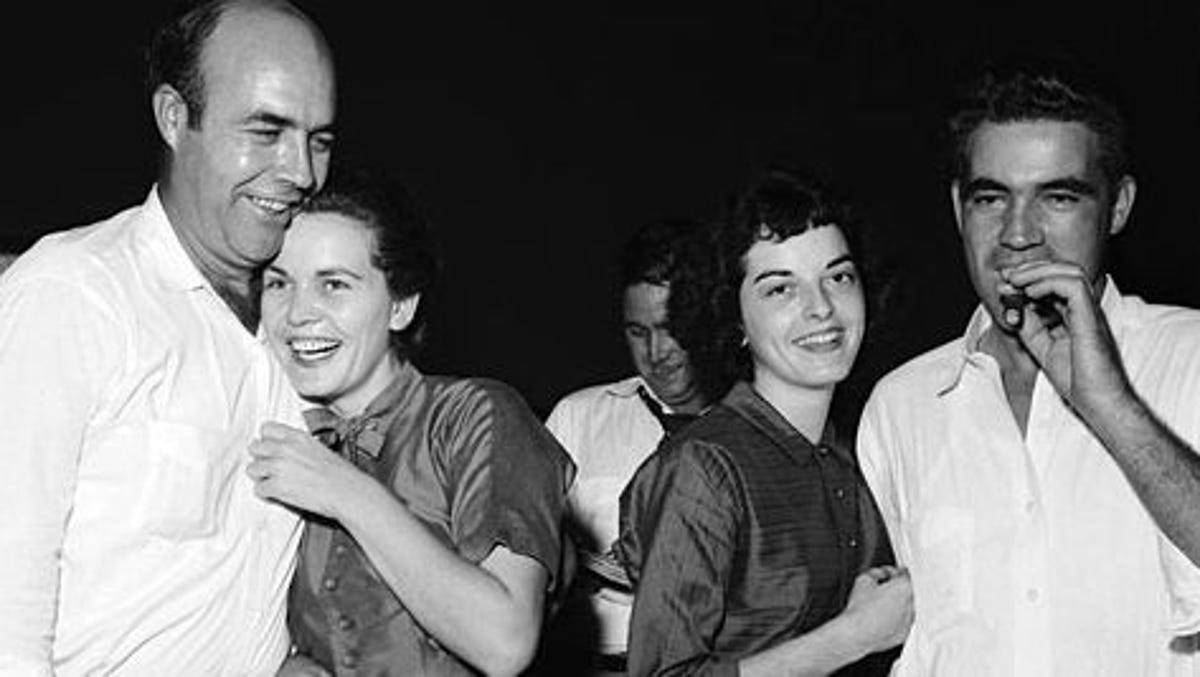
The jury only deliberated 67 minutes before returning a verdict of not guilty. One juror later said: "We wouldn't have taken so long if we hadn't stopped to drink pop."

Just a few months later, Look Magazine reportedly paid $4,000 to Mr. Milam and Mr. Bryant for their confessions. In a story published by the magazine on January 24, 1956, Mr. Milam and Mr. Bryant graphically described their abduction of Emmett Till from his uncle's home, admitting that they pistol-whipped him, forced him to disrobe, tied a heavy cotton gin fan around his neck with barbed wire, shot him, and dumped his body in the Tallahatchie River.


Kc5TYW7.jpg
 

Sonic Boom of the South

Louisiana, Army 2 War Vet, Jackson State Univ Alum
Supporter
Joined
May 1, 2012
Messages
83,558
Reputation
24,853
Daps
303,216
Reppin
Rosenbreg's, Rosenberg's...1825, Tulane
Kl295AX.jpg


On this day
September 24, 1964


At Least 7,500 White Demonstrators Protest Racial Integration of New York City Schools

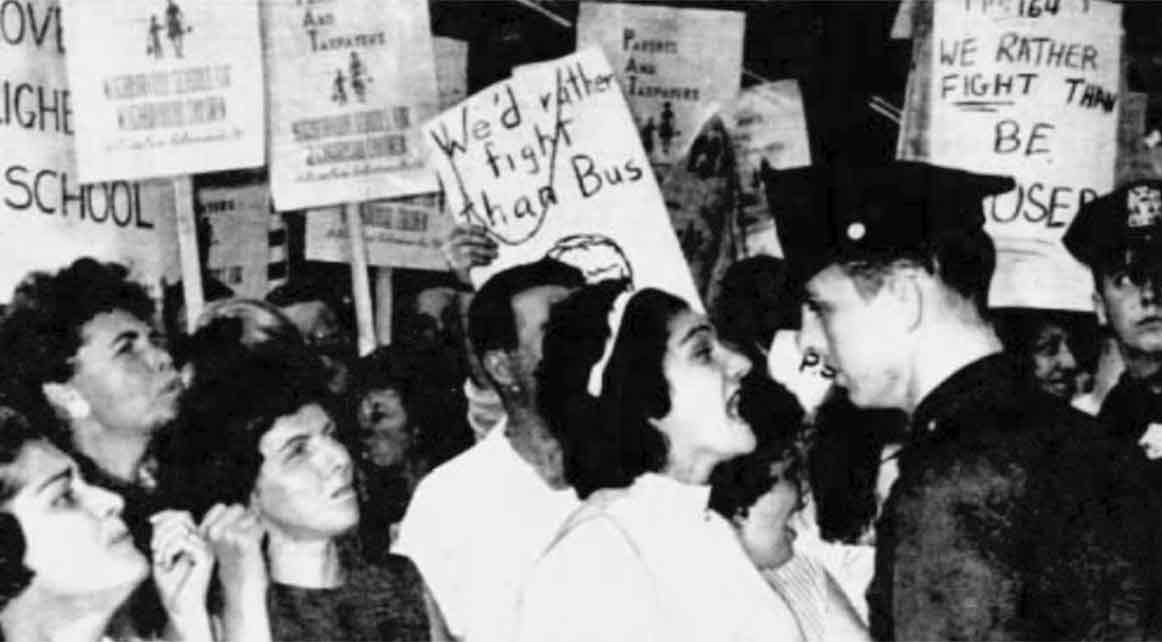
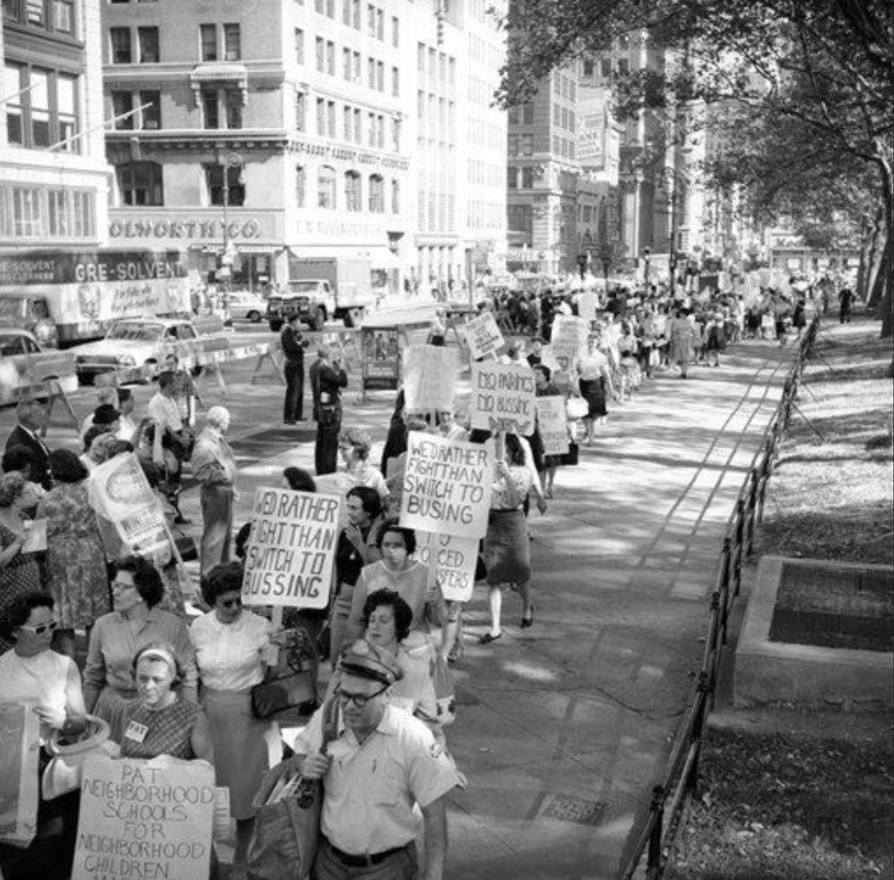
On September 24th, 1964, a decade after Brown v. Board of Education ruled that schools must be racially integrated, a crowd of at least 7,500 demonstrators, almost all of whom were white, marched outside New York City Hall to protest a policy aimed at increasing racial integration in the city’s public school system. The protest was organized by two groups formed by white parents: the Parents and Taxpayers Coordinating Council and the Joint Council for Better Education.

The protestors arrived at City Hall with placards to picket against the Board of Education’s decision to institute a compulsory busing program, transferring students to and from only eight elementary schools in the New York City area; four of these schools had mostly white students and four were predominantly Black.

The week prior, the same two groups of white parents sponsored a two-day school boycott at the start of the school year to protest the busing policy. During the boycott, pupil absences were more than double the usual number. The boycott resulted in the loss of $1.6 million in school aid to the New York City public school system because the aid, “intended to compensate communities with rising school populations,” was calculated on the basis of the number of students in attendance at the start of September.

Outside City Hall on September 24, the crowd carried signs that read “we’d rather fight than bus.” The executive secretary of the Parents and Taxpayers Coordinating Council, a white woman named Rosemary Gunning, argued that they were “asking only that the [City] Council take a position in favor of the traditional neighborhood school concept.” Protestors attempted to storm the City Hall after the council members inside voted to uphold the busing initiative, but they were stopped by the police.


Kl2dHPf.png
 

Sonic Boom of the South

Louisiana, Army 2 War Vet, Jackson State Univ Alum
Supporter
Joined
May 1, 2012
Messages
83,558
Reputation
24,853
Daps
303,216
Reppin
Rosenbreg's, Rosenberg's...1825, Tulane


Civil Rights activist Fannie Lou Hamer with her daughter, 1971. As a result of a "Mississippi appendectomy” (forced sterilization), Fannie Lou was unable to have children so she & her husband adopted 2 local impoverished girls. When Fannie went to a hospital in 1961 to have a uterine tumor removed, she left without her reproductive organs. Dubbed a 'Mississippi appendectomy,' it was part of a statewide effort to reduce the Black population through forced sterilization.
 

Sonic Boom of the South

Louisiana, Army 2 War Vet, Jackson State Univ Alum
Supporter
Joined
May 1, 2012
Messages
83,558
Reputation
24,853
Daps
303,216
Reppin
Rosenbreg's, Rosenberg's...1825, Tulane
This piece of shyt c00n. :scust:


KZgLTMv.jpg


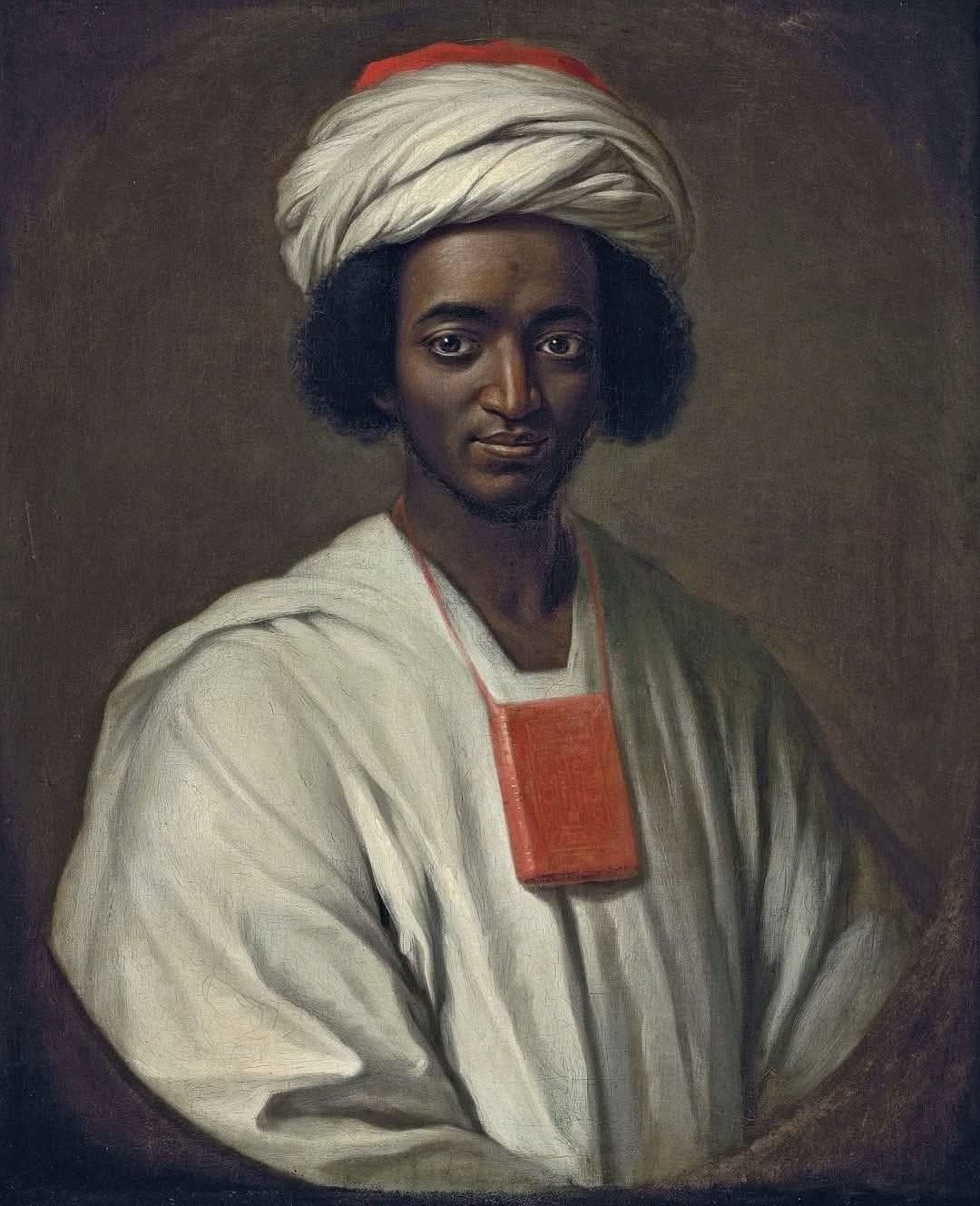
A Sląve Trader Who Became a Sląve

Born in 1701, Diallo was the son of a slave trader in present day Senegal 🇸🇳 As he grew older, he became deeply involved in his father’s business, sęlling slaves to Eurơpean traders.

However, during one of his trading ventures, Diallo's life took a dramatic turn. While transporting slaves for sale, he was cąptured, chąined alongside the very people he intended to sęll, and shipped to Maryland, USA.

In America, Diallo refused to accept his new status as a sląve. Unlike many others, he could read and write Arabic, a skill he shared with many African Mųslims of the time. Diallo used this skill to write a letter to his father back in Africa, pleading for his freedom.

When his master discovered the letter, he realized Diallo came from a royal family. This revelation led to Diallo being sent to England, where he regained his freedom. Eventually, Diallo returned to Africa.

He went back to trading sląves upon his return to Africa.
 

Sonic Boom of the South

Louisiana, Army 2 War Vet, Jackson State Univ Alum
Supporter
Joined
May 1, 2012
Messages
83,558
Reputation
24,853
Daps
303,216
Reppin
Rosenbreg's, Rosenberg's...1825, Tulane
fIodna4.jpg

------------------------------------------------

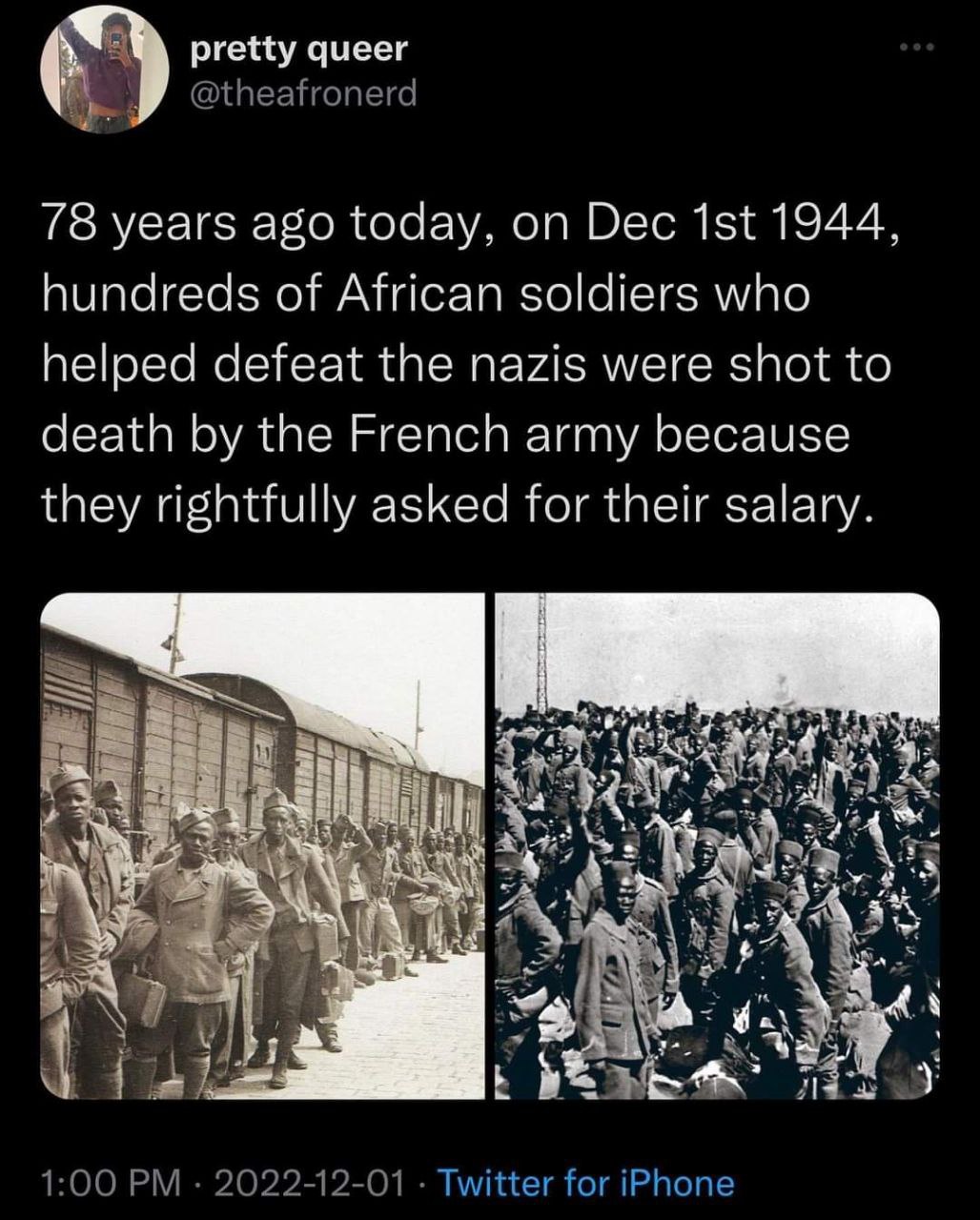
The time has come for France to own up to the massacre of its own troops in Senegal

Published: March 18, 2015 11:37am EDT

image-20141208-5164-gnu63s.jpg

Missing: Senegalese Tirailleurs, 1940


Since 2013, March 19 has marked France’s annual day of commemoration for those killed in the Algerian war of independence as well as the more minor conflicts in Morocco and Tunisia. But on the day that France commemorates those who died in its wars of decolonisation in North Africa, the truth about a massacre of sub-Saharans who fought on its side in World War II must also be acknowledged.

In December 1944, between 35 and 70 tirailleurs sénégalais – colonial troops from French West Africa – were killed at a demobilisation camp in Thiaroye, just outside Dakar in Senegal. These were soldiers who fought for France who were then gunned down in cold blood by the French army.

Then followed decades of silence on the matter. Successive governments said nothing, and when they did, as in the case of Nicolas Sarkozy, they took a “Je ne regrette rien” stance.

Then, François Hollande appeared to begin to break rank. On a trip to Dakar in October 2012, he called the events of December 1 1944 “an act of bloody repression”. He solemnly declared that France would hand over archives relating to the massacre on its 70th anniversary.

He reiterated these sentiments at a speech at the military cemetery in Thiaroye in November 2014 – on the eve of that anniversary.

However, the impression given was that the announcement of the creation of a museum on the site and the formal handing over of several boxes’ worth of archives to Senegal was designed to draw a line under Thiaroye, not open it up to more scrutiny.

What’s more, the archives transferred to the Senegalese authorities are in fact just a fraction of the material held by the French on Thiaroye. If the archive given to the Senegalese authorities is both partial and impartial, what then are the agreed facts in relation to Thiaroye – and what light has recent research thrown on the key issues?

The truth will out
By the time of the massacre, the tirailleurs, captured during the Nazi invasion in 1940, had spent four long years in prisoner of war camps in France. Following the liberation in the autumn of 1944, General de Gaulle decided that they should return home as soon as possible.

But disagreements soon surfaced regarding their demobilisation pay and some tirailleurs refused to board ships for Africa until they had received their statutory back pay. (One such dispute took place at a camp in Huyton on Merseyside.) This dispute continued at the demobilisation camp in Thiaroye and, on the morning of December 1 1944, a mix of French troops, local tirailleurs, three armoured cars with mounted machine guns and even a US army tank surrounded the camp.

The soldiers opened fire on the rebellious but unarmed tirailleurs and many were killed. The army would later officially recognise a death toll of 35 (some accounts in the days that followed claimed a further 35 deaths, as many of the injured died from their wounds). In early 1945, a further 34 soldiers were tried, convicted and jailed for sentences ranging from one to ten years for what was described as an armed mutiny.

While these facts are accepted by all sides, other elements of the story have remained hotly disputed. For the colonial authorities, this was purely a matter of military discipline, in which a heavily armed mutiny was defeated. For the colonised, Thiaroye was quite simply a massacre of unarmed soldiers and a reassertion of imperial authority on men simply demanding their rights be respected.

But thanks in large part to the tireless work of French historian Armelle Mabon, who has pored over all of the archival sources, there is now far greater certainty about some of the most contentious points.
 
Top