
You are using an out of date browser. It may not display this or other websites correctly.
You should upgrade or use an alternative browser.
You should upgrade or use an alternative browser.
Trump ordered a second strike of Venezuelan boat
- Thread starter Arithmetic
- Start date
More options
Who Replied?
I had to respect your post and give a response but I wasn't going to try to do it while working. Here goes:
1. There have been times where the country has been deeply divided on a lot but this is the first time we have had this particular brand of division. I will explain more later.
2. They can be challenged, and that isn't the point. When Trump does an illegal action, runs to the supreme court, and they rule on procedural grounds rather than striking whatever action down, they give more time for Trump to do damage. Without doxing, my industry is 1000% under attack by Trump and has capitulated not because they can't win cases but because the costs are putting some under at an alarming rate. Cases are slow, are not free, and if they are not telling the Admin to cease what it is doing, they functionally get to continue until hes functionally achieved his goal. See: Kilmar being in prison for months despite judges telling him to be let go (9-0 Supreme court ruling in that case), the rehiring of government workers who had to go with months of uncertainty, funding for various things going away and taking so long to return that it hurts the institution anyway.
3. The disarray is at the top. The leadership. On the local level, especially in places like my city and state (Chicago, Illinois), is fine. Getting lost in House and Senate leadership battles only tells a small part of the story even though they are letting us down majorly in favor of keeping money flowing (Jeffries) and observing norms (Schumer).
Your example of privatization also requires we recognize we were in a completely different political atmosphere with a President who while he did his dirt, no one followed him faithfully into trying to overthrow the government itself. He was not given presumptive immunity like Trump, he did not dismantle the enforcement arms, etc. There was a national tour of the privatization effort that without anyone other than the people themselves seeing it caused public sentiment to decline as well. Democrats did their part but there was no way to sell it and it died, especially when Katrina and other things hit making it politically infeasible. As for the funding bill, I agree that there was an opportunity to oppose earlier this year before the continuing resolution BUT we were in a place where there was the reality that if Democrats had drawn the conclusion they should oppose it into a shutdown, Democrats may get blame. The real dangers of this regimes agenda wasn't really alarming anyone who wasn't already vehemently opposed to them so it was a calculation that we can't really know the effects of...even though I thought they should shut it down. Mind you, only 36 laws have been passed and most of them are not related to the fukk shyt Trump is doing, just regular ass legislation: Public Laws: Numbers for the Current Session of Congress
I'm going to continue to stress, his Executive agenda is the problem, and Congressional democrats, many of whom suck, still can't stop him without Republicans.
Currently 404 cases. Imagine your entire government arm was fired and it takes two months before a court steps in and says to reinstate folks. You have attrition by way of people not wanting to deal with the mess, people NEEDING jobs so they go elsewhere, and other real life things that functionally do what the firing meant to do which is render an office less functional. There is no way to pre-empt this especially when they find multiple ways to approach the firings. Lisa Cook was an attempted firing for what Trump called mortgage fraud and dragged her through the initial case, the appeal, now the Justice Department probe, and is taking the case to the Supreme Court. So when we look into who is doing what to face Trump, we have to realize most will not be in a position to survive multiple attempts and getting them out of the way, so any civil remedies are slow.
1. Nothing they can say about UET wasn't basically covered in "He wants to be a dictator", especially in a political environment in which the more words you use, you pretty much lose the attention of average Americans. The people who it matters most two are institutional and they are going right along with it.
2. They do oversight literally all the time. We see hearings dragging RFKjr and Hegseth among others into congress to answer questions, but that does nothing when Republicans are not going to change their minds and the American people broadly don't pay attention. In 2023, the seven-member rule now requires the Oversight chair to sign off
 comer.house.gov

 oversight.house.gov
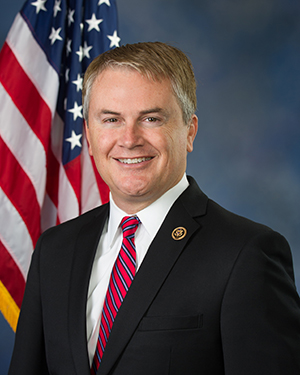
Republican James Comer from Kentucky. NOTHING gets through without his signature.
I espouse nothing defeatist, and have said since the election that due to the way America voted, the keys to beating Trump will not come from the party. We are in a place where people will have to act. They did it with their votes, now have to with resistance because legal, systemic means are slow or anemic. Democrats can pull all of the tools they want to thwart legislative efforts but as I said during my last post, the bulk (90%+) of the damage this regime is doing lies solely in what the executive is doing. Congress can reign it in. Congress is not Democratic.The argument that Democrats cannot function as an effective opposition party simply because they hold a minority status in Congress is not only empirically false but dangerously defeatist. It ignores historical precedents, constitutional tools, and the moral imperative to resist authoritarianism. This perspective overlooks three critical realities:
1. Minority parties have successfully thwarted extremist agendas in the past using procedural tools and strategic unity .
2. The Supreme Court’s radical rulings are not monolithic and still leave avenues for challenge, albeit narrowed .
3. Democrats’ current disarray is a choice, not an inevitability, reflecting a failure of leadership and tactical creativity .
1. There have been times where the country has been deeply divided on a lot but this is the first time we have had this particular brand of division. I will explain more later.
2. They can be challenged, and that isn't the point. When Trump does an illegal action, runs to the supreme court, and they rule on procedural grounds rather than striking whatever action down, they give more time for Trump to do damage. Without doxing, my industry is 1000% under attack by Trump and has capitulated not because they can't win cases but because the costs are putting some under at an alarming rate. Cases are slow, are not free, and if they are not telling the Admin to cease what it is doing, they functionally get to continue until hes functionally achieved his goal. See: Kilmar being in prison for months despite judges telling him to be let go (9-0 Supreme court ruling in that case), the rehiring of government workers who had to go with months of uncertainty, funding for various things going away and taking so long to return that it hurts the institution anyway.
3. The disarray is at the top. The leadership. On the local level, especially in places like my city and state (Chicago, Illinois), is fine. Getting lost in House and Senate leadership battles only tells a small part of the story even though they are letting us down majorly in favor of keeping money flowing (Jeffries) and observing norms (Schumer).
I never said minorities are powerless, but im going to reiterate for the umpteenth time, the bulk of the damage is being done at the executive level which is usually solved by the legislative but congressional Republicans are NOT defecting. Even the Epstein situation has only notably been echoed by MTG and Thomas Massie, even though we know a lot more of them would like to weigh in but don't.The notion that minorities are powerless is contradicted by recent history. During George W. Bush’s presidency, Democrats united unanimously to block the privatization of Social Security; a flagship GOP initiative. Similarly, in 2017, Democrats leveraged procedural tools and Republican infighting to defeat ACA repeal, despite Trump’s control of Congress . These successes relied on:
· Party discipline: Leaders like Pelosi and Reid enforced strict unity, preventing defections to bipartisan compromises that would undermine resistance.
· Public messaging: Democrats highlighted the tangible harms of GOP policies (e.g., loss of Social Security benefits, healthcare coverage), turning public opinion against them.
· Procedural weapons: Filibusters, holds, and motions to adjourn were deployed strategically to stall or block legislation .
Today, Democrats hold 45 Senate seats and 215 House seats—narrower margins than in 2017 but still sufficient to exploit GOP fractures. Yet, instead of emulating Pelosi’s playbook, current leaders like Schumer and Jeffries have been irresolute and fragmented, even siding with Republicans on critical votes like government funding bills .
Your example of privatization also requires we recognize we were in a completely different political atmosphere with a President who while he did his dirt, no one followed him faithfully into trying to overthrow the government itself. He was not given presumptive immunity like Trump, he did not dismantle the enforcement arms, etc. There was a national tour of the privatization effort that without anyone other than the people themselves seeing it caused public sentiment to decline as well. Democrats did their part but there was no way to sell it and it died, especially when Katrina and other things hit making it politically infeasible. As for the funding bill, I agree that there was an opportunity to oppose earlier this year before the continuing resolution BUT we were in a place where there was the reality that if Democrats had drawn the conclusion they should oppose it into a shutdown, Democrats may get blame. The real dangers of this regimes agenda wasn't really alarming anyone who wasn't already vehemently opposed to them so it was a calculation that we can't really know the effects of...even though I thought they should shut it down. Mind you, only 36 laws have been passed and most of them are not related to the fukk shyt Trump is doing, just regular ass legislation: Public Laws: Numbers for the Current Session of Congress
I'm going to continue to stress, his Executive agenda is the problem, and Congressional democrats, many of whom suck, still can't stop him without Republicans.
I'm only going to address the bolded because it basically addresses your other points, but this isn't true. Everything and everything that could be taken to court is being taken to court, and you can't pre-emptively sue to say "Just in case, we want to take this to court." Reactivity is all there is because there has to be an injured party needing redress of some sort.Yes there is a Court deference to Trump’s agenda, particularly through rulings that limit nationwide injunctions and expand presidential immunity . However, this does not render opposition futile:
· Nationwide injunctions are not entirely dead: The Court’s 2025 decision in Trump v. CASA barred universal injunctions but preserved class-action lawsuits as a pathway to block policies broadly .
· Emergency dockets remain contested: While the Court granted Trump emergency relief in cases involving immigration and workforce dismissals, it occasionally ruled against him (e.g., requiring the return of erroneously deported individuals) .
· The judiciary is not monolithic: Lower courts continue to rule against Trump’s policies, as seen in orders condemning his birthright citizenship order as "blatantly unconstitutional" .
The problem is not solely the Court’s conservatism but Democratic timidity in testing legal boundaries. For example, lawsuits challenging Trump’s use of unitary executive theory to fire officials or impound funds have been hesitant and reactive .
Currently 404 cases. Imagine your entire government arm was fired and it takes two months before a court steps in and says to reinstate folks. You have attrition by way of people not wanting to deal with the mess, people NEEDING jobs so they go elsewhere, and other real life things that functionally do what the firing meant to do which is render an office less functional. There is no way to pre-empt this especially when they find multiple ways to approach the firings. Lisa Cook was an attempted firing for what Trump called mortgage fraud and dragged her through the initial case, the appeal, now the Justice Department probe, and is taking the case to the Supreme Court. So when we look into who is doing what to face Trump, we have to realize most will not be in a position to survive multiple attempts and getting them out of the way, so any civil remedies are slow.
I'm going to preamble this with a truism because there appears to be an element of your posts that Democrats have to appeal to the masses when opposing Trump. I think by now we can admit two things: Americans broadly did not take seriously any appeals to preserving democracy. Eggs and housing, also known as kitchen table issues, far outweighs what American's perceive to be some amorphous symbol especially when they feel that to this point it has done nothing for them (see how low ratings are for all national institutions and politicians save for a few examples, where the only people who buck these trends are local politicians who constituents tend to be more receptive to.) The old adage holds true: "It's the economy, stupid."The unitary executive theory (UET): the idea that the president has absolute control over the executive branch, is a radical and historically dubious doctrine pioneered by Reagan-era conservatives and now embraced by Trump . While the Supreme Court has reinforced UET in cases like Collins v. Yellen (2021), which affirmed the president’s power to remove executive officials at will, this theory thrives only because of institutional capitulation .
Democrats have failed to:
· Expose UET’s constitutional flaws: The Take Care Clause requires the president to "faithfully execute" laws, not unilaterally rewrite them . The Opinion Clause also implies a collaborative executive branch, not a dictatorial one .
· Use Congress’s oversight powers: As the minority, Democrats can still subpoena witnesses, demand documents, and invoke the "seven-member rule" to compel agency transparency . Yet, they underutilize these tools, as seen in the failed attempt to subpoena Elon Musk .
· Mobilize public outrage: Trump’s autopen abuse (e.g., signing pardons without review) and attempts to dissolve agencies like the Federal Election Commission are blatant power grabs . Democrats have largely treated these as legalistic quirks rather than existential threats.
Consider the toolbox available to minorities:
· Filibusters and holds: These can halt nominations and legislation indefinitely .
· Motions to adjourn: These can disrupt committee hearings and force public scrutiny .
· Minority witness days: House rules allow minorities to call their own witnesses for hearings, yet Democrats rarely invoke this .
· Cross-branch coordination: Democrats could align lawsuits, congressional investigations, and state-level actions to create synergistic resistance.
1. Nothing they can say about UET wasn't basically covered in "He wants to be a dictator", especially in a political environment in which the more words you use, you pretty much lose the attention of average Americans. The people who it matters most two are institutional and they are going right along with it.
2. They do oversight literally all the time. We see hearings dragging RFKjr and Hegseth among others into congress to answer questions, but that does nothing when Republicans are not going to change their minds and the American people broadly don't pay attention. In 2023, the seven-member rule now requires the Oversight chair to sign off
The chair of the oversight and accountability committee?A separate order clarifies that the chair of the Committee on Oversight and Accountability shall be one of the seven members of the committee making any official request for information pursuant to Section 2954, Title 5, of the United States Code, a provision colloquially known as the "Seven Member Rule."18 Section 2954 provides that, on request of the House Committee on Government Operations (now the Committee on Oversight and Accountability), "or of any seven members thereof," an executive agency "shall submit any information requested of it relating to any matter within the jurisdiction of the committee." In the 118th Congress, the seven-committee-member minimum for such requests must include the chair of the Committee on Oversight and Accountability.
Congressman James Comer
comer.house.gov
Full Committee on Oversight and Government Reform - United States House Committee on Oversight and Government Reform
United States House Committee on Oversight and Government Reform
Republican James Comer from Kentucky. NOTHING gets through without his signature.
Last edited:
My post was so long that the coli refused to accept it so here is the last part:
There have been on-going protests all across the nation against Trump, Ice, etc that get zero media coverage outside of the big No-Kings protests. I'm basically telling you that keeping your foot on the Democrats necks without even acknowledging where we are at is completely hustling backward. If we voted in a metric ton of Democrats, as happened in the 40 years following the New Deal, Republicans similarly would be mere annoyances. I was once a "both sides are the same" type of person but that changed the moment I actually started reading senate/congress/house.gov, following all kinds of procedural hearings that are broadcast, and generally trying to understand the hows and whys. Democrats can oppose all they want but they don't have the power to do much more than delay and counter message which broadly they have been doing all along, but you would not think so if your focus is only Schumer and Jeffries useless asses. We have voted ourselves into a corner (as you said people can't vote themselves out of authoritarianism) and the only solution is from the people. General strike would be nice but guess what? Labor used to be how big movements like that took place and they have dwindled to the point of near irrelevance. Not to mention General Strikes can be long and hard. Most Americans just want their bills paid. Things have to get worse before we climb out because once again, America voted for the worst timeline. Everything has gotten worse, and its not doomerism to say it, and the guardrails are gone. Asking Democrats to make magic or oppose for oppositions sake will not change anything like food shortages, war, stagflation, and high unemployment will.
Just remember, the Tea Party was a Koch-funded takeover of a Republican party that started going one with with Newt Gingrich in the 90s but was still in it's old ways by the time Obama took hold. The Tea party was not at all grassroots when it hit the nations capitol and the Democrats do not have any similar support because the very things we need (holding the rich accountable, expanding the social safety net, etc) are opposed by the vast majority of monied interests. Elon owns Twitter/X, Zuckerberg Facebook, Larry Ellison wants to buy Tiktok, David Ellison bought CBS...basically, ALL of the media are kowtowing to Trump and those that don't are being sued. If a Democrat does anything of note to oppose these actions, the mainstream media and social media algorithms can make them functionally invisible to regular folks.Instead, Democrats are divided and demoralized, with leaders like Schumer siding with Republicans on funding bills while progressives like AOC push for harder opposition . The party lacks a unified strategy, echoing the Tea Party’s rise but without its tactical ruthlessness .
The argument that "there is no opposition" confuses structural constraints with moral and strategic failure. Democrats could be using every procedural tool, legal challenge, and public messaging campaign to resist Trump’s authoritarianism. Instead, they are fragmented, hesitant, and overly reliant on courts that have proven hostile. The unitary executive theory gains power not because it is legally sound but because Democrats have allowed it to be normalized.
As history shows, minorities can win...but only if they fight with unity and creativity. The real problem isn’t the lack of tools; it’s the lack of will to use them.
There have been on-going protests all across the nation against Trump, Ice, etc that get zero media coverage outside of the big No-Kings protests. I'm basically telling you that keeping your foot on the Democrats necks without even acknowledging where we are at is completely hustling backward. If we voted in a metric ton of Democrats, as happened in the 40 years following the New Deal, Republicans similarly would be mere annoyances. I was once a "both sides are the same" type of person but that changed the moment I actually started reading senate/congress/house.gov, following all kinds of procedural hearings that are broadcast, and generally trying to understand the hows and whys. Democrats can oppose all they want but they don't have the power to do much more than delay and counter message which broadly they have been doing all along, but you would not think so if your focus is only Schumer and Jeffries useless asses. We have voted ourselves into a corner (as you said people can't vote themselves out of authoritarianism) and the only solution is from the people. General strike would be nice but guess what? Labor used to be how big movements like that took place and they have dwindled to the point of near irrelevance. Not to mention General Strikes can be long and hard. Most Americans just want their bills paid. Things have to get worse before we climb out because once again, America voted for the worst timeline. Everything has gotten worse, and its not doomerism to say it, and the guardrails are gone. Asking Democrats to make magic or oppose for oppositions sake will not change anything like food shortages, war, stagflation, and high unemployment will.

Kyle C. Barker
Migos VERZUZ Mahalia Jackson
The argument that Democrats cannot function as an effective opposition party simply because they hold a minority status in Congress is not only empirically false but dangerously defeatist. It ignores historical precedents, constitutional tools, and the moral imperative to resist authoritarianism. This perspective overlooks three critical realities:
1. Minority parties have successfully thwarted extremist agendas in the past using procedural tools and strategic unity .
2. The Supreme Court’s radical rulings are not monolithic and still leave avenues for challenge, albeit narrowed .
3. Democrats’ current disarray is a choice, not an inevitability, reflecting a failure of leadership and tactical creativity .
The notion that minorities are powerless is contradicted by recent history. During George W. Bush’s presidency, Democrats united unanimously to block the privatization of Social Security; a flagship GOP initiative. Similarly, in 2017, Democrats leveraged procedural tools and Republican infighting to defeat ACA repeal, despite Trump’s control of Congress . These successes relied on:
· Party discipline: Leaders like Pelosi and Reid enforced strict unity, preventing defections to bipartisan compromises that would undermine resistance.
· Public messaging: Democrats highlighted the tangible harms of GOP policies (e.g., loss of Social Security benefits, healthcare coverage), turning public opinion against them.
· Procedural weapons: Filibusters, holds, and motions to adjourn were deployed strategically to stall or block legislation .
Today, Democrats hold 45 Senate seats and 215 House seats—narrower margins than in 2017 but still sufficient to exploit GOP fractures. Yet, instead of emulating Pelosi’s playbook, current leaders like Schumer and Jeffries have been irresolute and fragmented, even siding with Republicans on critical votes like government funding bills .
Yes there is a Court deference to Trump’s agenda, particularly through rulings that limit nationwide injunctions and expand presidential immunity . However, this does not render opposition futile:
· Nationwide injunctions are not entirely dead: The Court’s 2025 decision in Trump v. CASA barred universal injunctions but preserved class-action lawsuits as a pathway to block policies broadly .
· Emergency dockets remain contested: While the Court granted Trump emergency relief in cases involving immigration and workforce dismissals, it occasionally ruled against him (e.g., requiring the return of erroneously deported individuals) .
· The judiciary is not monolithic: Lower courts continue to rule against Trump’s policies, as seen in orders condemning his birthright citizenship order as "blatantly unconstitutional" .
The problem is not solely the Court’s conservatism but Democratic timidity in testing legal boundaries. For example, lawsuits challenging Trump’s use of unitary executive theory to fire officials or impound funds have been hesitant and reactive .
The unitary executive theory (UET): the idea that the president has absolute control over the executive branch, is a radical and historically dubious doctrine pioneered by Reagan-era conservatives and now embraced by Trump . While the Supreme Court has reinforced UET in cases like Collins v. Yellen (2021), which affirmed the president’s power to remove executive officials at will, this theory thrives only because of institutional capitulation .
Democrats have failed to:
· Expose UET’s constitutional flaws: The Take Care Clause requires the president to "faithfully execute" laws, not unilaterally rewrite them . The Opinion Clause also implies a collaborative executive branch, not a dictatorial one .
· Use Congress’s oversight powers: As the minority, Democrats can still subpoena witnesses, demand documents, and invoke the "seven-member rule" to compel agency transparency . Yet, they underutilize these tools, as seen in the failed attempt to subpoena Elon Musk .
· Mobilize public outrage: Trump’s autopen abuse (e.g., signing pardons without review) and attempts to dissolve agencies like the Federal Election Commission are blatant power grabs . Democrats have largely treated these as legalistic quirks rather than existential threats.
Consider the toolbox available to minorities:
· Filibusters and holds: These can halt nominations and legislation indefinitely .
· Motions to adjourn: These can disrupt committee hearings and force public scrutiny .
· Minority witness days: House rules allow minorities to call their own witnesses for hearings, yet Democrats rarely invoke this .
· Cross-branch coordination: Democrats could align lawsuits, congressional investigations, and state-level actions to create synergistic resistance.
Instead, Democrats are divided and demoralized, with leaders like Schumer siding with Republicans on funding bills while progressives like AOC push for harder opposition . The party lacks a unified strategy, echoing the Tea Party’s rise but without its tactical ruthlessness .
The argument that "there is no opposition" confuses structural constraints with moral and strategic failure. Democrats could be using every procedural tool, legal challenge, and public messaging campaign to resist Trump’s authoritarianism. Instead, they are fragmented, hesitant, and overly reliant on courts that have proven hostile. The unitary executive theory gains power not because it is legally sound but because Democrats have allowed it to be normalized.
As history shows, minorities can win...but only if they fight with unity and creativity. The real problem isn’t the lack of tools; it’s the lack of will to use them.
Now ask chatgpt if the minority party can force a subpoena if the majority party leader refuses to hold a vote or blocks the motion to subpoena.
Covered this in my two posts. I love to criticize useless corpo Dems, but people have to be real: Americans voted for or not against this in greater numbers than they did against it. If Trump wanted to do good, Democrats could do nothing to stop it. He doesn’t want to…and Democrats can do nothing to stop it. That's how democratic elections work and unfortunately we voted our democracy away.Now ask chatgpt if the minority party can force a subpoena if the majority party leader refuses to hold a vote or blocks the motion to subpoena.
Hammering on the Democrats is part of the reason we are here. Everyone just assumed things would work itself out because the country had a good track record the latter half of the 20th century. They didn’t seem to recognize that we could end up in a gilded age because a 50 year effort to use racism and patriotism finally worked. We are in the endgame and Democrats cant save us from what we did.
Last edited:

Ask yourself why the minority party doesnt use procedural disruptions and statutory tools to leverage public outrage. I guess strongly worded letters are enough for drones like you.Now ask chatgpt if the minority party can force a subpoena if the majority party leader refuses to hold a vote or blocks the motion to subpoena.

richaveli83
Veteran
From the tariff BS to this, dude is alienating damn near every ally and friend this country has in only 8 months in office.Trump decertified Colombia as a Partner against drugs today
US decertifies Colombia in drug war for first time in nearly 30 years
Americas
The United States has dropped Colombia from its list of reliable partners in the fight against narcotics, citing soaring cocaine production and political rifts with President Gustavo Petro.
Issued on: 16/09/2025 - 05:00
4 minReading time
By:
FRANCE 24
A member of the Carlos Patino front of the dissident FARC guerrilla patrols next to coca crops in Micay Canyon, a mountainous area and EMC stronghold in Cauca Department, southwestern Colombia, on March 24, 2024. © Raul Arboleda, AFP
The Trump administration on Monday added Colombia to a list of nations failing to cooperate in the drug war for the first time in almost 30 years, a stinging rebuke to a traditional U.S. ally that reflects a recent surge in cocaine production and fraying ties between the White House and the country’s leftist president.
Even as it determined that Colombia had failed to comply with its international counternarcotics obligations, the Trump administration issued a waiver of sanctions that would have triggered major aid cuts, citing vital U.S. national interests.
Nonetheless, it is a major step against one of the United States’ staunchest allies in Latin America, which analysts said could hurt the economy and further hamper efforts to restore security in the countryside.
President Gustavo Petro, who has said on several occasions that whisky kills more people than cocaine, lamented Trump's decision during a televised cabinet meeting Monday, saying Colombia was penalized after sacrificing the lives of “dozens of policemen, soldiers and regular citizens, trying to stop cocaine” from reaching the United States.
“What we have been doing is not really relevant to the Colombian people,” he said of the nation’s antidrug efforts. “It’s to stop North American society from smearing its noses” in cocaine.
The U.S. last added Colombia to the list, through a process known as decertification, in 1997 when the country’s cartels — through threats of violence and money — had poisoned much of the nation’s institutions.
"Decertification is a blunt tool and a huge irritant in bilateral relations that goes well beyond drug issues and makes cooperation far harder in any number of areas,” said Adam Isacson, a security researcher at the Washington Office on Latin America. “That’s why it’s so rarely used.”
The president at the time, Ernesto Samper, was facing credible accusations of receiving illicit campaign contributions from the now-defunct Cali cartel and a plane he was set to use for a trip to New York to attend the U.N. General Assembly session was found carrying 4 kilograms of heroin.
A remarkable turnaround began once Samper left office. Successive U.S. administrations — both Republican and Democrats — sent billions in foreign assistance to Colombia to eradicate illegal coca crops, strengthen its armed forces in the fight against drug-fueled rebels and provide economic alternatives to poor farmers who are on the lowest rungs of the cocaine industry.
Cocaine production surges
That cooperation, a rare U.S. foreign policy success in Latin America, started to unravel following the suspension a decade ago of aerial eradication of coca fields with glyphosate. It followed a Colombia high court ruling that determined the U.S.-funded program was potentially harmful to the environment and farmers.
A 2016 peace accord with the Revolutionary Armed Forces of Colombia, the nation’s largest rebel group known as FARC, also committed Colombia to rolling back punitive policies likened to the U.S. spraying of Agent Orange during the Vietnam War in favor of state building, rural development and voluntary crop substitution.
Since then, cocaine production has skyrocketed. The amount of land dedicated to cultivating coca, the base ingredient of cocaine, has almost tripled in the past decade to a record 253,000 hectares in 2023, according to the latest report available from the U.N. Office on Drugs and Crime. That is almost triple the size of New York City.
Along with production, drug seizures also have soared to 654 metric tons so far this year. Colombia seized a record 884 metric tons last year.
But unlike past governments, manual eradication of coca crops under Petro’s leadership has slowed, to barely 5,048 hectares this year — far less than the 68,000 hectares uprooted in the final year of his conservative predecessor’s term and well below the government’s own goal of 30,000 hectares.
A critic of US policy
Petro, a former rebel himself, also has angered senior U.S. officials by denying American extradition requests as well as criticizing the Trump administration’s immigration crackdown and its efforts to combat drug trafficking in neighboring Venezuela.
“Under my administration, Colombia does not collaborate in assassinations,” Petro said on Sept. 5 after the U.S. military carried out a deadly strike on a small Venezuelan vessel in the Caribbean that the Trump administration said was transporting cocaine bound for the U.S.
“The failure of Colombia to meet its drug control obligations over the past year rests solely with its political leadership,” Trump said in a presidential memo submitted to Congress. “I will consider changing this designation if Colombia’s government takes more aggressive action to eradicate coca and reduce cocaine production and trafficking, as well as hold those producing, trafficking, and benefiting from the production of cocaine responsible, including through improved cooperation with the United States to bring the leaders of Colombian criminal organizations to justice.”
Under U.S. law, the president annually must identify countries that have failed to meet their obligations under international counternarcotics agreements during the previous 12 months.
In addition to Colombia, the Trump administration listed four other countries — Afghanistan, Bolivia, Burma and Venezuela — as among 23 major drug transit or drug-production countries that have failed to meet their international obligations. With the exception of Afghanistan, the White House determined that U.S. assistance to those countries was vital to national interests and therefore they would be spared any potential sanctions.
The redesignation of Venezuela as a country that has failed to adequately fight narcotics smuggled from neighboring Colombia comes against the backdrop of a major U.S. military buildup in the Caribbean that has already led to two deadly strikes on small Venezuelan vessels that the Trump administration said were transporting cocaine bound for the U.S.
“In Venezuela, the criminal regime of indicted drug trafficker Nicolás Maduro leads one of the largest cocaine trafficking networks in the world, and the United States will continue to seek to bring Maduro and other members of his complicit regime to justice for their crimes,” Trump's designation said. “We will also target Venezuelan foreign terrorist organizations such as Tren de Aragua and purge them from our country.”
(FRANCE 24 with AP)


Kyle C. Barker
Migos VERZUZ Mahalia Jackson
Ask yourself why the minority party doesnt use procedural disruptions and statutory tools to leverage public outrage. I guess strongly worded letters are enough for drones like you.
Lol at procedural disruptions and public outrage. Maybe they should do some pep rallies too. These are the things that probably drew you to Jill Stein
No, you're right. The strategy of neoliberalist MAGA appeasement worked and is currently working. Disregarding your base's opposition to facilitating war crimes was a solid play. Go back to dapping and kekeing. Your reach exceeds your grasp.Lol at procedural disruptions and public outrage. Maybe they should do some pep rallies too. These are the things that probably drew you to Jill Stein

Problematic Pat
Superstar
shyt Israel busy executing a ground invasion in Gaza City while UN says they are committing war crimes. This country's politics ain't no different than any 3rd world nation. Traore is 100x the leader than anyone who has occupied that seatNo due process or confirmation of activity. America really going for the we the bad guys image

Nkrumah Was Right
Superstar
No due process or confirmation of activity. America really going for the we the bad guys image
America usually is the bad guy.

It’s just that empire is harder to maintain with subterfuge and soft power so the US government is going mask off.
You WANT to be the good guys but your allies are racist former colonial powers, genocidal Jewish Zionists, cac supremacist settler colonies, and authoritarian monarchies that saw dissidents in half
Simp the cartels brehs
Embarrassing

christ you're an idiot
Marco Rubio wanting regime change all over that continent
Kyle C. Barker
Migos VERZUZ Mahalia Jackson
No, you're right. The strategy of neoliberalist MAGA appeasement worked and is currently working. Disregarding your base's opposition to facilitating war crimes was a solid play. Go back to dapping and kekeing. Your reach exceeds your grasp.
How you gonna talk about someone else's grasp when you're vibe posting with chatgpt ?

Kind of like the way you thought vibes and being brat would win an election.How you gonna talk about someone else's grasp when you're vibe posting with chatgpt ?


