

MischievousMonkey
Gor bu dëgër
I really don't want the tone of my posts to come across as hostile, so please consider them just as cordial remarks and disagreements.You know what they say about statistics. On the flip:
From 2009 to 2021, the share of American high-school students who say they feel “persistent feelings of sadness or hopelessness” rose from 26 percent to 44 percent, according to a new CDC study. This is the highest level of teenage sadness ever recorded.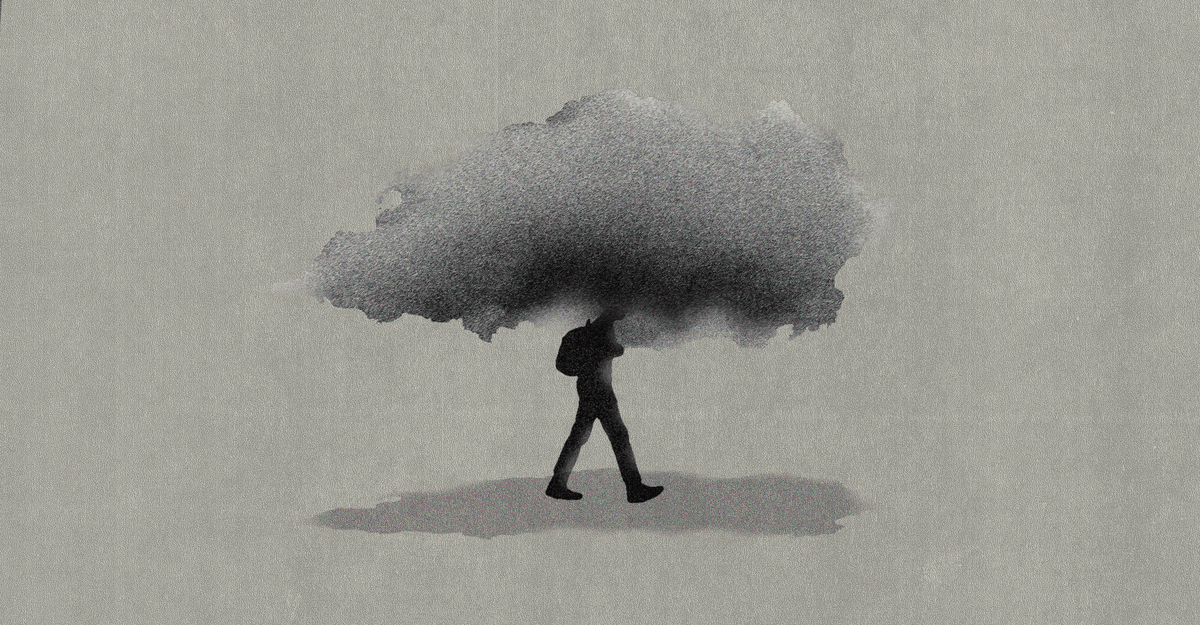
Why American Teens Are So Sad
Four forces are propelling the rising rates of depression among young people.www.theatlantic.com
Men lie, women lie but one who can see, sees. The BSing is rife these days, so much so that its been pretty much normalized.
I agree about gratefulness as a method of elevation along with the fact that most people have (comparatively speaking) got it made compared to previous generations but its actually way deeper than this as the anomie of which I speak is currently sprinkling the seeds that will generate future societies.
Try the experiment. You may be surprised by what you find. There is a definite reason for allowing them to percolate and not answer immediately so ensure to include that for most accurate results.
The statistics you showed aren't the flip side to mines or my argument. Not only do they only represent highschoolers, they show a significant majority of them don't have this persistent feeling of sadness or hopelessness. So why do you draw from these numbers that suffering is prevalent... But not that joy is too?
Do you think that a thread called "why do you think joy is so prevalent in the world" would have made just as much sense as this one?
(I'm not even considering the fact that depression physically prevents you from normally drawing joy from your daily life here)
Again, that's one of my problem with the premise. It begs the question and an unfalsifiable hypothesis such as folks wear masks so they lie anyway, but the enlightened sees through the lies, doesn't cut it imho.
It also implies that there must be a reason for suffering, which also begs the question.
I'm willing to do the experiment as you describe it... But the modalities I have an issue with too. I don't see why letting people time to dwell on the question would guarantee more accurate results. It seems counterintuitive that not going with the first answer that comes to mind would bear more truthful results, unless 1) you already accept that people wear mask and will lie, and 2) refute that dwelling on their suffering won't make them hyperfocus on it. Which shows circular reasoning yet again.
