2016 HL WPOY Nomination Thread

JahFocus CS

Get It How You Get It
Joined
Sep 10, 2014
Messages
20,461
Reputation
3,755
Daps
82,445
Reppin
Republic of New Afrika
Keynesian has the right incentive structure, but isn't perfect when you have near peak employment and an uncontrollable price of a commodity that oil was. Oil killed Keynesian.

Our buddy David here is trying to pin the so-called business cycle on Keynesianism, as if an Austrian capitalism wouldn't have recessions and depressions. It's just laughable. Keynesianism wasn't around during those recessions and depressions in the 1800s :mjlol:
 

MrSinnister

Delete account when possible.
Joined
Aug 1, 2015
Messages
5,323
Reputation
325
Daps
6,832
Our buddy David here is trying to pin the so-called business cycle on Keynesianism, as if an Austrian capitalism wouldn't have recessions and depressions. It's just laughable. Keynesianism wasn't around during those recessions and depressions in the 1800s :mjlol:
His systems would have boom/busts faster now. Even Apple, that used to have a market cap of 1.5 trillion, is hitting it's saturation point. They're heavily based in China too. Theses theories are right wing tinfoil hats. They keep trying and ducking up global economies (because we're all interconnected because of multinationals) anywhere they try it.
 

David_TheMan

Banned
Joined
Dec 2, 2015
Messages
40,574
Reputation
-3,308
Daps
89,588
Desire for a good/service can exist at any price point but its not a REAL demand unless the consumer has the money to act on it.... Demand and jobs have a symbiotic relationship in terms of growing the market, like a poster said earlier this is literally us arguing the chicken or the egg, because one is a function of the other. What we do know though is that the more money the consumer has the more desires he can convert into REAL demand, increasing consumption drives economic growth, that is the argument for increase in wages. I don't care what you personally feel about GDP but it is the de facto metric by which we measure economies.

Also, the era of mass production is a bad anecdote to prove your point: it made each individual unit of labor much more efficient by increasing its productivity, which meant the value that labor returned in the form of wages was increased, this is where their eventual growth opportunities laid, since the consumers of the market now had a surplus of value to consume MORE = growth.

The last paragraph is just word vomit, none of what you said is true. A monopoly is a market where their is only a sole producer of a commodity, this is essentially the ideal that a business strives for in a capitalist free market system. Cronyism would run rampant if the government had no regulatory authority, the free market inevitably leads to
corporatocracy....socialism ≠ corporatism :francis:

Demand is simply the want or market desire for the product, it is just as well met as it is unmet. So you are false trying to claim it is suddenly not real.
Demand and jobs do have a symbiotic relationship, demand and the need to fill the demand spur firms to enter the market which in term will create jobs that were not present before. So no again it isn't a chicken and egg argument, demand clearly determines market entry in the first place.

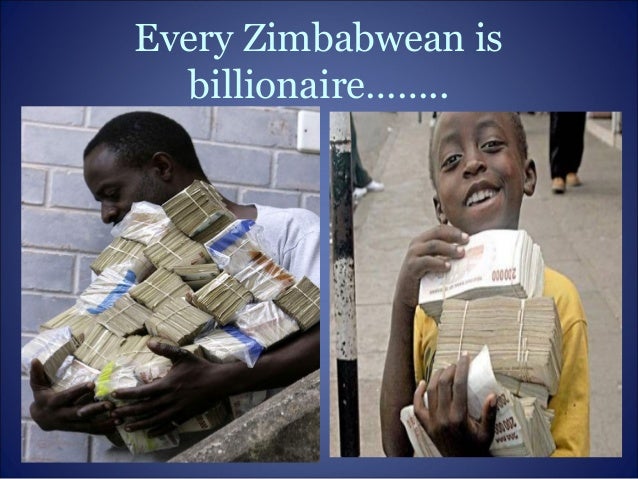
More money doesn't equal economic growth
hyperinflation-in-zimbabwe-4-638.jpg


You think these people are rich because of all the money they have. LOL Your contention is false.

The benefit of money comes from its value and ability to be backed, if we follow your logic to the extreme real world examples of giving people more money like zimbabwe and weimar republic germany would be success stories of the benefits of how a economy has grown because now the people have more money. Doesn't work that way.

Ending with that aside we can say this, again what grows economies are markets being expanded and new ones found, its really as simple as that for already stated reasons, its only that creates economic growth and new opportunities or expansion and higher value placed on currency in hand and in saving/storage.

Actually it doesn't disprove my point and its a perfect example specifically for the reason I gave, it took goods that were luxury and exclusive goods to the extreme uppercrust and made them common goods the working man could afford, which while killing one industry (carriage and horse industry) started up the automobile industry and meet a demand that was already in place. As for the labor value theory, it drove the price down for goods, drove the cost of labor down as well by making every man a craftsman as it were.

The GDP being a poor indicator of economic health isn't just my opinion, it ignores a great deal of economic data for a nation and is looked at that way by a host of economic schools and even the Keynesian school of mainstream economists.

The last paragraph isn't word vomit, its a history lesson about the origin of the word you are using and how it doesn't apply to capitalism
Monopoly originally was said with regard to government ordered favoritism to certain producers.
http://works.bepress.com/cgi/viewcontent.cgi?article=1007&context=gary_richardson
The supposed sources of ``monopoly’ ’ power were charters of guilds and towns, parliamentary statutes, and precedents established by common-law courts, which gave guilds the right to restrict access to markets, or so say scores of scholars (including those cited in the 1st paragraph).

You then say cronyism runs rampent in a free market, how when there is no ability to link government with business at all?
But we do have cronyism is the various socialist corporatist governments of europe and the US today.

corporatism, crony capitalism, simply different types of socialist economic organizations

 

David_TheMan

Banned
Joined
Dec 2, 2015
Messages
40,574
Reputation
-3,308
Daps
89,588
That chart just justified Keynesian economics. People didn't really need unions as the economy worked itself out with fair wages built on overall demand.

How does it justify Keynesian economics when Keynesian economics resulted in economic malaise of the 70s?

Also this post directly contradicts a contention someone on here tried to pass about the 80s destroying unions.

Also fair wage has really little to do with union membership which still never came close to making up the majority of the working class of the private sector.
 

David_TheMan

Banned
Joined
Dec 2, 2015
Messages
40,574
Reputation
-3,308
Daps
89,588
Again chatty patty shyt, talking about people and trying to put them down when all they have done is conversed with you politely and respectfully without name calling and doing any of the shyt you've done to me.
Can't even show enough respect to just acknowledge hey we have different opinions and completely different world views, but he has treated me with respect and I'll do the same.

I expect better of my fellow black men.
 

JahFocus CS

Get It How You Get It
Joined
Sep 10, 2014
Messages
20,461
Reputation
3,755
Daps
82,445
Reppin
Republic of New Afrika
Again chatty patty shyt, talking about people and trying to put them down when all they have done is conversed with you politely and respectfully without name calling and doing any of the shyt you've done to me.
Can't even show enough respect to just acknowledge hey we have different opinions and completely different world views, but he has treated me with respect and I'll do the same.

I expect better of my fellow black men.

:ehh:


:to:
 

MrSinnister

Delete account when possible.
Joined
Aug 1, 2015
Messages
5,323
Reputation
325
Daps
6,832
How does it justify Keynesian economics when Keynesian economics resulted in economic malaise of the 70s?

Also this post directly contradicts a contention someone on here tried to pass about the 80s destroying unions.

Also fair wage has really little to do with union membership which still never came close to making up the majority of the working class of the private sector.
Unions were disappearing after the Great Depression era, because people didn't need collective bargaining when the overall free market was establishing itself. Actually, this is pro your argument, but I'm pretty sure goods were a lot cheaper then, so you can have ass low minimum wages, that won't fly right now.

But you still have a slowing, gradual effect to the death knell drop in the late 70'-80's when people actually needed unions. They probably should have tried to keep them when times were good, so they could profit more when they were REALLY good for businesses. It's also shows unions don't really affect businesses at all. Everyone calls the late 40's-60's (besides Blacks) the Golden Age.

And again, the price of oil, and the instability of its markets killed Keynesian, as the balance was completely thrown off by the insane price fluctuations of a high demand commodity.
 

MrSinnister

Delete account when possible.
Joined
Aug 1, 2015
Messages
5,323
Reputation
325
Daps
6,832
How does it justify Keynesian economics when Keynesian economics resulted in economic malaise of the 70s?

Also this post directly contradicts a contention someone on here tried to pass about the 80s destroying unions.

Also fair wage has really little to do with union membership which still never came close to making up the majority of the working class of the private sector.
You really need to look up oil prices in the 70's for that answer.
 

David_TheMan

Banned
Joined
Dec 2, 2015
Messages
40,574
Reputation
-3,308
Daps
89,588
Unions were disappearing after the Great Depression era, because people didn't need collective bargaining when the overall free market was establishing itself. Actually, this is pro your argument, but I'm pretty sure goods were a lot cheaper then, so you can have ass low minimum wages, that won't fly right now.

But you still have a slowing, gradual effect to the death knell drop in the late 70'-80's when people actually needed unions. They probably should have tried to keep them when times were good, so they could profit more when they were REALLY good for businesses. It's also shows unions don't really affect businesses at all. Everyone calls the late 40's-60's (besides Blacks) the Golden Age.

And again, the price of oil, and the instability of its markets killed Keynesian, as the balance was completely thrown off by the insane price fluctuations of a high demand commodity.
You would have a point if after the depression you didn't see an increase in union membership per the graph you see it traveled up during the 40s and hit a peak , after the depression around 1956, so you seem to be wrong on a factual matter.

People don't need collective bargaining at anytime, but he helps with negotiation if you can monopolize supply, of workers, just like it aids business since they monopolize positions in their respective companies. The price weren't cheaper though, you are confusing price with monetary value. Thats why you don't just take old prices and compare them to curent prices, you factor in current inflation.

Thats why you can look at price in 1930 where .25 cent or a quarter is equal to $3.43 cent today
1955 - .25 cent = 2016 - $2.21
Calculate the value of $1 in 1930 - Inflation on 1 dollars - DollarTimes.com

The gradual decline started in 1957 and continued at the same rate through the 70s and 80s.
As for your contention that people needed unions, if they wanted unions they would have been clamoring back to them, what happened was they continued to leave them.

Unions had an effect, but again unions never made up a majority of those in the workforce, and like I brought up in the other thread, the main reason unions incresed in the 50s was because they were opposing a growing black economic class and they wanted to put them out, as well as foreigners asians and mexicans.

Price of oil became unstable because of Keynesian policy. You delink the dollar from a fixed standard like gold and inflate your currency yeah you are going to see a huge problem when gold is sold still fixed to the price of gold (which is what Opec did).

You really need to look up oil prices in the 70's for that answer.
I know about the oil prices shooing up in the 70s and more importantly I know the economic ideology behind why gold was delinked from the dollar as well.
 

MrSinnister

Delete account when possible.
Joined
Aug 1, 2015
Messages
5,323
Reputation
325
Daps
6,832
You would have a point if after the depression you didn't see an increase in union membership per the graph you see it traveled up during the 40s and hit a peak , after the depression around 1956, so you seem to be wrong on a factual matter.

People don't need collective bargaining at anytime, but he helps with negotiation if you can monopolize supply, of workers, just like it aids business since they monopolize positions in their respective companies. The price weren't cheaper though, you are confusing price with monetary value. Thats why you don't just take old prices and compare them to curent prices, you factor in current inflation.

Thats why you can look at price in 1930 where .25 cent or a quarter is equal to $3.43 cent today
1955 - .25 cent = 2016 - $2.21
Calculate the value of $1 in 1930 - Inflation on 1 dollars - DollarTimes.com

The gradual decline started in 1957 and continued at the same rate through the 70s and 80s.
As for your contention that people needed unions, if they wanted unions they would have been clamoring back to them, what happened was they continued to leave them.

Unions had an effect, but again unions never made up a majority of those in the workforce, and like I brought up in the other thread, the main reason unions incresed in the 50s was because they were opposing a growing black economic class and they wanted to put them out, as well as foreigners asians and mexicans.

Price of oil became unstable because of Keynesian policy. You delink the dollar from a fixed standard like gold and inflate your currency yeah you are going to see a huge problem when gold is sold still fixed to the price of gold (which is what Opec did).


I know about the oil prices shooing up in the 70s and more importantly I know the economic ideology behind why gold was delinked from the dollar as well.
You don't understand the way Keynesian economics works to make the first half of your statement. It's not like you just start it, and we all shoot upwards to peak employment. When you have a supply of labor, you increase the demand for it, by increasing the demand for items/commodities that demand labor. Again, common sense. This is why you see the need for unions rise, until everyone is satisfied, which all indications of the 1950's, outside of minorities says they were. Hell, they were so satisfied that a counterculture movement started. Once sated, the supposed need for unions started dropping, while the right wing was setting up its next strike. They would be had no chance in hell, if botch ass LBJ didn't refuse to run again because of Vietnam. He gave the presidency to Nixon.

As far as your second half, the Israeli crises caused the oil spikes. It was a steady variable for Keynesian, but such a hard spike threw the math off. We haven't tried trusting it again, because the Right Wing has been in charge since the 1970's.
 

Saka

Pro
Joined
May 2, 2012
Messages
995
Reputation
235
Daps
1,833
Demand is simply the want or market desire for the product, it is just as well met as it is unmet. So you are false trying to claim it is suddenly not real.
Demand and jobs do have a symbiotic relationship, demand and the need to fill the demand spur firms to enter the market which in term will create jobs that were not present before. So no again it isn't a chicken and egg argument, demand clearly determines market entry in the first place.

More money doesn't equal economic growth
hyperinflation-in-zimbabwe-4-638.jpg


You think these people are rich because of all the money they have. LOL Your contention is false.

The benefit of money comes from its value and ability to be backed, if we follow your logic to the extreme real world examples of giving people more money like zimbabwe and weimar republic germany would be success stories of the benefits of how a economy has grown because now the people have more money. Doesn't work that way.

Ending with that aside we can say this, again what grows economies are markets being expanded and new ones found, its really as simple as that for already stated reasons, its only that creates economic growth and new opportunities or expansion and higher value placed on currency in hand and in saving/storage.

Actually it doesn't disprove my point and its a perfect example specifically for the reason I gave, it took goods that were luxury and exclusive goods to the extreme uppercrust and made them common goods the working man could afford, which while killing one industry (carriage and horse industry) started up the automobile industry and meet a demand that was already in place. As for the labor value theory, it drove the price down for goods, drove the cost of labor down as well by making every man a craftsman as it were.

The GDP being a poor indicator of economic health isn't just my opinion, it ignores a great deal of economic data for a nation and is looked at that way by a host of economic schools and even the Keynesian school of mainstream economists.

The last paragraph isn't word vomit, its a history lesson about the origin of the word you are using and how it doesn't apply to capitalism
Monopoly originally was said with regard to government ordered favoritism to certain producers.
http://works.bepress.com/cgi/viewcontent.cgi?article=1007&context=gary_richardson


You then say cronyism runs rampent in a free market, how when there is no ability to link government with business at all?
But we do have cronyism is the various socialist corporatist governments of europe and the US today.

corporatism, crony capitalism, simply different types of socialist economic organizations

An unmet demand however wont lead to any economic impact, so its not a REAL demand, real demand is that which is sated in consumption and can be measured objectively. Your original argument was "fact of the matter is more jobs don't grow the economy, expanded markets and new markets do." that is a chicken or egg argument because you cant have new or expanded markets without more jobs, its a symbiotic relationship that leads to economic growth.
You cherry-picked the word money and made a semantical argument :francis: when its clear i was using money as a substitute for value, because money is the form which value takes in our economic system, giving people more value does result in more consumption = more growth.

GDP isn't perfect but it is effective at giving us an objective idea of an abstract concept.

Ye i could give you the etymology of the word and what it means in Greek that doesn't mean shyt... monopolies existed before modern economies, monopolies can also exist in non-capitalist systems but monopolies are inextricably linked with capitalism, because capitalism has a tendency towards monopoly, it is the END GAME that a business strives for, the ideal market condition.

Cronyism runs rampant in a free market, when the government has no regulatory power AT ALL, that's when you get corporatism. removing regulation is not the answer to crony capitalism.
 
Top