You are using an out of date browser. It may not display this or other websites correctly.
You should upgrade or use an alternative browser.
You should upgrade or use an alternative browser.
Africa
- Thread starter JAY?
- Start date
More options
Who Replied?

3 Nigerian banks are funding it completely. Clinton is there because his Clinton Global Initiative thingy rated this project very highly or something, he's just there to bring attention to the project.
don't worry brother

Last edited by a moderator:

theworldismine13
God Emperor of SOHH

thatrapsfan
Superstar
Leaving for Lusaka in a few months times 
Captain Crunch
Veteran
Dar es Salaam, Tanzia


Kilifi, Kenya


Bulawayo, Zimbabwe

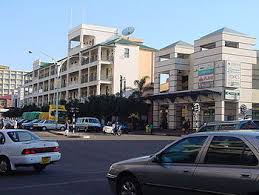
Kilifi, Kenya
Bulawayo, Zimbabwe

newworldafro
DeeperThanRapBiggerThanHH
Silicon Savannah...??????
 ....... Kenya's not in the savanna area.......Media trying to be whimsical...not even making sense.
More important why is this development 60 miles south of Nairobi???
 .... if not in town..at least a suburb of the main capital city... right??
The Economist has a special report on Africa in its recent edition. It is roughly the same stuff they have previously mentioned like improving GDP per capita, political stability, and the access to mobile phones which has been a favorite of many business publications. These stories are now finding their way to the business press and publications like Foreign Policy.
CELEBRATIONS are in order on the poorest continent. Never in the half-century since it won independence from the colonial powers has Africa been in such good shape. Its economy is flourishing. Most countries are at peace. Ever fewer children bear arms and record numbers go to school. Mobile phones are as ubiquitous as they are in India and, in the worst-affected countries, HIV infections have fallen by up to three-quarters. Life expectancy rose by a tenth in the past decade and foreign direct investment has tripled. Consumer spending will almost double in the next ten years; the number of countries with average incomes above $1,000 per person a year will grow from less than half of Africa’s 55 states to three-quarters.
Africans deserve the credit. Western aid agencies, Chinese mining companies and UN peacekeepers have done their bit, but the continent’s main saviours are its own people. They are embracing modern technology, voting in ever more elections and pressing their leaders to do better. A sense of hope abounds. Africans rightly take pride in conferences packed with Western bankers keen to invest in their capital markets (see article). Within the next few months MasterCard will have issued South Africans with 10m debit cards. Even the continent’s politicians are doing a bit better, especially in economic management and striking peace deals. Average GDP growth is humming along, at about 6%. Governance is improving: our correspondent visited 23 countries to research this week’s special report and was not once asked for a bribe—inconceivable only ten years ago.
This is a welcome transformation, but it is still incomplete. The danger is that Africa settles for today’s pace of change. Only if Africans raise their ambitions still further will they reach their full potential. They need to take on the difficult jobs of building infrastructure, rooting out corruption and clearing the tangle of government regulation that is still holding them back. And they should hurry.
One reason is that so much more remains to be done. Poverty may have become less visible in Africa’s capitals but it remains widespread. The battle against hunger has not been won. The spread of wealth is uneven and winners from today’s boom all too often rush to fortify their gilded positions inside guarded compounds. The financiers who suggest that Africa could soon rival Asia have let their imaginations run riot. Whereas one is the workshop of the world, the other almost exclusively exports what grows in fields or is dug out from below them.
About a third of Africa’s GDP growth comes from commodities. This will not last. Today’s prices are near record highs and commodity markets have a habit of collapsing. Furthermore, recent gains in agricultural commodities may be undermined by climate change. Even now, savannahs are drying out, water tables are dropping and rains either failing or becoming more irregular. One in five Africans will be directly affected by 2020. Even as their continent prospers, many of them will continue to depend on agriculture and there is little they can do about the threats to the world’s environment.
Another reason to push ahead is that Africa’s hard-won victories are vulnerable to relapses. Kenya is a model for other countries in east Africa but the campaign for elections on March 4th has been marred by violence (see article). New scourges—like Islamist extremism in the Sahara—could yet sow instability.
And Africa must make the most of two transitions it is now going through. The move from the countryside to cities offers the chance of a one-off boost to productivity both on the farm and in the slums. If African states bungle this, they will create a dangerous unemployed urban class. At the same time, though Africa’s population is still growing rapidly—it will double to 2 billion by 2050—families there are becoming smaller. This promises a “demographic dividend”, as the number of workers relative to children and the elderly increases. The continent must make use of this bulge of labour, and the savings it produces, for development. If they squander it, Africans will grow old before they grow rich.
Break down your borders
Africa’s citizens are already striving to become more productive. Farmers have started using hand-held gadgets to gain access to weather reports. Slums too are teeming with technology. The internet is changing the way the continent does business. In Kenya a third of GDP flows through a mobile money-transfer system set up by a private telecoms company.
But Africa’s entrepreneurs are often stymied by the state. The bottom third countries in the World Bank’s ease-of-business ranking are almost all in Africa. Their people could easily have better lives; abundant capital and technology offer big opportunities. The infrastructure is improving—only 5% of the 15,800 miles travelled for our special report was on unpaved roads—but the power grid is a disaster. On the whole, government officials should focus less on building things than getting out of the way. Useless regulations have created bottlenecks. East Africa’s main port in Mombasa is gummed up and land borders across the continent hold back lorries for days. Restrictions on employing migrants and on land ownership prevent businesses from expanding. Bureaucrats and customs officers inflate the cost of getting anything done. Shipping a car from China to Tanzania costs $4,000, but getting it from there to nearby Uganda can cost another $5,000.
If aspiring Africa wants a new dream, it should be creating a common market from the Med to the Cape. That would be a boon to trade, enterprise and manufacturing: it would also get rid of much of the petty corruption and save lives. A recent World Bank report pointed out that Africa could produce enough food to feed itself; alas, too few subsistence farmers get a chance to sell their produce (and usually get less than 20% of the market price). Why not rekindle pan-Africanism by opening borders drawn in London and Paris? Africa needs a reborn liberation movement—except this time the aim is to free Africans from civil servants rather than colonial masters.
The Economist
CELEBRATIONS are in order on the poorest continent. Never in the half-century since it won independence from the colonial powers has Africa been in such good shape. Its economy is flourishing. Most countries are at peace. Ever fewer children bear arms and record numbers go to school. Mobile phones are as ubiquitous as they are in India and, in the worst-affected countries, HIV infections have fallen by up to three-quarters. Life expectancy rose by a tenth in the past decade and foreign direct investment has tripled. Consumer spending will almost double in the next ten years; the number of countries with average incomes above $1,000 per person a year will grow from less than half of Africa’s 55 states to three-quarters.
Africans deserve the credit. Western aid agencies, Chinese mining companies and UN peacekeepers have done their bit, but the continent’s main saviours are its own people. They are embracing modern technology, voting in ever more elections and pressing their leaders to do better. A sense of hope abounds. Africans rightly take pride in conferences packed with Western bankers keen to invest in their capital markets (see article). Within the next few months MasterCard will have issued South Africans with 10m debit cards. Even the continent’s politicians are doing a bit better, especially in economic management and striking peace deals. Average GDP growth is humming along, at about 6%. Governance is improving: our correspondent visited 23 countries to research this week’s special report and was not once asked for a bribe—inconceivable only ten years ago.
This is a welcome transformation, but it is still incomplete. The danger is that Africa settles for today’s pace of change. Only if Africans raise their ambitions still further will they reach their full potential. They need to take on the difficult jobs of building infrastructure, rooting out corruption and clearing the tangle of government regulation that is still holding them back. And they should hurry.
One reason is that so much more remains to be done. Poverty may have become less visible in Africa’s capitals but it remains widespread. The battle against hunger has not been won. The spread of wealth is uneven and winners from today’s boom all too often rush to fortify their gilded positions inside guarded compounds. The financiers who suggest that Africa could soon rival Asia have let their imaginations run riot. Whereas one is the workshop of the world, the other almost exclusively exports what grows in fields or is dug out from below them.
About a third of Africa’s GDP growth comes from commodities. This will not last. Today’s prices are near record highs and commodity markets have a habit of collapsing. Furthermore, recent gains in agricultural commodities may be undermined by climate change. Even now, savannahs are drying out, water tables are dropping and rains either failing or becoming more irregular. One in five Africans will be directly affected by 2020. Even as their continent prospers, many of them will continue to depend on agriculture and there is little they can do about the threats to the world’s environment.
Another reason to push ahead is that Africa’s hard-won victories are vulnerable to relapses. Kenya is a model for other countries in east Africa but the campaign for elections on March 4th has been marred by violence (see article). New scourges—like Islamist extremism in the Sahara—could yet sow instability.
And Africa must make the most of two transitions it is now going through. The move from the countryside to cities offers the chance of a one-off boost to productivity both on the farm and in the slums. If African states bungle this, they will create a dangerous unemployed urban class. At the same time, though Africa’s population is still growing rapidly—it will double to 2 billion by 2050—families there are becoming smaller. This promises a “demographic dividend”, as the number of workers relative to children and the elderly increases. The continent must make use of this bulge of labour, and the savings it produces, for development. If they squander it, Africans will grow old before they grow rich.
Break down your borders
Africa’s citizens are already striving to become more productive. Farmers have started using hand-held gadgets to gain access to weather reports. Slums too are teeming with technology. The internet is changing the way the continent does business. In Kenya a third of GDP flows through a mobile money-transfer system set up by a private telecoms company.
But Africa’s entrepreneurs are often stymied by the state. The bottom third countries in the World Bank’s ease-of-business ranking are almost all in Africa. Their people could easily have better lives; abundant capital and technology offer big opportunities. The infrastructure is improving—only 5% of the 15,800 miles travelled for our special report was on unpaved roads—but the power grid is a disaster. On the whole, government officials should focus less on building things than getting out of the way. Useless regulations have created bottlenecks. East Africa’s main port in Mombasa is gummed up and land borders across the continent hold back lorries for days. Restrictions on employing migrants and on land ownership prevent businesses from expanding. Bureaucrats and customs officers inflate the cost of getting anything done. Shipping a car from China to Tanzania costs $4,000, but getting it from there to nearby Uganda can cost another $5,000.
If aspiring Africa wants a new dream, it should be creating a common market from the Med to the Cape. That would be a boon to trade, enterprise and manufacturing: it would also get rid of much of the petty corruption and save lives. A recent World Bank report pointed out that Africa could produce enough food to feed itself; alas, too few subsistence farmers get a chance to sell their produce (and usually get less than 20% of the market price). Why not rekindle pan-Africanism by opening borders drawn in London and Paris? Africa needs a reborn liberation movement—except this time the aim is to free Africans from civil servants rather than colonial masters.
The Economist
newworldafro
DeeperThanRapBiggerThanHH
The Economist has a special report on Africa in its recent edition. It is roughly the same stuff they have previously mentioned like improving GDP per capita, political stability, and the access to mobile phones which has been a favorite of many business publications. These stories are now finding their way to the business press and publications like Foreign Policy.
CELEBRATIONS are in order on the poorest continent. Never in the half-century since it won independence from the colonial powers has Africa been in such good shape. Its economy is flourishing. Most countries are at peace. Ever fewer children bear arms and record numbers go to school. Mobile phones are as ubiquitous as they are in India and, in the worst-affected countries, HIV infections have fallen by up to three-quarters. Life expectancy rose by a tenth in the past decade and foreign direct investment has tripled. Consumer spending will almost double in the next ten years; the number of countries with average incomes above $1,000 per person a year will grow from less than half of Africa’s 55 states to three-quarters.
Africans deserve the credit. Western aid agencies, Chinese mining companies and UN peacekeepers have done their bit, but the continent’s main saviours are its own people. They are embracing modern technology, voting in ever more elections and pressing their leaders to do better. A sense of hope abounds. Africans rightly take pride in conferences packed with Western bankers keen to invest in their capital markets (see article). Within the next few months MasterCard will have issued South Africans with 10m debit cards. Even the continent’s politicians are doing a bit better, especially in economic management and striking peace deals. Average GDP growth is humming along, at about 6%. Governance is improving: our correspondent visited 23 countries to research this week’s special report and was not once asked for a bribe—inconceivable only ten years ago.
This is a welcome transformation, but it is still incomplete. The danger is that Africa settles for today’s pace of change. Only if Africans raise their ambitions still further will they reach their full potential. They need to take on the difficult jobs of building infrastructure, rooting out corruption and clearing the tangle of government regulation that is still holding them back. And they should hurry.
One reason is that so much more remains to be done. Poverty may have become less visible in Africa’s capitals but it remains widespread. The battle against hunger has not been won. The spread of wealth is uneven and winners from today’s boom all too often rush to fortify their gilded positions inside guarded compounds. The financiers who suggest that Africa could soon rival Asia have let their imaginations run riot. Whereas one is the workshop of the world, the other almost exclusively exports what grows in fields or is dug out from below them.
About a third of Africa’s GDP growth comes from commodities. This will not last. Today’s prices are near record highs and commodity markets have a habit of collapsing. Furthermore, recent gains in agricultural commodities may be undermined by climate change. Even now, savannahs are drying out, water tables are dropping and rains either failing or becoming more irregular. One in five Africans will be directly affected by 2020. Even as their continent prospers, many of them will continue to depend on agriculture and there is little they can do about the threats to the world’s environment.
Another reason to push ahead is that Africa’s hard-won victories are vulnerable to relapses. Kenya is a model for other countries in east Africa but the campaign for elections on March 4th has been marred by violence (see article). New scourges—like Islamist extremism in the Sahara—could yet sow instability.
And Africa must make the most of two transitions it is now going through. The move from the countryside to cities offers the chance of a one-off boost to productivity both on the farm and in the slums. If African states bungle this, they will create a dangerous unemployed urban class. At the same time, though Africa’s population is still growing rapidly—it will double to 2 billion by 2050—families there are becoming smaller. This promises a “demographic dividend”, as the number of workers relative to children and the elderly increases. The continent must make use of this bulge of labour, and the savings it produces, for development. If they squander it, Africans will grow old before they grow rich.
Break down your borders
Africa’s citizens are already striving to become more productive. Farmers have started using hand-held gadgets to gain access to weather reports. Slums too are teeming with technology. The internet is changing the way the continent does business. In Kenya a third of GDP flows through a mobile money-transfer system set up by a private telecoms company.
But Africa’s entrepreneurs are often stymied by the state. The bottom third countries in the World Bank’s ease-of-business ranking are almost all in Africa. Their people could easily have better lives; abundant capital and technology offer big opportunities. The infrastructure is improving—only 5% of the 15,800 miles travelled for our special report was on unpaved roads—but the power grid is a disaster. On the whole, government officials should focus less on building things than getting out of the way. Useless regulations have created bottlenecks. East Africa’s main port in Mombasa is gummed up and land borders across the continent hold back lorries for days. Restrictions on employing migrants and on land ownership prevent businesses from expanding. Bureaucrats and customs officers inflate the cost of getting anything done. Shipping a car from China to Tanzania costs $4,000, but getting it from there to nearby Uganda can cost another $5,000.
If aspiring Africa wants a new dream, it should be creating a common market from the Med to the Cape. That would be a boon to trade, enterprise and manufacturing: it would also get rid of much of the petty corruption and save lives. A recent World Bank report pointed out that Africa could produce enough food to feed itself; alas, too few subsistence farmers get a chance to sell their produce (and usually get less than 20% of the market price). Why not rekindle pan-Africanism by opening borders drawn in London and Paris? Africa needs a reborn liberation movement—except this time the aim is to free Africans from civil servants rather than colonial masters.
The Economist
^^^ African "renaissance" is welcome....just funny how this shiit is so coded
I dont know if this was posted before, but this is a good mechanism of unlocking value for farmers. Some African countries adopted commodity marketing board arrangements led to rent seeking behavior by Governments where they took advantage of their monopolies to short change farmers. I saw the founder of this ECX at a TED talks and its good to see her transform her ideas into tangible action.
While government leaders, NGOs and corporations devise strategies to churn out more food for future generations, Eleni Gabre-Madhin is taking a different approach. Concerned by a 2002 famine in her home country of Ethiopia that followed bumper crops in 2000 and 2001, the Stanford-educated economist decided it was time to go beyond food production and take a hard look at distribution.
The result? Africa's first commodity exchange. As the founder and outgoing CEO of the Ethiopia Commodity Exchange (ECX), Gabre-Madhin established a reliable interface for buyers and sellers to meet an idea that has inspired other African countries to follow suit. Gabre-Madhin won the Yara award at the African Green Revolution Forum in Arusha, Tanzania, for her role in transforming Ethiopia's commodity market.
What prompted your decision to found Africa's first commodity exchange in Ethiopia?
I had been doing research on grain markets and other agriculture markets in Africa for many years and, as it happened, I did my PhD on grain markets in Ethiopia. One of the things I kept seeing over and over, which I'd seen in other parts of Africa, was just how difficult it was for buyers to find sellers and sellers to find buyers, and how difficult it was to enforce the contract.
You'd see that a seller, such as a farmer, for example, who sold grain to a trader wouldn't get paid for weeks, sometimes months. There were cases in the coffee market in Ethiopia where people had committed suicide because they had outstanding loans and their buyers hadn't paid them. So there were all sorts of cases of contract default.
Then from the buyers' perspective you'd hear that they'd have to inspect the grain or coffee visually to check if it was really the quality they'd been told it was. They would have to reweigh it and rebag it to see if it was the actual quantity and quality that they were contracting.
So these are all the problems in the supply chain that make us poor and make us food insecure. If people can't get grain where it's produced really efficiently to where it's needed, then you have markets that are segmented. You have pockets of surplus where prices collapse and places in other parts of the county where prices shoot up because there's a deficit and there's no grain coming in.
That's exactly what happened in 1984 in the big famine that claimed a million lives in Ethiopia. There was obviously a shortage in the north and yet Ethiopia had to go to the world and beg for food aid, but there was a grain surplus in the fertile parts of western Ethiopia.
When I found out about this, I said: "It can't just be about producing more sure, producing more is important but we've got to figure out how to distribute it. We've got to figure out how to make an efficient market work for everybody for the farmers, for the buyers, because otherwise we're always going to be in this cycle."
The same thing happened in 2002, when there were consecutive bumper harvests in 2000 and 2001, and Ethiopia was doing really well. Then six months later prices collapsed almost to zero, and farmers could not sell the grain. Six months later, in mid-2002, Ethiopia went to the world for emergency food aid for 14 million people at risk of starvation.
I was so shocked. By that time I had my PhD and I knew this was what I wanted to work on. I had the idea of a commodity exchange I'd written about it in my dissertation. I did my PhD at Stanford, which is really specialised on commodity markets.
What other sorts of dialogues are ongoing about distribution?
Now, there is more interest in markets and issues around distribution. In the Ethiopian debate about food security and famine, people would always say, "More seeds, more fertiliser, more irrigation these are the things we have to do." And yes, we have to do all that, but then here you are you get a bumper harvest and six months later people are still going to starve.
Every crisis leads to an opportunity so that crisis led me to tell the government: "We have 40 or 50 PhDs in economics working on production issues, and four of us have written PhDs on market issues, and that's how skewed our development policy is we're always talking about production and we have to have a more balanced perspective on how we're going to prevent hunger in Ethiopia, and we have to think about the marketing side." That somehow resonated, and the government decided to start up a whole initiative on markets. That's how I got invited to start the project on the commodity exchange and subsequently left the project and then started the exchange.
Has the idea of a commodity exchange gained traction elsewhere on the continent?
Around Africa, our exchange in Ethiopia has gained a lot of visibility: 18 countries have come to visit it. There has been a huge amount of interest. Many countries are writing it into their policies that they want to have a commodity exchange. Organisations like the UN Food and Agriculture Organisation, New Partnership for Africa's Development, UN Development Programme, the World Bank all these organisations are now sort of saying, we have to take this seriously, and help countries think through initiatives like the Ethiopia commodity exchange.
As the outgoing CEO of the exchange, what will you do next? I've seen this enormous demand, and that's going to be my next chapter to sponsor that demand, which in a sense has been created by the initiative in Ethiopia. I feel this is the natural next step for me.
And how will you do that?
I'm setting up a company that will carry out precisely this kind of project for different countries, bringing in knowledge, technology and management experience. At this point, there are about six countries, I would say, that are moving quite aggressively on getting commodity exchanges set up in Africa, and that's really exciting.
You have talked about a disconnect between buyers and sellers how does a commodity exchange address that and hold both parties accountable?
Basically, it's a membership-based system. We have members of the exchange that buy a membership seat, just like Charles Schwab and Merrill Lynch are seat holders on the New York stock exchange or Cargill is a member on the Chicago board of trade.
When you buy a membership seat, you use that seat to trade either on behalf of yourself or clients, who you may sign up. We have members of the exchange who trade on behalf of farmers, who themselves are farmers, and members who are buyers, such as industrial processors, flour millers, exporters, roasters, etc.
The members follow the rules of the exchange in the sense that they will bring a commodity to our warehouse, get it graded, certified, weighed and essentially stored in a warehouse that we are operating. This means we have a guarantee that we know what the quality is, we know what the quantity is and we know it will be delivered at sale.
On the buying side, we have a clearing house that takes the buyer's funds into a pre-trade cash account that is used for exchange trading purposes. The exchange has no involvement besides providing the platform for the buyer and seller to physically or virtually meet, and once they've agreed on the terms of the price and what the quantity is, then our clearing house will take the funds from the buyer from that pre-trade cash account and transfer it to the seller the next day. Also the next day, we will take the warehouse receipt from the seller and transfer the ownership to the buyer. So the exchange is the third-party guarantor of the transaction, and that's the key point.
Having a guarantor for the transaction means you don't need relatives or special connections. You don't have to beg people to pay you or chase after them. You don't have to check if the quality is really grade one. The exchange is guaranteeing the quality, quantity, payment and delivery. That's a very big value-add proposition to the market that if you trade through the exchange, you will receive payment the next morning.
That means we are a "T+1" clearing and settlement system; the day of trade being "T". T+1 means that tomorrow morning you're paid. Even stock exchanges that have been around for 20 years are still taking two or three days after trade to effect payment. We're settling the next day. This is a financial revolution in Ethiopia that somebody who sold is guaranteed payment the next day, especially when you imagine how many people have committed suicide or spend a large part of their time trying to get paid.
This is a very big change in our market that people can go to market saying, "I'm going to sell at whatever price I want, and I will get paid." Same thing for the buyers: "I will get my delivery, I will get my commodity when I want it, not months later."
There are exporters who used to default on their export contracts because the supplier had not yet met their contract. Or processors, like millers, who would get a delivery but it would be full of sand or stones. They'd put it in their machines, and their machines would break down. All these problems are not going away because of our system.
The smallholder farmer was the theme of the African Green Revolution Forum. Are they able to access the commodity exchange easily?
In our exchange, 12% of the members are farmer co-operatives that are representing 2.4 million small farmers in Ethiopia. That's a massive number in just four short years and relative to the amount of investment. Millions and millions are being spent on linking farmers to markets, and here with less than $10m we've accessed 2.4 million farmers in four years.
More importantly, even if they don't trade directly through the exchange, because of the transparency around the pricing, all the farmers in the country are now using the ECX price as the reference price. There are 15 million coffee farmers in Ethiopia, for example, and they are referencing their local market sales off the ECX price. This basically means that the margin between the local price and the ECX price has narrowed almost by half. So if a trader knows what the central market price is, but the farmer doesn't know, the trader will try to bring it down. Even if the prices are going up, the trader is buying at the lowest possible price to get a big margin that margin has shrunk down to half of what it used to be because of the transparency of the system and because everybody's using the same system.
We're getting 1.2m calls a month for market prices off the market data server, of which 70% come from rural areas. When the Tanzanian president, Jakaya Kikwete, came to ECX in May, he asked a trader who was part of our meeting, how do you negotiate with the farmers? How do you set prices with the farmers? And she looked at him and said: "Mr President, even if I wanted to cheat farmers I can't, because they know the prices before I do."
How Africa's first commodity exchange revolutionised Ethiopia's economy | Lauren Everitt | Global development | guardian.co.uk
While government leaders, NGOs and corporations devise strategies to churn out more food for future generations, Eleni Gabre-Madhin is taking a different approach. Concerned by a 2002 famine in her home country of Ethiopia that followed bumper crops in 2000 and 2001, the Stanford-educated economist decided it was time to go beyond food production and take a hard look at distribution.
The result? Africa's first commodity exchange. As the founder and outgoing CEO of the Ethiopia Commodity Exchange (ECX), Gabre-Madhin established a reliable interface for buyers and sellers to meet an idea that has inspired other African countries to follow suit. Gabre-Madhin won the Yara award at the African Green Revolution Forum in Arusha, Tanzania, for her role in transforming Ethiopia's commodity market.
What prompted your decision to found Africa's first commodity exchange in Ethiopia?
I had been doing research on grain markets and other agriculture markets in Africa for many years and, as it happened, I did my PhD on grain markets in Ethiopia. One of the things I kept seeing over and over, which I'd seen in other parts of Africa, was just how difficult it was for buyers to find sellers and sellers to find buyers, and how difficult it was to enforce the contract.
You'd see that a seller, such as a farmer, for example, who sold grain to a trader wouldn't get paid for weeks, sometimes months. There were cases in the coffee market in Ethiopia where people had committed suicide because they had outstanding loans and their buyers hadn't paid them. So there were all sorts of cases of contract default.
Then from the buyers' perspective you'd hear that they'd have to inspect the grain or coffee visually to check if it was really the quality they'd been told it was. They would have to reweigh it and rebag it to see if it was the actual quantity and quality that they were contracting.
So these are all the problems in the supply chain that make us poor and make us food insecure. If people can't get grain where it's produced really efficiently to where it's needed, then you have markets that are segmented. You have pockets of surplus where prices collapse and places in other parts of the county where prices shoot up because there's a deficit and there's no grain coming in.
That's exactly what happened in 1984 in the big famine that claimed a million lives in Ethiopia. There was obviously a shortage in the north and yet Ethiopia had to go to the world and beg for food aid, but there was a grain surplus in the fertile parts of western Ethiopia.
When I found out about this, I said: "It can't just be about producing more sure, producing more is important but we've got to figure out how to distribute it. We've got to figure out how to make an efficient market work for everybody for the farmers, for the buyers, because otherwise we're always going to be in this cycle."
The same thing happened in 2002, when there were consecutive bumper harvests in 2000 and 2001, and Ethiopia was doing really well. Then six months later prices collapsed almost to zero, and farmers could not sell the grain. Six months later, in mid-2002, Ethiopia went to the world for emergency food aid for 14 million people at risk of starvation.
I was so shocked. By that time I had my PhD and I knew this was what I wanted to work on. I had the idea of a commodity exchange I'd written about it in my dissertation. I did my PhD at Stanford, which is really specialised on commodity markets.
What other sorts of dialogues are ongoing about distribution?
Now, there is more interest in markets and issues around distribution. In the Ethiopian debate about food security and famine, people would always say, "More seeds, more fertiliser, more irrigation these are the things we have to do." And yes, we have to do all that, but then here you are you get a bumper harvest and six months later people are still going to starve.
Every crisis leads to an opportunity so that crisis led me to tell the government: "We have 40 or 50 PhDs in economics working on production issues, and four of us have written PhDs on market issues, and that's how skewed our development policy is we're always talking about production and we have to have a more balanced perspective on how we're going to prevent hunger in Ethiopia, and we have to think about the marketing side." That somehow resonated, and the government decided to start up a whole initiative on markets. That's how I got invited to start the project on the commodity exchange and subsequently left the project and then started the exchange.
Has the idea of a commodity exchange gained traction elsewhere on the continent?
Around Africa, our exchange in Ethiopia has gained a lot of visibility: 18 countries have come to visit it. There has been a huge amount of interest. Many countries are writing it into their policies that they want to have a commodity exchange. Organisations like the UN Food and Agriculture Organisation, New Partnership for Africa's Development, UN Development Programme, the World Bank all these organisations are now sort of saying, we have to take this seriously, and help countries think through initiatives like the Ethiopia commodity exchange.
As the outgoing CEO of the exchange, what will you do next? I've seen this enormous demand, and that's going to be my next chapter to sponsor that demand, which in a sense has been created by the initiative in Ethiopia. I feel this is the natural next step for me.
And how will you do that?
I'm setting up a company that will carry out precisely this kind of project for different countries, bringing in knowledge, technology and management experience. At this point, there are about six countries, I would say, that are moving quite aggressively on getting commodity exchanges set up in Africa, and that's really exciting.
You have talked about a disconnect between buyers and sellers how does a commodity exchange address that and hold both parties accountable?
Basically, it's a membership-based system. We have members of the exchange that buy a membership seat, just like Charles Schwab and Merrill Lynch are seat holders on the New York stock exchange or Cargill is a member on the Chicago board of trade.
When you buy a membership seat, you use that seat to trade either on behalf of yourself or clients, who you may sign up. We have members of the exchange who trade on behalf of farmers, who themselves are farmers, and members who are buyers, such as industrial processors, flour millers, exporters, roasters, etc.
The members follow the rules of the exchange in the sense that they will bring a commodity to our warehouse, get it graded, certified, weighed and essentially stored in a warehouse that we are operating. This means we have a guarantee that we know what the quality is, we know what the quantity is and we know it will be delivered at sale.
On the buying side, we have a clearing house that takes the buyer's funds into a pre-trade cash account that is used for exchange trading purposes. The exchange has no involvement besides providing the platform for the buyer and seller to physically or virtually meet, and once they've agreed on the terms of the price and what the quantity is, then our clearing house will take the funds from the buyer from that pre-trade cash account and transfer it to the seller the next day. Also the next day, we will take the warehouse receipt from the seller and transfer the ownership to the buyer. So the exchange is the third-party guarantor of the transaction, and that's the key point.
Having a guarantor for the transaction means you don't need relatives or special connections. You don't have to beg people to pay you or chase after them. You don't have to check if the quality is really grade one. The exchange is guaranteeing the quality, quantity, payment and delivery. That's a very big value-add proposition to the market that if you trade through the exchange, you will receive payment the next morning.
That means we are a "T+1" clearing and settlement system; the day of trade being "T". T+1 means that tomorrow morning you're paid. Even stock exchanges that have been around for 20 years are still taking two or three days after trade to effect payment. We're settling the next day. This is a financial revolution in Ethiopia that somebody who sold is guaranteed payment the next day, especially when you imagine how many people have committed suicide or spend a large part of their time trying to get paid.
This is a very big change in our market that people can go to market saying, "I'm going to sell at whatever price I want, and I will get paid." Same thing for the buyers: "I will get my delivery, I will get my commodity when I want it, not months later."
There are exporters who used to default on their export contracts because the supplier had not yet met their contract. Or processors, like millers, who would get a delivery but it would be full of sand or stones. They'd put it in their machines, and their machines would break down. All these problems are not going away because of our system.
The smallholder farmer was the theme of the African Green Revolution Forum. Are they able to access the commodity exchange easily?
In our exchange, 12% of the members are farmer co-operatives that are representing 2.4 million small farmers in Ethiopia. That's a massive number in just four short years and relative to the amount of investment. Millions and millions are being spent on linking farmers to markets, and here with less than $10m we've accessed 2.4 million farmers in four years.
More importantly, even if they don't trade directly through the exchange, because of the transparency around the pricing, all the farmers in the country are now using the ECX price as the reference price. There are 15 million coffee farmers in Ethiopia, for example, and they are referencing their local market sales off the ECX price. This basically means that the margin between the local price and the ECX price has narrowed almost by half. So if a trader knows what the central market price is, but the farmer doesn't know, the trader will try to bring it down. Even if the prices are going up, the trader is buying at the lowest possible price to get a big margin that margin has shrunk down to half of what it used to be because of the transparency of the system and because everybody's using the same system.
We're getting 1.2m calls a month for market prices off the market data server, of which 70% come from rural areas. When the Tanzanian president, Jakaya Kikwete, came to ECX in May, he asked a trader who was part of our meeting, how do you negotiate with the farmers? How do you set prices with the farmers? And she looked at him and said: "Mr President, even if I wanted to cheat farmers I can't, because they know the prices before I do."
How Africa's first commodity exchange revolutionised Ethiopia's economy | Lauren Everitt | Global development | guardian.co.uk

In Kenya, the Next Big Oil Patch - Businessweek
Not that long of an article, but here's a few cliff notes:
Not that long of an article, but here's a few cliff notes:
The valley could yield 10 billion barrels, Tullow estimates, enough to supply Kenya for three centuries.
Kenya imports all its oil, so securing a domestic energy supply and becoming a hub for area producers would boost an economy forecast to grow 6 percent this year. Officials in Nairobi are proposing a $5 billion plan to build a network of pipelines to a terminal on Kenya’s Indian Ocean coast. Tankers would then ship the oil to customers in China, India, and other Asian countries. “The interest of this country is to fast-track this process,” says Martin Heya, commissioner for petroleum.

newworldafro
DeeperThanRapBiggerThanHH
video said it is supposed to get up to 7 Km or 4.3 miles long....