Also, are you depressed?
Start cleaning!
The psychology behind cleanliness
Keeping your home clean and tidy is good for your physical and mental wellbeing - or so the science says.
A
2010 study by researchers at the University of California used software to analyse how 30 cohabiting couples talked about their homes. Those describing their living spaces as "cluttered" or complained of "unfinished projects" were more likely to be suffering from depression and fatigue than those who described their homes as "restful" and "restorative". It was also found that those living in cluttered environments displayed higher levels of cortisol, a hormone that's released into a person's blood from their adrenal gland, often in response to stress.
In their
2011 study, researchers at Princeton University concluded that a cluttered environment makes it more difficult to focus on a specific task due to a person's visual cortex being overwhelmed by all the task-irrelevant objects in the room.
A
2014 study published in the journal Mindfulness found that participants who took part in 'mindfully' washing the dishes reported a 27% reduction in nervousness, along with a 25% improvement in 'mental inspiration'. Mindfully washing the dishes means to do so contemplatively, by inhaling the scent of the dishwashing liquid and enjoying the sensation of warm water on your hands.
So it's worth considering how you go about cleaning your home, as different approaches may lead to different outcomes. A more energetic clean may be more beneficial to your physical health, while a meditative approach could benefit your mental wellbeing.
5 ways a clean home can improve your mental health
Cleaning releases endorphins
You can approach cleaning as a meditative task or throw yourself into it, all elbow grease and dancing with mops.
We'll talk about the physical benefits of an energetic cleaning blitz later, but any form of exercise will result in the release of endorphins. These endorphins go on to interact with the receptors in your brain, altering your perception of pain and triggering a positive feeling in your body. Regular exercise has been proven to reduce stress, lessen anxiety and ward off depression.
There's also that sense of satisfaction you get from transforming your messy home into a livable space.
Declutter to improve your focus
The Princeton study we've already mentioned demonstrates that while our brains are perhaps the most complex structures in the universe, capable of doing amazing things, they're also easily overwhelmed.
If you struggle to focus on office or school work, take a look at your work environment. Are you cluttering your visual cortex with objects not related to the task at hand? Piles of paperwork, your cereal bowl from breakfast, unopened letters, an overflowing bin… all these task-irrelevant objects could be making it more difficult for you to focus on what needs to be done. Things like paperwork and unopened letters are particularly troublesome; in addition to their contribution to your cluttered environment, they may also act as a visual cue by reminding you of things you've been putting off.
So open those letters and file away any paperwork, put the bowl in the dishwasher, empty the waste paper bin… if your desk is full of knick-knacks competing with your work for attention, perhaps now's the time to decide what to get rid of. If you're not ready to let go quite yet, you could always place them in another room.
A better smelling home can lift your mood
The link between olfactory sensations and mental health are long-established, and it's been proven that aromatherapy can reduce symptoms of anxiety and depression. Because your olfactory response is directly linked to the limbic system (the emotional center of our brain), scents that you associate with past experiences can encourage you to reminisce. But more than that, certain scents can have a beneficial impact on your mind and body, for example the soothing effect of lavender may help you sleep and would be a perfect scent for the bedroom.
A musty smelling room isn't likely to do anything for your mental health, but many cleaning products are scented with citrus, which can have an energising effect and give you a much needed lift.
Other scents you may wish to try in your home include:
- Pine - shinrin-yoku ("taking in the atmosphere of the forest"), is a form of therapy that originated in Japan. A study has shown the practice to be beneficial in lessening the symptoms of anxiety and depression. Pine scent is common in bathroom cleaning products and disinfectant spray.
- Rosemary and peppermint - both considered to be able to stimulate your mind, so perhaps best used in the home office or anywhere you need to concentrate.
- Pumpkin - an aphrodisiac, with researchers discovering that 40% of male test subjects responded 'positively' to a pumpkin scent combined with lavender. Perhaps best used in the bedroom?
Sharing a clean environment makes for a better relationship
If you share your living space with others, there's always a chance you're not on the same page where tidiness and cleanliness is concerned. Dirty dishes in the sink and hair in the bathtub can cause resentment and be a source of bad feeling, which is likely to impact your mental wellbeing.
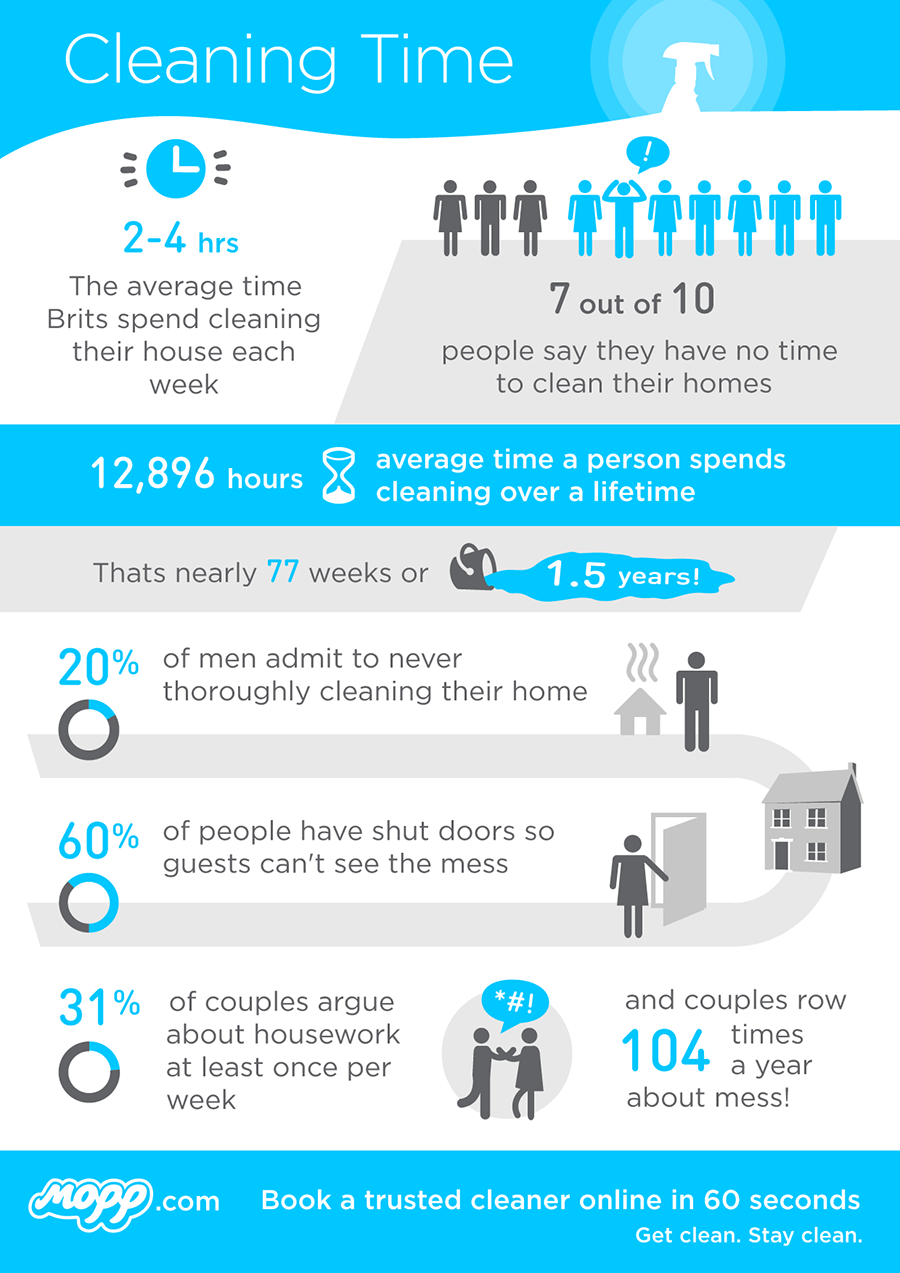
Try to agree to share responsibility for the housework. Cooperation and compromise can be beneficial to mental wellbeing - as can living in a clean, decluttered home, free of arguments about who buried the remote control under a pile of dirty clothes.
 Enjoy better quality sleep
The National Sleep Foundation carried out a
survey that found that people who make their beds every morning are 19% more likely to get a good night's sleep. 75% percent said they sleep better when their sheets are freshly laundered and pillows plumped, because they feel more comfortable.
It's also true that if your mental wellbeing has been boosted through the general improvement in your home environment, that will no doubt have a positive impact on the quality of your sleep.
A clean home for better physical health
We mentioned the release of endorphins you'll experience during energetic housekeeping, but if cleaning can be exercise then there are physical benefits to be had too. A
2017 study published in The Lancet concluded that 30 minutes spent blitzing your home could reduce your risk of heart disease by one fifth - as long as the chores require some physical exertion and the session lasts the full half hour. A 30 year old woman weighing 130lbs would burn approximately 130 calories mopping the floor for 30 minutes, or 85 doing miscellaneous housework (according to the
HealthStatus calculator).
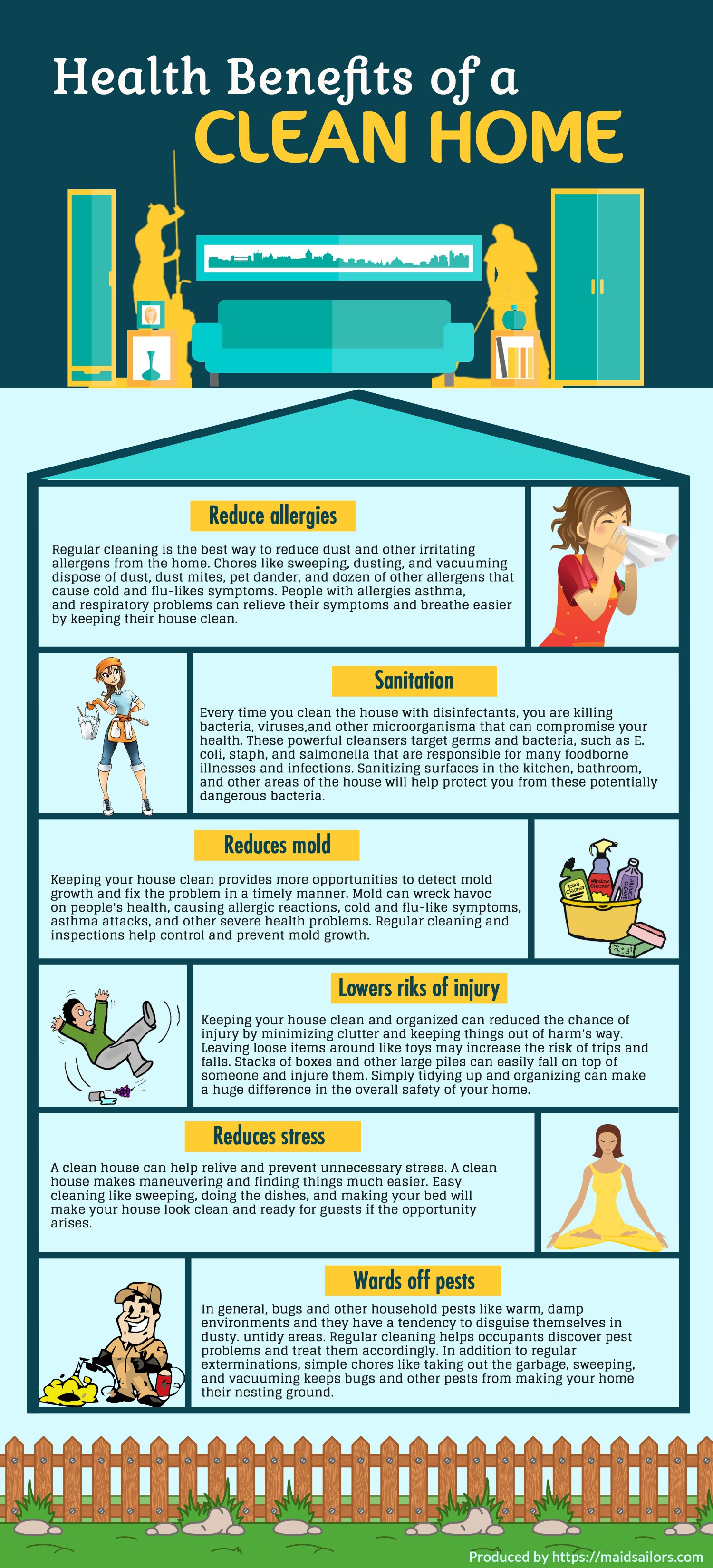
Another obvious benefit to physical health is the removal of bacteria from your home. Household surfaces can be covered in all kinds of potentially harmful bacteria, such as E-coli, Staphylococcus and Corynebacterium. Common fungal species found in the home include Leptosphaerulina chartarum, Epicoccum nigrum and Wallemia sebi. Homes with pets are likely to harbour more diverse species of bacteria and require more frequent cleaning.
If you or others sharing your home suffer from allergies, frequent cleaning of carpets and other surfaces can help to reduce symptoms.
A dirty kitchen is a kitchen you're unlikely to enjoy cooking in, and so the quality of your meals could suffer. This is likely to impact your diet and physical wellbeing. Ensuring that your kitchen is a clean and tidy environment could encourage you to cook healthier, more balanced meals rather than wade past the dirty dishes and discarded pizza boxes to get to the microwave.
Start small!
https://www.unfukkyourhabitat.com/the-depressionmessy-house-cycle/







 On earth as it is in heaven! Away unfilthy spirits! Ma'am! I love cleaning. Its instant gratification


 Is there a reason why?