Ezra Klein and Derek Thompson on the abundance agenda and liberals - Housing 🏠, Energy ⚡️, Infrastructure 🚊, Transportation 🛣️, etc

☑︎#VoteDemocrat

The Original
WOAT
Supporter
Joined
Dec 9, 2012
Messages
336,970
Reputation
-34,846
Daps
640,633
Reppin
The Deep State

The Whole Country Is Starting to Look Like California
Summarize
Housing prices are rising fast in red and purple states known for being easy places to build. How can that be?

Rogé KarmaJune 30, 2025, 7:30 AM ET
Something is happening in the housing market that really shouldn’t be. Everyone familiar with America’s affordability crisis knows that it is most acute in ultra-progressive coastal cities in heavily Democratic states. And yet, home prices have been rising most sharply in the exact places that have long served as a refuge for Americans fed up with the spiraling cost of living. Over the past decade, the median home price has increased by 134 percent in Phoenix, 133 percent in Miami, 129 percent in Atlanta, and 99 percent in Dallas. (Over that same stretch, prices in New York, San Francisco, and Los Angeles have increased by about 75 percent, 76 percent, and 97 percent, respectively).

This trend could prove disastrous. For much of the past half century, suburban sprawl across the Sun Belt was a kind of pressure-release valve for the housing market. People who couldn’t afford to live in expensive cities had other, cheaper places to go. Now even the affordable alternatives are on track to become out of reach for a critical mass of Americans.

The trend also presents a mystery. According to expert consensus, anti-growth liberals have imposed excessive regulations that made building enough homes impossible. The housing crisis has thus become synonymous with feckless blue-state governance. So how can prices now be rising so fast in red and purple states known for their loose regulations?

From the March 2025 issue: How progressives froze the American dream

A tempting explanation is that the expert consensus is wrong. Perhaps regulations and NIMBYism were never really the problem, and the current push to reform zoning laws and building codes is misguided. But the real answer is that San Francisco and New York weren’t unique—they were just early. Eventually, no matter where you are, the forces of NIMBYism catch up to you.

The perception of the Sun Belt as the anti-California used to be accurate. In a recent paper, two urban economists, Ed Glaeser and Joe Gyourko, analyze the rate of housing production across 82 metro areas since the 1950s. They find that as recently as the early 2000s, booming cities such as Dallas, Atlanta, and Phoenix were building new homes at more than four times the rate of major coastal cities such as San Francisco, Los Angeles, and New York, on average. The fact that millions of people were being priced out of the locations with the best jobs and highest wages—so-called superstar cities—wasn’t ideal. But the Sun Belt building boom kept the coastal housing shortage from becoming a full-blown national crisis.

No longer. Although the Sun Belt continues to build far more housing than the coasts in absolute terms, Glaeser and Gyourko find that the rate of building in most Sun Belt cities has fallen by more than half over the past 25 years, in some cases by much more, even as demand to live in those places has surged. “When it comes to new housing production, the Sun Belt cities today are basically at the point that the big coastal cities were 20 years ago,” Gyourko told me. This explains why home prices in the Sun Belt, though still low compared with those in San Francisco and New York, have risen so sharply since the mid-2010s—a trend that accelerated during the pandemic, as the rise of remote work led to a large migration out of high-cost cities.

In a properly functioning housing market, the post-COVID surge in demand should have generated a massive building boom that would have cooled price growth. Instead, more than five years after the pandemic began, these places still aren’t building enough homes, and prices are still rising wildly.

As the issue of housing has become more salient in Democratic Party politics, some commentators have pointed to rising costs in the supposedly laissez-faire Sun Belt as proof that zoning laws and other regulations are not the culprit. “Blaming zoning for housing costs seems especially blinkered because different jurisdictions in the United States have very different approaches to land use regulations, and yet the housing crisis is a nationwide phenomenon,” the Vanderbilt University law professors Ganesh Sitaraman and Christopher Serkin write in a recent paper. Some argue that the wave of consolidation within the home-building industry following the 2008 financial crisis gave large developers the power to slow-walk development and keep prices high. Others say that the cost of construction has climbed so high over the past two decades that building no longer makes financial sense for developers.

Both of those claims probably account for part of the growth in housing costs, but they fall short as the main explanation. The home-building industry has indeed become more concentrated since 2008, but the slowdown in housing production in the Sun Belt began well before that. If the problem were a monopolistic market, you would expect to see higher profit margins for builders, yet Glaeser and Gyourko find that developer profits have remained roughly constant. (Other sources agree.) Likewise, construction and financing costs have risen sharply since the early 2000s—but not to the point where builders can’t turn a profit. In fact, Glaeser and Gyourko find that the share of homes selling far above the cost of production in major Sun Belt markets has dramatically increased. Put another way, there are even more opportunities for home builders to make a profit in these places; something is preventing them from taking advantage.

The Sun Belt, in short, is subject to the same antidevelopment forces as the coasts; it just took longer to trigger them. Cities in the South and Southwest have portrayed themselves as business-friendly, pro-growth metros. In reality, their land-use laws aren’t so different from those in blue-state cities. According to a 2018 research paper, co-authored by Gyourko, that surveyed 44 major U.S. metro areas, land-use regulations in Miami and Phoenix both ranked in the top 10 most restrictive (just behind Washington, D.C., and L.A. and ahead of Boston), and Dallas and Nashville were in the top 25. Because the survey is based on responses from local governments, it might understate just how bad zoning in the Sun Belt is. “When I first opened up the zoning code for Atlanta, I almost spit out my coffee,” Alex Armlovich, a senior housing-policy analyst at the Niskanen Center, a centrist think tank, told me. “It’s almost identical to L.A. in the 1990s.”

These restrictive rules weren’t a problem back when Sun Belt cities could expand by building new single-family homes at their exurban fringes indefinitely. That kind of development is less likely to be subject to zoning laws; even when it is, obtaining exceptions to those laws is relatively easy because neighbors who might oppose new development don’t exist yet. Recently, however, many Sun Belt cities have begun hitting limits to their outward sprawl, either because they’ve run into natural obstacles (such as the Everglades in Miami and tribal lands near Phoenix) or because they’ve already expanded to the edge of reasonable commute distances (as appears to be the case in Atlanta and Dallas). To keep growing, these cities will have to find ways to increase the density of their existing urban cores and suburbs. That is a much more difficult proposition. “This is exactly what happened in many coastal cities in the 1980s and ’90s,” Armlovich told me. “Once you run out of room to sprawl, suddenly your zoning code starts becoming a real limitation.”

Jerusalem Demsas: The labyrinthine rules that created a housing crisis

Glaeser and Gyourko go one step further. They hypothesize that as Sun Belt cities have become more affluent and highly educated, their residents have become more willing and able to use existing laws and regulations to block new development. They point to two main pieces of evidence. First, for a given city, the slowdown in new housing development strongly correlates with a rising share of college-educated residents. Second, within cities, the neighborhoods where housing production has slowed the most are lower-density, affluent suburbs populated with relatively well-off, highly educated professionals. In other words, anti-growth NIMBYism might be a perverse but natural consequence of growth: As demand to live in a place increases, it attracts the kind of people who are more likely to oppose new development, and who have the time and resources to do so. “We used to think that people in Miami, Dallas, Phoenix behaved differently than people in Boston and San Francisco,” Gyourko told me. “That clearly isn’t the case.”
 

☑︎#VoteDemocrat

The Original
WOAT
Supporter
Joined
Dec 9, 2012
Messages
336,970
Reputation
-34,846
Daps
640,633
Reppin
The Deep State
Part 2:


Real-world examples aren’t hard to find. In early 2024, an affordable-housing developer proposed a project for an 85-unit apartment building in an affluent suburb of San Antonio. The apartments would have consisted entirely of subsidized units reserved for low-income residents, and the building would have included an on-site preschool. The project had buy-in from the city government, but a handful of local residents opposed it, citing concerns such as traffic, crime, and the height of the building. “It’s too much—we’re turning into Houston,” one nearby resident told the planning commission in April. “I would appreciate if you all would keep San Antonio residential and feeling like home.”

Those residents took advantage of a 1927 Texas law known as the “valid petition,” a procedure originally introduced as a way to preserve segregation after the Supreme Court struck down explicitly racial zoning. Under the law, any effort by a developer to get an exemption from a zoning ordinance (say, to build apartments on land zoned for retail) can be blocked if the owners of just 20 percent of the land within 200 feet of the proposed project site file a petition opposing the effort. At that point, the only way to rescue the project is to summon a three-fourths supermajority vote by the city council. In San Antonio, that meant nine of the city’s 11 council members would need to vote to overturn the valid petition. In the end, only seven did. The project was killed.

Experts told me that from the mid-20th century through the 2000s, valid petitions were hardly used in Texas. But in recent years they have become such a common way to kill new projects that they have earned the nickname “the tyrant’s veto.” They have been wielded against, among other things, a hospital expansion in Dallas, student housing in Bryan, and Habitat for Humanity houses in Austin. According to Nicole Nosek, the chair and founder of Texans for Reasonable Solutions, a pro-housing advocacy organization, the law chills development before it even gets proposed in the first place. “Developers call it ‘the silent killer,’” Nosek told me. “Many of them don’t even try to propose projects in places like East Austin, because they know that one person could stir up enough trouble to kill it altogether.”

Justin Webb, the owner of a small family-owned home-building business in Dallas, told me that when he started out in 1990, the local environment was “every builder’s dream.” Not anymore. “Now everything is a negotiation; everything is a process,” Webb said. He cited a project first proposed in May 2022 to turn a run-down strip mall in North Dallas into a mixed-use development with 2,300 new housing units alongside offices, retail, walking paths, and green space. After three years of local opposition and several contentious community meetings, the proposal has been scaled back to just 868 units. And it faces a lawsuit filed by a local neighborhood association that might kill it altogether. “A lot of times, the last person to move in wants to close the door and throw away the key,” Webb said. “I think that’s what’s happening all over Texas right now.”

Texas isn’t an outlier. Similar anecdotes abound in cities such as Orlando, Las Vegas, Phoenix, Albuquerque, and Atlanta. This trend has turned some of the most developer-friendly cities into absolute nightmares for home builders.

Olga Khazan: Why people won’t stop moving to the Sun Belt

When Mike Vasquez began working for his family’s Arizona-based construction business in the 1980s, he told me, he could walk into the local planning office with a proposal “written on a napkin” and get approval for a new project within hours. Today, that process requires navigating an agonizing thicket of paperwork, regulations, town-hall meetings, neighborhood resistance, and potential lawsuits. Simply breaking ground on a new project can take years, if it gets approved at all. “It used to be the case that if you owned a piece of land, you could just build on it,” Vasquez told me. “Now it takes a year or two just to get the land rezoned so I can start a project. You can’t run a business like that.” So after 43 years of building homes out West, Vasquez has decided to pull up stakes and move across the country to North Carolina, where he has heard it’s still possible to build like in the good old days.

Right now, the same story is playing out again and again across the Sun Belt: Eventually, suburban sprawl runs its course, and cities must face both the restrictiveness of their own land-use laws and the seemingly universal human tendency to put down roots and then oppose new development. If current trends continue, then in 20 years, the housing crisis in cities such as Miami, Phoenix, and Atlanta will be as severe as it is in Los Angeles, San Francisco, and New York today.

The good news is that these cities have been warned. They can look at the crisis plaguing their coastal counterparts, see into their not-so-far-off future, and choose to do something about it. Some already have. In 2021, Raleigh, North Carolina, responded to an influx of new residents by reforming its laws to make building multifamily housing much easier. Over the next three years, the city built 60 percent more units annually and experienced half the rental-cost growth than it had during the previous five years, according to data gathered by Alex Horowitz, the project director for housing policy at the Pew Charitable Trusts.

The forces opposed to new development are just as vehemently opposed to the kind of reforms needed to avert a future crisis. Many local and state governments across the Sun Belt have tried and failed to implement lasting pro-housing reforms. But the recent spike in home prices across the region has put even more pressure on lawmakers to act. The Texas legislature recently passed several pieces of legislation that will, among other things, reduce the minimum lot size of new homes, limit the power of the “tyrant’s veto,” and allow multifamily housing to be built on land currently zoned for offices and retail. Red states like to portray themselves as free from the pathologies that have made housing such a problem in other parts of the country. Now they have an opportunity to prove it.
 

☑︎#VoteDemocrat

The Original
WOAT
Supporter
Joined
Dec 9, 2012
Messages
336,970
Reputation
-34,846
Daps
640,633
Reppin
The Deep State
:wow:


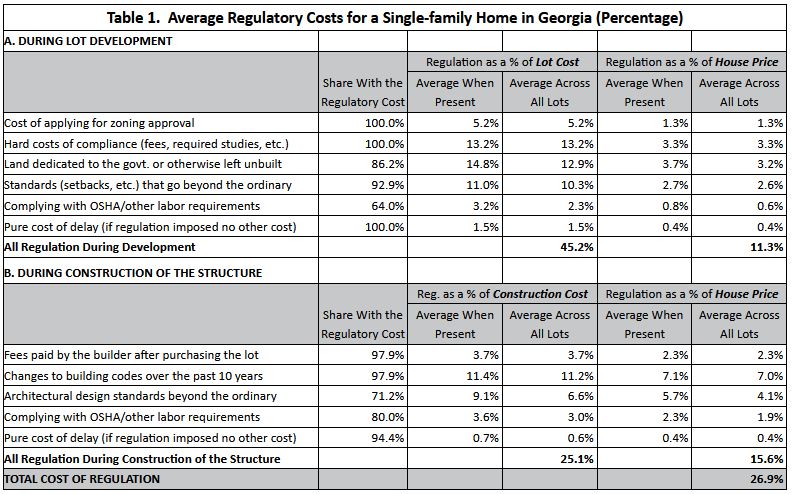
housing-table-1.jpg
 

☑︎#VoteDemocrat

The Original
WOAT
Supporter
Joined
Dec 9, 2012
Messages
336,970
Reputation
-34,846
Daps
640,633
Reppin
The Deep State

☑︎#VoteDemocrat

The Original
WOAT
Supporter
Joined
Dec 9, 2012
Messages
336,970
Reputation
-34,846
Daps
640,633
Reppin
The Deep State
:dead:


Apartment rents are down and supply is up 170% in Buenos Aires since Argentina scrapped all rental regulations
Summarize
Kelly Cloonan
Buenos Aires
celta4/Getty Images
Buenos Aires is seeing a rental market boom.

Since last October, rents have fallen 40% and supply has skyrocketed over 170%, according to The Wall Street Journal.

The increasing affordability comes after Argentina did away with restrictions on year-to-year rent increases, which sent initial lease prices soaring and locked up some of the city's available supply.

Under former President Alberto Fernández, the country employed rent controls to minimize rent hikes starting in 2020. The law required a minimum of a three-year lease contract, and dictated that prices could only increase year-to-year at a set rate from the central bank.

But since they could only raise prices once a year, landlords eager to avoid inflationary losses hiked up initial rent prices for new leases, making the market unaffordable for many renters.

Other landlords left apartments vacant or turned them into vacation rentals, with tourists paying for the accommodations in a more stable currency.

Amid little supply and high prices, a housing affordability crisis ensued, with rents soaring double-digit percentages. The average rent for a two-bedroom apartment skyrocketed to 27 times that of 2019, a Zonaprop report found.

Please help BI improve our Business, Tech, and Innovation coverage by sharing a bit about your role — it will help us tailor content that matters most to people like you.

What is your job title? (1 of 2)

By providing this information, you agree that Business Insider may use this data to improve your site experience and for targeted advertising. By continuing you agree that you accept the Terms of Service and Privacy Policy .
Prices are now easing as Javier Milei, the country's recently elected president, is working to get rid of strict price controls on everything from rent to food to clothing.

Those controls are leftovers from Fernández's left-wing policies and Fair Prices initiative.

Milei's move marks a bid to invigorate the country's sluggish economy, which has a record-high annual inflation rate of 237%. That marks a decline since March, when the annual inflation rate hit 287%.

Some of the country's inhabitants have gotten creative in a weak economy, with one province creating its own currency to deal with budget shortfalls and the peso's decline in value.

Milei won his campaign last year with calls for the potential adoption of the US dollar as the official currency and promises to curb inflation with aggressive economic reform
 

☑︎#VoteDemocrat

The Original
WOAT
Supporter
Joined
Dec 9, 2012
Messages
336,970
Reputation
-34,846
Daps
640,633
Reppin
The Deep State


Opinion | The Abundance agenda is shaping the Democratic Party - The …

E.J. Dionne Jr.
The market for “big ideas” depends far more on demand than supply, and the craving in the Democratic Party for the next new and popular thing is intense. Amid all of the chaos created by President Donald Trump’s antidemocratic power grab, one idea has broken through.

“Abundance” is, depending on your point of view, a bold and confident answer to the problems plaguing progressives; a fiendishly clever plot by corporate interests to blunt the power of the populist left; an intellectual craze that will pass; or a sensible but rather modest set of ideas to make building housing, clean energy projects, and mass transit easier and scientific breakthroughs more likely.

There are certainly reasons to doubt that a “New Abundance” will ever take its place in history alongside the New Deal or the New Frontier. But the passionate response the idea has provoked and its resolute hopefulness about how well-designed government action could make life better and richer for the vast majority of Americans marks it out as the kind of idea Democrats need. It has the potential of dividing the party. In some ways, it already has. But there are also signs that Abundance may answer political needs of the party’s center and left alike.

The foundational text of the movement is “Abundance” by Ezra Klein, the New York Times writer and podcaster, and Derek Thompson, a staff writer at The Atlantic. Published in March, the book has spent 14 weeks on the New York Times bestseller list and hit No. 1 in April.
Follow Trump’s second term

Do your own Google search to discover how a relatively slim volume — 226 pages plus footnotes — has so roiled and inspired the Democratic world. Like all successful manifestos, “Abundance” is briskly written and straightforward. “This book is dedicated to a simple idea: to have the future we want, we need to build and invent more of what we need,” Klein and Thompson write. “That’s it. That’s the thesis.” The book’s very last words describe their ideological aspiration: “a liberalism that builds.”

The core argument is that well-intentioned progressives have created too many choke points that stall or block building things — including public and not just private projects. There are good reasons for environmental reviews, community-participation requirements and other permitting rules. But the authors insist that they shouldn’t be allowed to delay projects for years — or forever. The travails of high-speed rail in California are Exhibit A in “Abundance” catalogue of horrors but they offer many others.

The cause won a major victory on Monday when Gov. Gavin Newsom (D) signed two bills amending the half-century-old California Environmental Quality Act. The changes, which divided Democrats, will allow many development projects — particularly for housing — to avoid the rigorous reviews that often delayed construction and inflated costs. The measures drew opposition from leaders of environmental and community groups who fear the loosening of the rules went too far.

Klein and Thompson aren’t alone in worrying about the government’s inability to get America moving again. Reflecting something in the zeitgeist, two other important entries this year in the Abundance library are “Why Nothing Works: Who Killed Progress — and How to Bring It Back,” by Marc J. Dunkelman, a Brown University fellow; and “Stuck: How the Privileged and the Propertied Broke the Engine of American Opportunity,” by Yoni Appelbaum, an editor at the Atlantic. Predating them all in 2023 was Richard D. Kahlenberg’s “Excluded: How Snob Zoning, NIMBYism, and Class Bias Build the Walls We Don’t See.”
Klein and Thompson lay heavy stress on the need to get projects aimed at battling climate change built quickly. But as the Appelbaum and Kahlenberg books suggest, a major impetus for the Abundance movement is the failure — particularly in blue states and cities — to build enough affordable housing. The use of zoning rules and environmental restrictions in affluent (and often liberal) suburban areas to keep lower-income people out is a particular target of all these thinkers.

Because this is largely a row among Democrats, the debate around Abundance sometimes seems like a high concept version of the party’s hallowed circular firing squad. Klein and Thompson are candid in saying that precisely because they are “liberals in the American tradition,” they aim most of their shots at their own side by way of setting it straight. “We have many disagreements with the modern American right,” they write. “But we focus, in this book, on the pathologies of the broad left.”

The living tend not to take kindly to the ministrations of pathologists.

You can see why The Atlantic’s political writer Jonathan Chait predicted that Abundance is destined to set off a “civil war” among Democrats. This is a real possibility if centrists use abundance to pummel the left and the left pummels abundance, in the words of Sam Adler-Bell, co-host of the Know Your Enemies podcast, as “a Trojan horse for reviving neoliberalism.”
But look no further than Zohran Mamdani, the left’s 33-year-old New York City wunderkind to see an alternative path.

Because Mamdani is a proud democratic socialist, his thumping of former governor Andrew M. Cuomo in New York’s June 24 Democratic Mayoral primary has been widely interpreted in ideological terms — the party’s “left” beating its “center.”

There’s something to this. But Mamdani would not have swept the city without the disparity between his buoyant optimism and Cuomo’s tone of pessimism; the victor’s youth in contrast to Cuomo’s age; and Mamdani’s understanding that a 2025 agenda around the costs of food, housing, transportation and child care would beat yesterday’s agenda around crime, a key Cuomo issue. (And yes, Cuomo also carried a lot of baggage.)
 
Last edited:
Top