
You are using an out of date browser. It may not display this or other websites correctly.
You should upgrade or use an alternative browser.
You should upgrade or use an alternative browser.
Supreme Clientele's 17th Anniversary :wow:
- Thread starter BmoreGorilla
- Start date
More options
Who Replied?




BmoreGorilla
Veteran
I always laughed when he said don't get your little thick ass tossed upGET IN LINE, PUNKYou should be studying your arts, instead of studying me.


BmoreGorilla
Veteran
It's hard to narrow down favoritesmy ish .
- Apollo Kids
- We Made It
- Mighty Healthy
- Wu-Banga (always like GZA verse on this)
- One
- Nutmeg
- Cherchez LaGhost
so many ill tracks on this


You can see why Nas, Rae and Ghost fukk with each other. They got the same swagger. And you can see why Ghost is Cam's favorite rapper.
Nas and Ghost got the same swagger?
 Ghost is way more animated and emotional than Nas.
Stillmatic and BP came out next year. :bronwtf:
and?
MBDTF? GKMC? LR? TCD? APOS? BE? Madvillainy? TBP? BTH? Oneirology? What on earth are you smoking bruh?
 terrible list of course to accompany the smiley abuse
Playaz Eyez
Veteran
That's my GOAT


phrank kastle
All Star
In the year 2000, the Wu-Tang Clan was in the middle of sea change. A string of disappointing solo albums from Inspectah Deck, Raekwon, and GZA followed Wu-Tang Forever while RZA forged an alias, Bobby Digital, to make beats that sounded nothing like the vintage Wu production of the ’90s. In short, the group needed saving. Ironman was their hero.
Supreme Clientele came out on January 25, 2000 (February 8 is often cited as another release date for the album) and was met with immediate critical praise from The Source (4.5 mics), XXL (XL rating), Vibe, and other publications. Supreme Clientele came nearly four years after Ghost’s breathtaking debut album Ironman, but more importantly, it was the first Wu-Tang solo album that RZA oversaw as executive producer since that first wave of classic individual debuts from Meth, ODB, GZA, and Rae. The result was a vivid, original masterpiece that found Ghost essentially creating his own language out of thin air. It debuted at no. 7 on the Billboard Hot 200 albums chart and solidified the return of the Wu, even if the movement was only fronted by Ghost.
Speaking on the album, Ghost told The Source in 2000, “We just say fly shyt, that sound fly to our ear.” On a surface level, that’s exactly what Supreme Clientele is – a batshyt crazy album that makes little lyrical sense to anyone – but we’ve always loved it, and the LP has stood the test of time thanks to it’s mix of brash irreverence with hints of throwback sounds.
Today we celebrate one of the most unique rap albums of all time by letting you in on a couple secrets. Here are 10 Things You Probably Didn’t Know About Ghostface Killah’s Supreme Clientele. Go heat up some ziti.
1. Ghostface consciously invented a new rhyming style on Supreme Clientele.
Ghost’s free association rhymes became the signature hallmark of Supreme Clientele, and he explained how he came up with the style in a 2007 interview:
“‘Cobra Clutch’” was abstract, an abstract joint. People get me twisted and sh*t. See I created a style when I did “’Nutmeg’” and ‘“One’” and all the other sh*t. I was in Africa and I was like, “’Yo I’ma make a rhyme not meaning nothing.’” Just put words together but what the sentence might mean, might not got nothing to do for nothing. I did it on “’Nutmeg’” and I the first verse on “’One’” and all the other sh*t. People started getting me confused. Like, ‘Damn I don’t know what he’s talking about.’ But it wasn’’t meant for you to know what I was talking about cause it was just a style that I created.”
2. The first track, “Nutmeg,” was produced by Ghostface’s barber Arthur Wilson.
Wilson, who is Ghost’s cousin, also went by Black Moes-Art, or Mo the Barber, and he produced “I Declare War” off Shyheim’s 2001 Manchild album, too.
3. Parts of Supreme Clientele were written in Africa.
In 1999, Ghostface went to Africa to seek out alternative treatments for his diabetes. RZA went with him, and that was apparently where some of the first rhymes on Supreme Clientele were written. RZA talks about it in his second book, The Tao Of Wu.
4. In February ’99, Ghost pled guilty to robbery charges and served four months at Rikers.
The charges stemmed from a 1995 case where the parking valet of a Manhattan club called Palladium claimed Ghost and his clique assaulted him and stole $3,000 from him. Ghost opted to settle for a six month sentence and five years of probation instead of going to trial. He talks about it on “Saturday Nite.” (“You mind popping your trunk? Slow your pace / Starks fixed your face, copped out to six, five years probation.”)
5. “Mighty Healthy” was inspired by Divine Force’s “Holy War.”
This is crazy. “Holy War” was a 1987 song by Sir Ibu of the rap crew Divine Force. In it, you can hear very familiar lines like, “Make you snap your fingers or wiggle” and “Party that body, don’t fukk with me, you’ll feel sorry.” Ghost was paying tribute to (or, depending on how you see it, stealing lines from) “Holy War” more than a decade later.
In an interview with Hip-Hop Core, RZA revealed that he ended up paying Sir Ibu over “Mighty Healthy”:
“Well, All in Together Now never really disbanded. We’re cousins, so we always made tapes and demos together. But GZA had a man called Melquan, he’s president of a record company called Jamaica Records. They call him Funky President Melquan. He had a group named Divine Force, with Sir Ibu. “It get Busy…” Ghostface did it over on his “Supreme Clientele” album, on ‘Mighty Healthy’. When Ghost did it over, Sir Ibu, who was my buddy, came over and said: “Yo, I need money for that!”. So I gave him 2500$. Motherfukker! (laughs)”
6. Epic Records considered putting out “Cobra Clutch” as a street single for the album.
In 1998, Epic released “Mighty Healthy” as a street single, but they were also considering putting “Cobra Clutch” on Supreme Clientele and pushing that as a street single as well. The LP was originally slated to drop in February of ’99, but when Ghost got locked up, promo efforts on the album halted, and “Cobra Clutch” remained on The Swarm compilation.
7. The Canadian version of the album contains a song called “Wise (In The Rain).”
The song was dedicated to a friend of Ghost’s who was killed, Wise Allah. It was basically a straight loop of “In The Rain” by The Dramatics, so the sample wasn’t cleared for the U.S. version.
At the listening session for the album in 2000, Ghost told the following story about writing the song (from this Vibe piece):
“I wrote this next song for Wise…That’s my brother right there…My brother just got shot. I was down in Miami. One night, I went outside to the beach with a box. I was the only one out there at the time. I threw on the Dramatics’ ‘In The Rain.’ I took a couple of pulls off weed n’ shyt. It started raining – and the song is called ‘In The Rain.’ It was like a coincidence on how the shyt was going down. I started catching the rhyme. First line, second line. And the more I wrote, the more it rained. But I was like, fukk it, because there was an energy that just kept me there. A force, knawmean? Every time I wrote a line and then thought I might change it, it would rain harder, like it was saying, “‘Don’t touch nothing.’ So I’d keep it. I was out there for four or five hours. And you know how big the beach is. I looked out at the water, and it was just mad dark. And I’m on the sand. And I’m writing about Wise. So, you know, I started crying a little bit. As the tears was coming down, something said, ‘Turn to the right.’ I looked over, and there was a pyramid built in the sand. Outta nowhere. The music was still going. I got up, walked around the pyramid three times. Said, ‘All praise due Allah.’ Couple of tears come out again. But it was all good. Because I was there. Y’know? And I was free.”
8. Epic wanted Ghost to add two more verses to “Cherchez La Ghost.”
At the beginning of this 2000 Vibe piece, Ghost seems to be writing two verses the label asked to tack onto the end of “Cherchez La Ghost,” the second single they wanted to push after the lead single, “Apollo Kids.” That version never came out.
9. The Clyde Smith skit at the end of the album? That’s Raekwon.
Not the most classified secret, because if you know how Raekwon talks, then you already knew who this is without any explicit feature credit, but still cool to know. He goes right at 50 Cent on this, who was, along with Mase, in beef with Ghost at the time.
10. The beat for “Stay True” originally appeared on Inspectah Deck’s 1999 album Uncontrolled Substance.
There was a song on Deck’s album called “Elevation,” and while the beat has two parts that play on the same sample, for whatever reason the first half of the beat ended up being used for the short “Stay True” on Supreme Clientele.
Bonus Fact: On “Malcolm,” Ghostface was talking about the alleged incident where I-Cham broke Mase’s jaw.
Supreme Clientele came out on January 25, 2000 (February 8 is often cited as another release date for the album) and was met with immediate critical praise from The Source (4.5 mics), XXL (XL rating), Vibe, and other publications. Supreme Clientele came nearly four years after Ghost’s breathtaking debut album Ironman, but more importantly, it was the first Wu-Tang solo album that RZA oversaw as executive producer since that first wave of classic individual debuts from Meth, ODB, GZA, and Rae. The result was a vivid, original masterpiece that found Ghost essentially creating his own language out of thin air. It debuted at no. 7 on the Billboard Hot 200 albums chart and solidified the return of the Wu, even if the movement was only fronted by Ghost.
Speaking on the album, Ghost told The Source in 2000, “We just say fly shyt, that sound fly to our ear.” On a surface level, that’s exactly what Supreme Clientele is – a batshyt crazy album that makes little lyrical sense to anyone – but we’ve always loved it, and the LP has stood the test of time thanks to it’s mix of brash irreverence with hints of throwback sounds.
Today we celebrate one of the most unique rap albums of all time by letting you in on a couple secrets. Here are 10 Things You Probably Didn’t Know About Ghostface Killah’s Supreme Clientele. Go heat up some ziti.
1. Ghostface consciously invented a new rhyming style on Supreme Clientele.
Ghost’s free association rhymes became the signature hallmark of Supreme Clientele, and he explained how he came up with the style in a 2007 interview:
“‘Cobra Clutch’” was abstract, an abstract joint. People get me twisted and sh*t. See I created a style when I did “’Nutmeg’” and ‘“One’” and all the other sh*t. I was in Africa and I was like, “’Yo I’ma make a rhyme not meaning nothing.’” Just put words together but what the sentence might mean, might not got nothing to do for nothing. I did it on “’Nutmeg’” and I the first verse on “’One’” and all the other sh*t. People started getting me confused. Like, ‘Damn I don’t know what he’s talking about.’ But it wasn’’t meant for you to know what I was talking about cause it was just a style that I created.”
2. The first track, “Nutmeg,” was produced by Ghostface’s barber Arthur Wilson.
Wilson, who is Ghost’s cousin, also went by Black Moes-Art, or Mo the Barber, and he produced “I Declare War” off Shyheim’s 2001 Manchild album, too.
3. Parts of Supreme Clientele were written in Africa.
In 1999, Ghostface went to Africa to seek out alternative treatments for his diabetes. RZA went with him, and that was apparently where some of the first rhymes on Supreme Clientele were written. RZA talks about it in his second book, The Tao Of Wu.
4. In February ’99, Ghost pled guilty to robbery charges and served four months at Rikers.
The charges stemmed from a 1995 case where the parking valet of a Manhattan club called Palladium claimed Ghost and his clique assaulted him and stole $3,000 from him. Ghost opted to settle for a six month sentence and five years of probation instead of going to trial. He talks about it on “Saturday Nite.” (“You mind popping your trunk? Slow your pace / Starks fixed your face, copped out to six, five years probation.”)
5. “Mighty Healthy” was inspired by Divine Force’s “Holy War.”
This is crazy. “Holy War” was a 1987 song by Sir Ibu of the rap crew Divine Force. In it, you can hear very familiar lines like, “Make you snap your fingers or wiggle” and “Party that body, don’t fukk with me, you’ll feel sorry.” Ghost was paying tribute to (or, depending on how you see it, stealing lines from) “Holy War” more than a decade later.
In an interview with Hip-Hop Core, RZA revealed that he ended up paying Sir Ibu over “Mighty Healthy”:
“Well, All in Together Now never really disbanded. We’re cousins, so we always made tapes and demos together. But GZA had a man called Melquan, he’s president of a record company called Jamaica Records. They call him Funky President Melquan. He had a group named Divine Force, with Sir Ibu. “It get Busy…” Ghostface did it over on his “Supreme Clientele” album, on ‘Mighty Healthy’. When Ghost did it over, Sir Ibu, who was my buddy, came over and said: “Yo, I need money for that!”. So I gave him 2500$. Motherfukker! (laughs)”
6. Epic Records considered putting out “Cobra Clutch” as a street single for the album.
In 1998, Epic released “Mighty Healthy” as a street single, but they were also considering putting “Cobra Clutch” on Supreme Clientele and pushing that as a street single as well. The LP was originally slated to drop in February of ’99, but when Ghost got locked up, promo efforts on the album halted, and “Cobra Clutch” remained on The Swarm compilation.
7. The Canadian version of the album contains a song called “Wise (In The Rain).”
The song was dedicated to a friend of Ghost’s who was killed, Wise Allah. It was basically a straight loop of “In The Rain” by The Dramatics, so the sample wasn’t cleared for the U.S. version.
At the listening session for the album in 2000, Ghost told the following story about writing the song (from this Vibe piece):
“I wrote this next song for Wise…That’s my brother right there…My brother just got shot. I was down in Miami. One night, I went outside to the beach with a box. I was the only one out there at the time. I threw on the Dramatics’ ‘In The Rain.’ I took a couple of pulls off weed n’ shyt. It started raining – and the song is called ‘In The Rain.’ It was like a coincidence on how the shyt was going down. I started catching the rhyme. First line, second line. And the more I wrote, the more it rained. But I was like, fukk it, because there was an energy that just kept me there. A force, knawmean? Every time I wrote a line and then thought I might change it, it would rain harder, like it was saying, “‘Don’t touch nothing.’ So I’d keep it. I was out there for four or five hours. And you know how big the beach is. I looked out at the water, and it was just mad dark. And I’m on the sand. And I’m writing about Wise. So, you know, I started crying a little bit. As the tears was coming down, something said, ‘Turn to the right.’ I looked over, and there was a pyramid built in the sand. Outta nowhere. The music was still going. I got up, walked around the pyramid three times. Said, ‘All praise due Allah.’ Couple of tears come out again. But it was all good. Because I was there. Y’know? And I was free.”
8. Epic wanted Ghost to add two more verses to “Cherchez La Ghost.”
At the beginning of this 2000 Vibe piece, Ghost seems to be writing two verses the label asked to tack onto the end of “Cherchez La Ghost,” the second single they wanted to push after the lead single, “Apollo Kids.” That version never came out.
9. The Clyde Smith skit at the end of the album? That’s Raekwon.
Not the most classified secret, because if you know how Raekwon talks, then you already knew who this is without any explicit feature credit, but still cool to know. He goes right at 50 Cent on this, who was, along with Mase, in beef with Ghost at the time.
10. The beat for “Stay True” originally appeared on Inspectah Deck’s 1999 album Uncontrolled Substance.
There was a song on Deck’s album called “Elevation,” and while the beat has two parts that play on the same sample, for whatever reason the first half of the beat ended up being used for the short “Stay True” on Supreme Clientele.
Bonus Fact: On “Malcolm,” Ghostface was talking about the alleged incident where I-Cham broke Mase’s jaw.

In the year 2000, the Wu-Tang Clan was in the middle of sea change. A string of disappointing solo albums from Inspectah Deck, Raekwon, and GZA followed Wu-Tang Forever while RZA forged an alias, Bobby Digital, to make beats that sounded nothing like the vintage Wu production of the ’90s. In short, the group needed saving. Ironman was their hero.
Supreme Clientele came out on January 25, 2000 (February 8 is often cited as another release date for the album) and was met with immediate critical praise from The Source (4.5 mics), XXL (XL rating), Vibe, and other publications. Supreme Clientele came nearly four years after Ghost’s breathtaking debut album Ironman, but more importantly, it was the first Wu-Tang solo album that RZA oversaw as executive producer since that first wave of classic individual debuts from Meth, ODB, GZA, and Rae. The result was a vivid, original masterpiece that found Ghost essentially creating his own language out of thin air. It debuted at no. 7 on the Billboard Hot 200 albums chart and solidified the return of the Wu, even if the movement was only fronted by Ghost.
Speaking on the album, Ghost told The Source in 2000, “We just say fly shyt, that sound fly to our ear.” On a surface level, that’s exactly what Supreme Clientele is – a batshyt crazy album that makes little lyrical sense to anyone – but we’ve always loved it, and the LP has stood the test of time thanks to it’s mix of brash irreverence with hints of throwback sounds.
Today we celebrate one of the most unique rap albums of all time by letting you in on a couple secrets. Here are 10 Things You Probably Didn’t Know About Ghostface Killah’s Supreme Clientele. Go heat up some ziti.
1. Ghostface consciously invented a new rhyming style on Supreme Clientele.
Ghost’s free association rhymes became the signature hallmark of Supreme Clientele, and he explained how he came up with the style in a 2007 interview:
“‘Cobra Clutch’” was abstract, an abstract joint. People get me twisted and sh*t. See I created a style when I did “’Nutmeg’” and ‘“One’” and all the other sh*t. I was in Africa and I was like, “’Yo I’ma make a rhyme not meaning nothing.’” Just put words together but what the sentence might mean, might not got nothing to do for nothing. I did it on “’Nutmeg’” and I the first verse on “’One’” and all the other sh*t. People started getting me confused. Like, ‘Damn I don’t know what he’s talking about.’ But it wasn’’t meant for you to know what I was talking about cause it was just a style that I created.”
2. The first track, “Nutmeg,” was produced by Ghostface’s barber Arthur Wilson.
Wilson, who is Ghost’s cousin, also went by Black Moes-Art, or Mo the Barber, and he produced “I Declare War” off Shyheim’s 2001 Manchild album, too.
3. Parts of Supreme Clientele were written in Africa.
In 1999, Ghostface went to Africa to seek out alternative treatments for his diabetes. RZA went with him, and that was apparently where some of the first rhymes on Supreme Clientele were written. RZA talks about it in his second book, The Tao Of Wu.
4. In February ’99, Ghost pled guilty to robbery charges and served four months at Rikers.
The charges stemmed from a 1995 case where the parking valet of a Manhattan club called Palladium claimed Ghost and his clique assaulted him and stole $3,000 from him. Ghost opted to settle for a six month sentence and five years of probation instead of going to trial. He talks about it on “Saturday Nite.” (“You mind popping your trunk? Slow your pace / Starks fixed your face, copped out to six, five years probation.”)
5. “Mighty Healthy” was inspired by Divine Force’s “Holy War.”
This is crazy. “Holy War” was a 1987 song by Sir Ibu of the rap crew Divine Force. In it, you can hear very familiar lines like, “Make you snap your fingers or wiggle” and “Party that body, don’t fukk with me, you’ll feel sorry.” Ghost was paying tribute to (or, depending on how you see it, stealing lines from) “Holy War” more than a decade later.
In an interview with Hip-Hop Core, RZA revealed that he ended up paying Sir Ibu over “Mighty Healthy”:
“Well, All in Together Now never really disbanded. We’re cousins, so we always made tapes and demos together. But GZA had a man called Melquan, he’s president of a record company called Jamaica Records. They call him Funky President Melquan. He had a group named Divine Force, with Sir Ibu. “It get Busy…” Ghostface did it over on his “Supreme Clientele” album, on ‘Mighty Healthy’. When Ghost did it over, Sir Ibu, who was my buddy, came over and said: “Yo, I need money for that!”. So I gave him 2500$. Motherfukker! (laughs)”
6. Epic Records considered putting out “Cobra Clutch” as a street single for the album.
In 1998, Epic released “Mighty Healthy” as a street single, but they were also considering putting “Cobra Clutch” on Supreme Clientele and pushing that as a street single as well. The LP was originally slated to drop in February of ’99, but when Ghost got locked up, promo efforts on the album halted, and “Cobra Clutch” remained on The Swarm compilation.
7. The Canadian version of the album contains a song called “Wise (In The Rain).”
The song was dedicated to a friend of Ghost’s who was killed, Wise Allah. It was basically a straight loop of “In The Rain” by The Dramatics, so the sample wasn’t cleared for the U.S. version.
At the listening session for the album in 2000, Ghost told the following story about writing the song (from this Vibe piece):
“I wrote this next song for Wise…That’s my brother right there…My brother just got shot. I was down in Miami. One night, I went outside to the beach with a box. I was the only one out there at the time. I threw on the Dramatics’ ‘In The Rain.’ I took a couple of pulls off weed n’ shyt. It started raining – and the song is called ‘In The Rain.’ It was like a coincidence on how the shyt was going down. I started catching the rhyme. First line, second line. And the more I wrote, the more it rained. But I was like, fukk it, because there was an energy that just kept me there. A force, knawmean? Every time I wrote a line and then thought I might change it, it would rain harder, like it was saying, “‘Don’t touch nothing.’ So I’d keep it. I was out there for four or five hours. And you know how big the beach is. I looked out at the water, and it was just mad dark. And I’m on the sand. And I’m writing about Wise. So, you know, I started crying a little bit. As the tears was coming down, something said, ‘Turn to the right.’ I looked over, and there was a pyramid built in the sand. Outta nowhere. The music was still going. I got up, walked around the pyramid three times. Said, ‘All praise due Allah.’ Couple of tears come out again. But it was all good. Because I was there. Y’know? And I was free.”
8. Epic wanted Ghost to add two more verses to “Cherchez La Ghost.”
At the beginning of this 2000 Vibe piece, Ghost seems to be writing two verses the label asked to tack onto the end of “Cherchez La Ghost,” the second single they wanted to push after the lead single, “Apollo Kids.” That version never came out.
9. The Clyde Smith skit at the end of the album? That’s Raekwon.
Not the most classified secret, because if you know how Raekwon talks, then you already knew who this is without any explicit feature credit, but still cool to know. He goes right at 50 Cent on this, who was, along with Mase, in beef with Ghost at the time.
10. The beat for “Stay True” originally appeared on Inspectah Deck’s 1999 album Uncontrolled Substance.
There was a song on Deck’s album called “Elevation,” and while the beat has two parts that play on the same sample, for whatever reason the first half of the beat ended up being used for the short “Stay True” on Supreme Clientele.
Bonus Fact: On “Malcolm,” Ghostface was talking about the alleged incident where I-Cham broke Mase’s jaw.
never heard Wise before,just threw it on right now..
and i read this original article too,must have totally forgot about it..

Me Andy niccaz deciphered this entire album line for line only for Ghost to come trough and say he was in such a deep state that he was talking nonsense 
We were
Classic album, Ghost has the illest discography in the music industry, period.
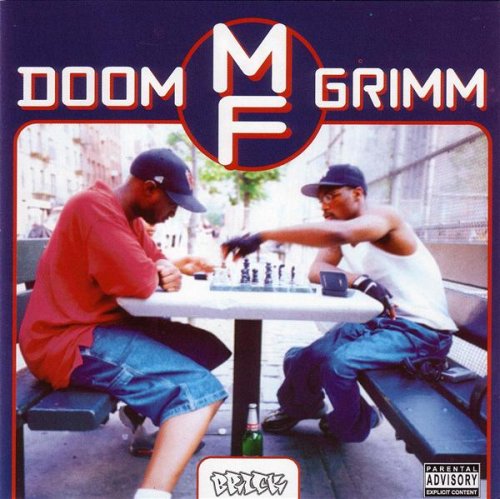
On the low ever since MF GRIMM alluded to it I wonder if Rza/Ghost were inspired by DOOMSDAY for this. There's definitely some similarities.
only for Ghost to come trough and say he was in such a deep state that he was talking nonsense We were
Classic album, Ghost has the illest discography in the music industry, period.
On the low ever since MF GRIMM alluded to it I wonder if Rza/Ghost were inspired by DOOMSDAY for this. There's definitely some similarities.

Lead us to the promised land and we will build upon this land until we free all Black men

BmoreGorilla
Veteran
Agreed about the discographyMe Andy niccaz deciphered this entire album line for line
We were
Classic album, Ghost has the illest discography in the music industry, period.
On the low ever since MF GRIMM alluded to it I wonder if Rza/Ghost were inspired by DOOMSDAY for this. There's definitely some similarities.
This is the album that saved the Wu from extinction with the hip hop game going towards a more southern approach for the time. After Wu Tang Forever, the crew started to fall off with mediocre to garbage albums (well Bobby Digital was alright). Then out of nowhere Ghostface drops Supreme Clientele which blew my friggin mind. The lyrics were wacky in a Camp Lo on acid type of way, the beat selection, the features, and even the skits made the album feel timeless. Hell, you can put that album on now and it would sound modern because of how futureproof the shyt was. There's one thing you can say about Ghost, dude knows the game and knows hip hop to the tee. Him and Rae were one of the first dudes to introduce that mob shyt on the purple tape while folks were still drinking 40s on the stoop, Ghost was talking about Wallabes when them shyts were just word of mouth, and he pretty much open the manhole to the underground scene that folks kept walking over.
To this very day, I haven't heard a bad album from Ghost...even that R and B album Ghostdini was flames .
.
, the features, and even the skits made the album feel timeless. Hell, you can put that album on now and it would sound modern because of how futureproof the shyt was. There's one thing you can say about Ghost, dude knows the game and knows hip hop to the tee. Him and Rae were one of the first dudes to introduce that mob shyt on the purple tape while folks were still drinking 40s on the stoop, Ghost was talking about Wallabes when them shyts were just word of mouth, and he pretty much open the manhole to the underground scene that folks kept walking over. To this very day, I haven't heard a bad album from Ghost...even that R and B album Ghostdini was flames
.Me Andy niccaz deciphered this entire album line for line
We were
Classic album, Ghost has the illest discography in the music industry, period.
On the low ever since MF GRIMM alluded to it I wonder if Rza/Ghost were inspired by DOOMSDAY for this. There's definitely some similarities.


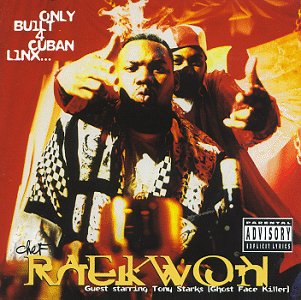
Deeper than rap


With one swift and haughty breath Ghost revived the Wu. Supreme Clientele was so avante garde. I remember playing this album at least 3 times a day for a year straight! The off the wall lyrics, the Ironman animation skits, The Woodrow skit, the production, the sequencing...everything on this album was brilliant. And I been saying this for years: Ghost deserves to be mentioned as one of the Top 10 MCs ever (he's my #2) just solely for the fact that he's probably the only MC who DRASTICALLY switched his rhyme style from his debut and made another classic. This is one of those albums that make you proud of Hip Hop. This is Art.
BmoreGorilla
Veteran
This is the album that saved the Wu from extinction with the hip hop game going towards a more southern approach for the time. After Wu Tang Forever, the crew started to fall off with mediocre to garbage albums (well Bobby Digital was alright). Then out of nowhere Ghostface drops Supreme Clientele which blew my friggin mind. The lyrics were wacky in a Camp Lo on acid type of way, the beat selection
To this very day, I haven't heard a bad album from Ghost...even that R and B album Ghostdini was flames
With one swift and haughty breath Ghost revived the Wu. Supreme Clientele was so avante garde. I remember playing this album at least 3 times a day for a year straight! The off the wall lyrics, the Ironman animation skits, The Woodrow skit, the production, the sequencing...everything on this album was brilliant. And I been saying this for years: Ghost deserves to be mentioned as one of the Top 10 MCs ever (he's my #2) just solely for the fact that he's probably the only MC who DRASTICALLY switched his rhyme style from his debut and made another classic. This is one of those albums that make you proud of Hip Hop. This is Art.
For years everybody used to debate who the best Wu members were. When this album dropped that debate came to an end
