Rohiggidy

The Big League
Joined
Jun 8, 2012
Messages
6,576
Reputation
80
Daps
2,433
Reppin
New York
Platform numbers for July 2013: Jelly Bean over 40%, Gingerbread at 33%
platform-numbers-july-2013.png


Android 4.x now running on 63-percent of all devices in use
 

Rohiggidy

The Big League
Joined
Jun 8, 2012
Messages
6,576
Reputation
80
Daps
2,433
Reppin
New York
The Moto X proves Google still needs the Nexus program
Nexus is a critical platform for Google to develop and advance Android


nexusstock1_640_large_verge_medium_landscape.jpg

5
Moto X has finally been revealed and although it’s the first phone that truly reflects the new company’s post-Google philosophies, it’s thoroughly a Motorola phone, not a Google phone. It’s not running the latest version of Android, it’s being sold in partnership with the carriers, and it’s priced like a traditional smartphone instead of as a low-cost Nexus. It could be disruptive, but it’s more likely to stake out a middle road. Motorola insists that it’s just another phone maker to Google.

Now that we know what the Moto X is — and more importantly what it isn’t — we can say pretty definitively that for the time being, the job of pushing Android forward falls to the same people it always has: Google’s Android team and the Nexus program. Both are paradoxical and always have been. Android is open source and despite Google’s best efforts, fragmented at both the device and software level. The Nexus program has always seemed more like a vanity project for diehard Android fans than a genuine attempt at dominating the smartphone market.

ANDROID IS FRAGMENTED AND NEXUS DEVICES HAVE LIMITED APPEAL

Can Google solve either of those problems? Does it even want to? Luckily, Google just released a new version of Android and a new Nexus 7 tablet — so we took the opportunity to sit down with Android director of engineering Dave Burke and vice president of Android product management Hugo Barra to see if the answers to those questions have changed. Here’s the short version: yes, but not how you might expect.

If you're the sort of person who gets worked up about Android fragmentation, the just-announced Android 4.3 update is a good news / bad news kind of release. The bad news is that there's no end in sight for the cycle of Android updates, which goes a little something like this: Google announces and releases a new version of Android, Nexus devices are updated over the course of a month or so, and every other phone manufacturer on the market makes vague promises of updates that inevitably feel like they're delayed by custom software and carriers.

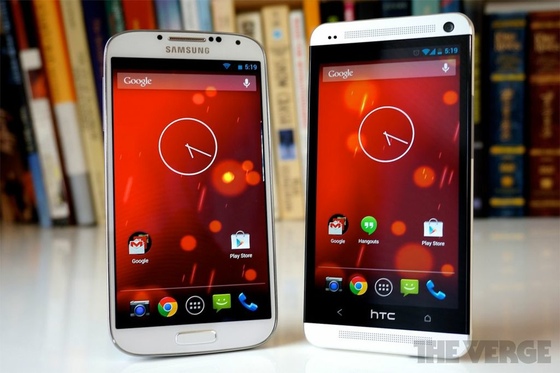
It remains to be seen if Google Play edition phones or the Moto X can change that cycle — but even if they do, it will only solve the problem for a tiny fraction of Android users.

google-play-editions-theverge-1_560.jpg


ANDROID 4.3 IS A VERY MINOR UPDATE

With Android 4.3, the "good" news, such as it is, is that it isn't what most would consider an essential update. The features 4.3 adds to the operating system are mostly under the hood: Bluetooth Smart, improved multi-user profiles, and slightly better gaming support top the list. As a "point" platform update, it's not unexpected and presumably an upcoming 5.0 / "Key Lime Pie" update will do a better job of wowing users with new features.

But while Google doesn't have a big platform update now and can't seem to get software updates distributed to the Android ecosystem in a timely manner, it has found a way to push new features out to Android users. The method is simple: Google has "modularized" the Android platform so it can release the best parts — its apps — on their own schedule, irrespective of major platform updates. "We're not tied to a platform release for apps unlike some companies," Burke says, "we're constantly updating all our apps in parallel."

GOOGLE HAS "MODULARIZED" THE ANDROID PLATFORM

Burke points out that Google's Android apps — including Hangouts, Keep, Google Music, Chrome, Drive, Gmail, YouTube, and more — are updated on a more aggressive schedule and "no longer have to wait for major platform updates." How often each app is updated can vary, but "six to eight weeks is pretty typical," Burke tells us.

There are upsides and downsides to this strategy. Android itself becomes more of a "platform," needing updates mainly so that it can support new app features and functionality. That doesn't necessarily make life easier for developers — who still need to decide which release to target — but it does make life better for users. Google misses out on the attention it would have gotten from the giant, update everything kind of release we see with iOS, but it reduces the pain of not being on the latest version. For people who still can't handle that pain, there's the Nexus program and the new "Google Play edition" devices.

NEXUS DEVICES HAVE ALWAYS BEEN A BIT OF A MYSTERY

Nexus devices from Google have always been a bit of a mystery. When the company started the program, it looked like Google's plan to sell devices directly could actually cause some real disruption in the wireless space. But mobile is filled with entrenched and powerful players, so Nexus phones didn't have a big retail impact.

What are Google's Nexus devices for if not to be purchased by large numbers of consumers? Google's take on that issue has been consistent: they're "halo" devices meant to educate the rest of the ecosystem. Burke put it to us this way: "Basically what Nexus allows us to do is set the standard ... [we can] demonstrate how Android runs and hopefully influence other device manufacturers to take what we've done and do even better."

That explanation has often been difficult to take at face value. Though the phones have usually been elegant devices, they typically launched with specs that were behind the curve. The Galaxy Nexus had a pretty terrible camera, for example, and the Nexus 4 lacks support for LTE. Now that Google sells top-end "Google Play edition" phones that run stock Android, the Nexus line seems more irrelevant than ever.

"WE NEED TO DO IT ON A REAL DEVICE."

That brings us to the other — and more important — reason the Nexus line exists: Google simply needs hardware on which it can develop Android. Burke says "as an engineering team creating a mobile platform — we can't do that in the abstract. We need to do it on a real device that we're carrying with us." When people ask me about the Nexus line, I like to joke that if you need to create a few hundred polished and usable devices for Google engineers, why not make a few hundred thousand more and sell them to hardcore users?

But with Google Play edition phones running stock Android, does the company really need to be in the business of making hardware for a tiny audience of power users? The argument that it doesn't may have become moot in the past year, thanks to the release of the original Nexus 7. Google says it accounts for ten percent of the rapidly growing Android tablet market and, indeed, recent studies show that it is among the top 20 Android devices worldwide. It was the first Nexus device that struck upon a simple, winning formula: make a good product and sell it as cheaply as possible. Later, the Nexus 4 would also retail for surprisingly little and has done better than its predecessors — but still hasn't sold as many units as the Nexus 7.

huge-barra-theverge-1_560.jpg


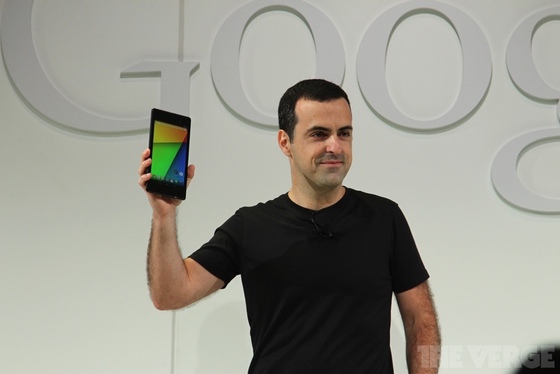
Hugo Barra tells us that the Nexus 7 achieved these sales in the face of aggressive competition from other Android tablets and, of course, the iPad. It also achieved Google's goal of using a Nexus device to improve Android itself. "We learned a ton from it," Barra says, and the improvements in Android 4.3 are largely designed to appeal to tablet users. "It really helped us think about what we needed to put in the new generation tablet."

The Nexus 4 appears to be more popular than most people give it credit for, and the Nexus 7 is the most popular Android tablet. Even if you don’t buy into Google’s "halo" argument, the company now has two good reasons to keep the Nexus program going: developing Android and actually selling devices — though whether or not the company makes a profit at it is totally unclear.

THERE’S NO CURE FOR ANDROID FRAGMENTATION, BUT GOOGLE CAN MANAGE THE SYMPTOMS

There's no getting around the fact that Android fragmentation at the platform level is real and a real problem for Google — even if it's only because it opens the company up toshots from Apple CEO Tim Cook. If you think Android fragmentation is a disease, over the last five years you’ve seen Google try and fail to come up with a cure. Luckily, it’s not a terminal disease, and in the past year the combination of unbundled app updates and successful Nexus devices have helped to manage its symptoms. Google, and Android users, are just going to have to live with that.

 

Rohiggidy

The Big League
Joined
Jun 8, 2012
Messages
6,576
Reputation
80
Daps
2,433
Reppin
New York
Motorola is not Google and now you see why it matters

Motorola is NOT Google
Since Google bought Motorola (the deal was officially finalized in May of 2012), we all have been waiting for Google's first smartphone. What you don't realize is that we are still waiting for it. The Moto X is not a Google phone. It's Motorola's next flagship. It has to do with Motorola and how Google doesn't really run them.

You see, Motorola is a company outside of Google. Google controls their primary revenue streams, patent portfolio, CEO, and other stuff, but their day to day operations are managed by Motorola. Their employees are Motorola employees. Their phone engineers do not work with the Android team in Mountain View. In effect, Motorola is not Google. The "a Google company" is almost reminding you that Google owns them - and they need to remind you, because you won't find it in their products.

Their products are created by Motorola. The same people (albeit less of them than before, because Google trimmed a ton of bloat) designed the Motorola RAZR M. Maybe those guys and girls are really talented but they are not Google employees (their checks come from Motorola and their shirts say Motorola). The Google employees could opt to become Motorola employees (and apparently 70 people participated in a program to swap sides, but Google declined to comment in which direction). Why would there need to be an employ swap program? Because the companies are separate.

As Andy Rubin said, there is a "firewall" between the two companies - something that was reiterated today. Why is it there? Because China wanted it. China is 90% Android and they were afraid of what would happen if Google were allowed to produce their own hardware and software. Could Google use their market position in China in a monopolistic fashion? That's why Google had to install this "firewall". In effect, Google has a vested interest in staying out of Motorola's business. It's called China.

The next minor oddity is the Moto X Google Edition. How is a Google company not producing a Google Edition, by default? Because Motorola is not Google. It's really that simple. Motorola is still the company that has to make Droids for Verizon and Google is still the company that makes Android and doesn't care about making Verizon happy. (see Nexus 7 with Verizon LTE support but no CDMA and the Verizon Galaxy Nexus and the Verizon Nexus 4... oh.)

The Motorola X is a Motorola product intended for the same people that Motorola has always been targeting and the Droid line is called hedging your bets. It's not clear if Google really cares what Motorola does. Their main interest were patents and after today it's perfectly clear that Motorola is still Motorola, even if Google is working on improving them. Motorola is the same company that made the RAZR (one of the best selling phones all time) and the Droid RAZR (not one of the best selling phones of all time).

Where is Google improving Motorola? Their supply line. Google is slowly forcing Motorola to own their supply line. The Motorola X8 is the first step in the direction. Motorola already produces portions of it's own SoC and now Google has added another. The more Motorola can control, the better their products will become. However, it's up to Motorola to use their better supply chain to turn out phones worth buying. Google is just worried about their bottom line and not Motorola's products.

Google and Motorola are married; Motorola is not Google's right arm, so to speak.
 

Rohiggidy

The Big League
Joined
Jun 8, 2012
Messages
6,576
Reputation
80
Daps
2,433
Reppin
New York
I love the software behind the Moto X, the hardware appears to be lacking though.
tests ran by ArsTechnica this morning to kick this thing off. Before we dive into performance, though, we wanted to make it clear that the Moto X, even though it sports a dual-core CPU, uses the exact same Adreno 320 GPU as the Galaxy S4 and HTC One. The CPU is also more than likely using Krait 300 cores instead of the year-old Krait 200 cores that many think it’s using. By all means, this is a custom job with tech on-par with the Snapdragon 600, it’s just not quad-core, so it’ll lack some overall power, something that seems to be throwing you all for a loop. That said, this phone is no slouch.

In terms of gaming, you may see better performance on the Moto X than you will on the One and Galaxy S4. For one, the Adreno 320 GPU will run better on a 720p display than a 1080p display, that’s for sure. You can see proof of that in the frame rates generated in the GFXBench 2.7 onscreen test above. But even offscreen, where the benchmark scales everything to 1080p, to put all phones tested on an equal playing field, the Moto X tops the GS4 and Nexus 4.

Their series of benchmarks also shows the Moto X beating the Galaxy S4 in browser tests, but overall falling in a full performance bench, but that’s because it’s only a dual-core CPU.

The processor and GPU combo in the Moto X is nothing to worry about.
 

Rohiggidy

The Big League
Joined
Jun 8, 2012
Messages
6,576
Reputation
80
Daps
2,433
Reppin
New York
Google Announces Android Device Manager, a Tool to Help Find Your Lost Device
by: Tim-o-tato | posted 08.02.13 | Apps, News


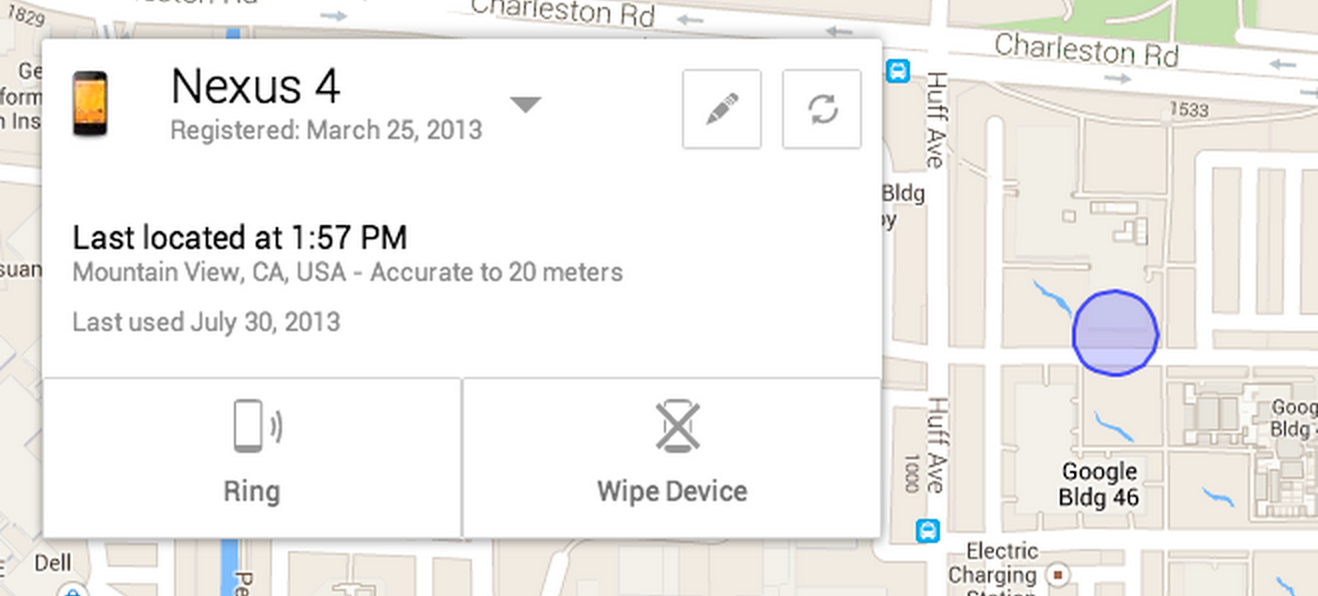
The Android team took to the official blog today to announce a feature that all Android users need, whether they want to admit it or not. If your Android device gets lost/misplaced, you can now use Android Device Manager to locate its exact position or you can “ring” your device. If your phone has been stolen, you can also use the service to remotely wipe your device, ensuring that your info and its private contents are safe.
 

Rohiggidy

The Big League
Joined
Jun 8, 2012
Messages
6,576
Reputation
80
Daps
2,433
Reppin
New York
Moto X vs Galaxy S4: Do you care about specs or experience?
http://www.geek.com/deals/
Android By Ryan Whitwam Aug. 2, 2013 8:30 am
X-590x330.jpg

The Moto X is finally official, and that means phone buyers will have to figure it into their calculations. The current king of Android by most measurements is the Samsung Galaxy S4, which just came out late in the spring. Let’s see how these two phones stack up, and if the first real Google phone is able to take on Samsung’s flagship.

Staring you right in the face on both phones are AMOLED panels. This technology is a favorite of Samsung and Motorola because they use no power on black pixels and are extremely thin. Motorola chose to go with a 4.7-inch 720p AMOLED screen, which is unusual for a headlining device these days. The Samsung has a 5-inch 1080p Super AMOLED.

Advertisement


Even at 720p the Moto X manages 317 pixels per inch. That’s respectable, but Samsung’s flagship clocks in at 441 pixels per inch. The Samsung device is going to be crisper, but it will also suck up more juice.

Inside, these devices have similar origins, but take different approaches to provide a smooth user experience. The Moto X uses the new X8 mobile computing platform, which is a combination of a dual-core Snapdragon S4 Pro and a pair of special processing cores elsewhere on the board. The natural language and contextual computing processors enable the always-on software features and save battery life.

Samsung went with a faster ARM chip — the quad-core Snapdragon 600 (in the US). This is a better option in terms of raw power, but it lacks the neat always-on features. Still, it makes the GS4 a powerful device. If the Moto X with its optimized software can keep up, it might have the edge here. Both phones are equipped with 2GB of RAM.

Motorola chose to go with a 10MP camera with an RGBC sensor for better low light performance. The Galaxy S4 does OK in low-light, but its 13MP camera takes incredibly detailed images. It might edge out the Moto X in daily use.


As for software, Samsung relies on its enormous mountain of features, some of which work well and other not so much. You have to hand it to Samsung for being innovative with features like Smart Stay, Air Gesture, and all the other “Smart” stuff. This phone runs Android 4.2.2 with a fairly heavy skin designed by Samsung. Some users are okay with it, but other find it a bit garish.

The Moto X runs software that could easily be confused with stock Android, but it isn’t quite. Motorola made very few changes to the UI and fundamentals of Android. The magic comes from the custom silicon and the extra feature that enables. The Moto X can pull up voice search any time it hears you say the trigger phrase — even while it’s asleep. The AMOLED display is also used to display notifications while the phone is asleep.

Aesthetics are highly personal, but the Galaxy S4 has a reputation for feeling rather cheap and slippery. It’s made of slick white or black plastic, with a handful of other colors available in limited markets. The Moto X is well-put-together and can be purchased in a wide variety of custom colors.


The Samsung Galaxy S4 and Moto X are going to cost $199 on-contract for the 16GB version. There are occasional sales on the GS4, so you might be able to get a deal there. It’s a close call, but the Moto X deserves some serious consideration, even though the GS4 has slightly better specs
 

Rohiggidy

The Big League
Joined
Jun 8, 2012
Messages
6,576
Reputation
80
Daps
2,433
Reppin
New York

Rohiggidy

The Big League
Joined
Jun 8, 2012
Messages
6,576
Reputation
80
Daps
2,433
Reppin
New York
Moto X vs HTC One: 4.7-inch Android 4.2.2 showdown

Android By Russell Holly Aug. 2, 2013 12:55 pm

VIEW PHOTO GALLERY

We can all go ahead and stop calling the Moto X a mid-range phone now.

Everyone is guilty of it, myself included. You look at that specs sheet and the first thing you think is “how could this possibly cost as much on a new contract as something like the Galaxy S4 or the HTC One?” because the tech community has been trained to care about specs. As far as we’ve been told, the quad-core Snapdragon 600 processor is a better processor than the previous generation Snapdragon S4 Pro. We see these names and they are supposed to mean something.

While we’re not quite ready to give a full review on the Moto X, we have taken some time to compare the camera and general performance side by side with the HTC One. The truth is there’s nothing mid-range about the Moto X, and it is a fierce competitor against the HTC One (as well as the Galaxy S4).

The HTC One and Moto X are both 4.7-inch Android phones running version 4.2.2 with curved backs to better fit in the hand. The curve on the Moto X is a little more noticeable than on the HTC One, and as a result is a little more difficult to use when its on flat surface.

The Moto X is noticeably smaller than the One due to the lack of HTC’s BoomSound speakers and IR sensor on the top of the phone. As a result, the Moto X fits much better in my hand, but has its speaker on the back of the phone near the camera instead of the front. Meanwhile, HTC’s volume rocker and power button sit nice and flush with the aluminum unibody casing, while the Moto X button stick out a bit against the seam that separates the glass front and polycarbonate back.

X-590x330.jpg


Display
The most important part of any phone is the part that lets you actually use it. This is an area that HTC has excelled in for a while now, and is an area in which the Motorola is lacking. In a side-by-side comparison, you can absolutely see the screen superiority of the HTC One. The 1080p display is crisp and clear, while the same image on the Moto X can look slightly fuzzy… if you look hard. You won’t notice the difference when you are playing games, but you’ll absolutely notice it when reading text.

If you’re not terribly picky about 720p vs 1080p, you have to choose between color accuracy on these two screens. HTC’s display shows color significantly cooler than the Moto X. The warm display on the X is great for looking at color, but on a flat white background the screen can offer a yellow twinge that can be bothersome to some users. On the other hand, the overly blue tint on the HTC One can be irritating in low light situations, so what you’re really deciding is which end of the color correction scale you prefer to be on since neither phone really does a good enough job of hitting the middle.

Performance
It’s a no-brainer, right? There’s no way that S4 Pro can outshine the Snapdragon 600. Only, that’s not exactly true. Both phones are incredibly snappy, and it’s not easy to compare glide and scroll performance because HTC Sense and vanilla Android deploy different movement principles to scrolling and bouncing, but in no way do either phone have problems. The animations on the Moto X are noticeably faster when entering and exiting menus, but when you are using these two phones side by side you’ll be unable to tell which Android 4.2.2 phone is faster.

Complex tasks are where it is at, and there’s no greater real world test of raw performance on a Qualcomm phone than their own made for Snapdragon game. Reign of Amira is great for testing Snapdragon systems against one another because Qualcomm made this game in house with the specific intention of showing off how great their systems are for gaming. When running these two phones side by side, the Moto X is noticeably faster than the HTC One. In our video demonstration, you can see that the Moto X is a full second faster in loading the game, despite being a technically lesser processor.

Games aren’t the only hardware intensive thing you can do on an Android phone, but it is by far the most common. The Moto X gets a slight performance bump here because it only has to draw against a 720p display instead of a 1080p display, which helps explain why the animations and navigation feels just slightly faster sometimes. If you were to do something like transcode a video and share it via HDMI to a television, it is likely that the quad core processor on the HTC One would handle that better.
 

Rohiggidy

The Big League
Joined
Jun 8, 2012
Messages
6,576
Reputation
80
Daps
2,433
Reppin
New York


Ultrapixel vs Clear Pixel
We’ve reached a really exciting time in the smartphone world where companies are taking risks and trying new things with cameras on their flagship phones. The Moto X and the HTC One are perfect examples of this. The 4MP Ultrapixel camera on the HTC One is an amazing low light shooter with some very special hardware and software form HTC to help make it a great camera, while the 10MP Clear Pixel camera on the Moto X is the first RGBC sensor ever to be used in a smartphone. Both of these phones are supposed to perform well in low light settings, but as ExtremeTech’s David Cardinal warns there could be some issues with using an RGBC sensor in areas with a lot of light.

We tested the Moto X and the HTC One in three different scenarios, outdoors with full auto, indoors with HDR, and outdoors in low light. In each of these tests we found that the Moto X offered a more accurate representation of the colors on the other side of the lens, even if that meant the image looked almost washed out when compared to the highly processed images created by the HTC One. The Moto X handled bright lights significantly better than the HTC One did in our tests, but when the lights went out the HTC One went back to be being the better low light shooter. Darker shots from the Moto X appeared blotchy, especially when looking at the wood grain in our demo shots. Check out the gallery for our compare photos.

It’s not easy to choose a clear winner here. HTC’s photos have a surreal look to them, with colors that are more vibrant and brilliant than real life. Motorola’s camera is significantly more sharp and color accurate in the Moto X. When it comes to just pulling the phone out and taking a photo, HTC’s camera typically requires a little more work to focus on where you want, but compensates for that with zero shutter lag. As a result, the HTC One burst shot is also much faster than that of the Moto X, which may be a big deal for some users.

Bonus features
With the HTC One and the Moto X, it boils down to getting an experience that you can’t get anywhere else. Each phone offers a set of features that are exclusive to their platform, forcing the user to decide if they want to compromise in some way to get those features.

HTC’s BlinkFeed focused UI was a big selling point for the HTC One at launch, delivering a super RSS feed that ties in your favorite sites and social networks. It’s still not totally customizable, and still doesn’t offer the ability to add in whatever you want, but the service is something new that no one else is offering. On top of this, HTC’s BoomSound and BeatsAudio enhancements make the hardware the best audio experience you can get on a smartphone. There’s no other way to get that experience, and for many that makes all the difference in the world.

Motorola’s features are significantly more function focused, especially the touch-less control features. Should to opt-in to this feature, the Moto X allows Google Now commands to become persistent throughout the OS. At any point in your phone experience, you can say “OK Google Now” and the screen with wake up and become ready to receive your commands. There’s also some interesting awareness features, like the ability to activate settings in specific situations. When these features are enabled, you can automatically launch apps when you start driving or unlock your phone just be having a trusted bluetooth headset connect to the phone. These features are unique in that once you enable them and learn how to use them, they become a part of your phone that you don’t even think about.

Moto X is not a mid-range phone
The one important takeaway from this comparison is just how good a phone the Moto X is. When consider actual usage, choosing which smartphone is better for you really depends on what kind of user you are. If you care about the best audio and the highest resolution screen to consume content on, the HTC One is obviously the better phone. Both phones are running Android 4.2.2 with an eventual promise to deliver 4.3, but it seems likely that the Google-owned Motorola will deliver first.

If you’re looking for a phone with better ergonomics and a pure Android, the Moto X offers a very close to vanilla Android experience with a focus on doing as much work for you as you allow it to.
 

Hersh

Superstar
Joined
May 2, 2012
Messages
20,840
Reputation
3,089
Daps
34,062
i realize the x is the next flagship.. but its a bit underwelming-- whats next.. note 3.. then?
 
Top